Portuguese
  Spanish


Researchers from Penn State converted a PET bottle into highly ordered synthetic graphite, an essential material for lithium-ion batteries. The study, published on June 26, 2026, indicates that plastic waste can gain energy value, although scale and performance tests in batteries are still needed before possible industrial use.
A discarded PET bottle can cease to be just common waste and become raw material for synthetic graphite used in batteries. The conversion was demonstrated by researchers from Penn State, in the United States, in a study on plastic reuse for energy technologies.
According to Penn State, in a publication dated June 26, 2026, updated on June 30, 2026, the research was conducted in University Park, Pennsylvania, and published in the journal Diamond and Related Materials. The material obtained could be studied for batteries in electric vehicles, smartphones, and renewable energy storage.
PET bottle is no longer seen just as trash in the lab
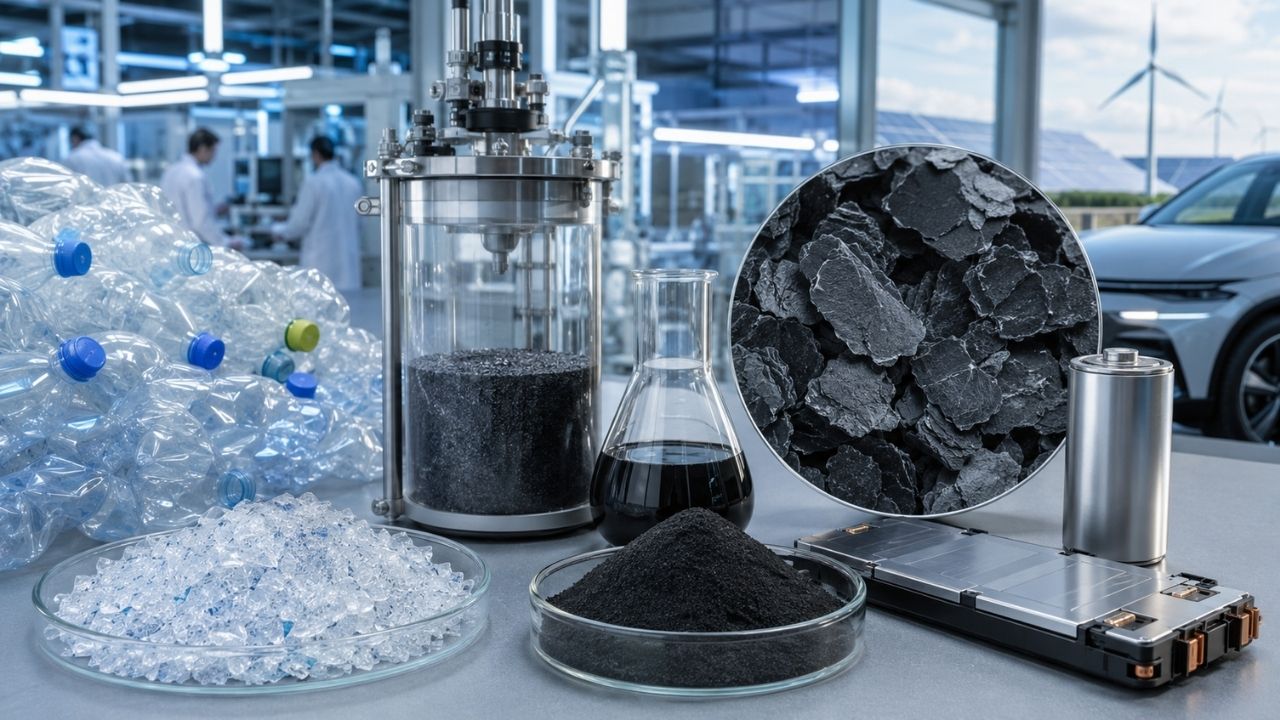
In the study, the researchers transformed PET waste, the same type of plastic used in disposable PET bottles, into highly ordered synthetic graphite. This graphite is a crystalline form of carbon and plays an important role in lithium-ion batteries, especially in the anode, the part that stores and releases electrical charges.
-
Divers Recover 2,600-Year-Old Phoenician Shipwreck from Seabed in Spain to Prevent Damage

-
113-Million-Year-Old Pterosaur Fossil in Brazil Holds Rare Molecules That Could Reveal Its Diet
-
Indian Inventor, 58, Develops Steering Wheel-Free Agricultural Machine Operated by Levers, Offering Cost-Effective Alternative to Expensive Tractors

-
Scientific Breakthrough: Bacteria Found in a Rio de Janeiro Lagoon Guide Mars Research After Scientists Identify Similarities to Extreme Environments, Expanding Understanding of Extraterrestrial Life Possibilities




The central point of the discovery lies in the added value of the material. Instead of recycling the PET bottle only for lower-value products, the team showed that the plastic can be reorganized into a more sophisticated structure, with potential to meet sectors related to electric cars, electronics, and clean energy.
Synthetic graphite outperformed natural samples in ordering
According to Penn State, the graphite formed from PET showed large, well-ordered crystallites, meaning microscopic regions where the carbon layers are more aligned. This organization is important because it indicates higher structural quality for materials used in batteries.
The researchers reported that the material derived from PET bottles had superior ordering compared to commercial samples of natural graphite used as a reference in the study. This does not mean that the technology is ready for industrial use, but it shows that plastic waste can generate a competitive material in structural characteristics.
Process used shredded PET and small amount of graphene oxide
The team combined shredded PET plastic with small amounts of graphene oxide and heated the material through a controlled thermal process. During this stage, the carbon atoms in the plastic were reorganized into more ordered graphitic structures.
According to the researchers, the best quality was observed with the addition of 2.5% graphene oxide by weight. The graphene surfaces acted as molds, helping the carbon atoms organize into stacked layers during graphitization, a process that transforms carbon into graphite.
New route avoids metallic catalysts used in other methods
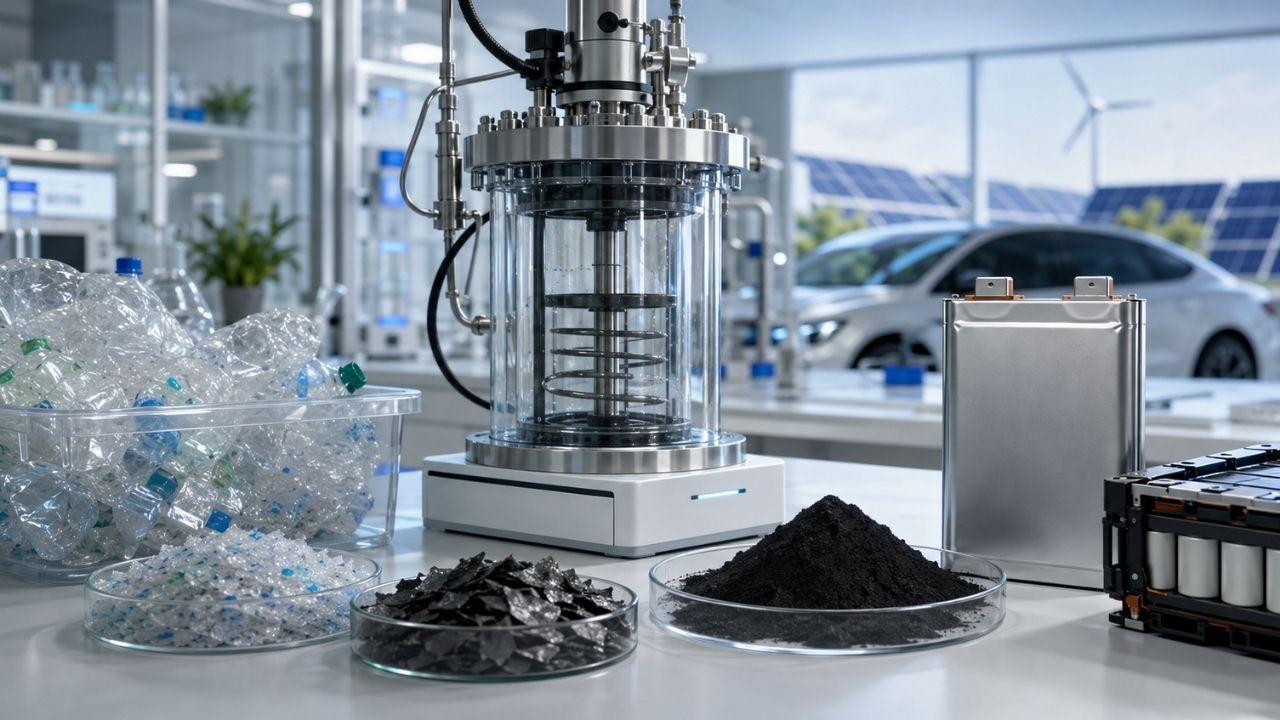
One of the study’s differentiators is that the technique did not rely on metallic catalysts like iron, nickel, or cobalt, used in some synthetic graphite production methods. These catalysts can leave impurities and require additional chemical purification steps.
By using graphene-based additives, the researchers suggest it would be possible to produce cleaner graphite and reduce the need for extra metal removal processes. In practice, the proposal aims to tackle two problems at once: the excess of discarded plastic and the growing demand for battery materials.
Demand for batteries increases the importance of graphite
Graphite is classified as a critical mineral by the United States Department of Energy and is essential for lithium-ion batteries. As the demand for electric vehicles, cell phones, computers, and energy storage systems grows, so does the pressure for reliable sources of this material.
In this scenario, the PET bottle appears as a possible alternative source of carbon. The research does not claim that plastic will single-handedly solve the global demand for graphite, but suggests that abundant waste can be converted into higher-value materials, expanding the role of recycling in clean energy chains.
Further tests are needed before reaching commercial batteries
Despite the promising results, the researchers themselves emphasize that additional studies are still necessary. Among the next steps are evaluating large-scale production and measuring the material’s performance within real batteries, under usage conditions.
This caution is important to avoid an exaggerated reading of the discovery. The study shows a scientific path, not a product already available on the market. The PET bottle turned into synthetic graphite in the laboratory, but adoption in commercial batteries depends on technical tests, economic viability, and manufacturing capacity.
What this discovery changes in the way we look at plastic
Penn State’s research reinforces a change in perspective on plastic waste. Instead of treating the PET bottle only as a disposal problem, the study shows that it can be seen as a carbon source for advanced materials, especially in areas related to the energy transition.
Do you believe that technologies like this can transform recycling into a high-value chain, or is there still a long way to go for laboratory discoveries to reach real life? Leave your opinion in the comments and join the discussion.