Portuguese
  Spanish


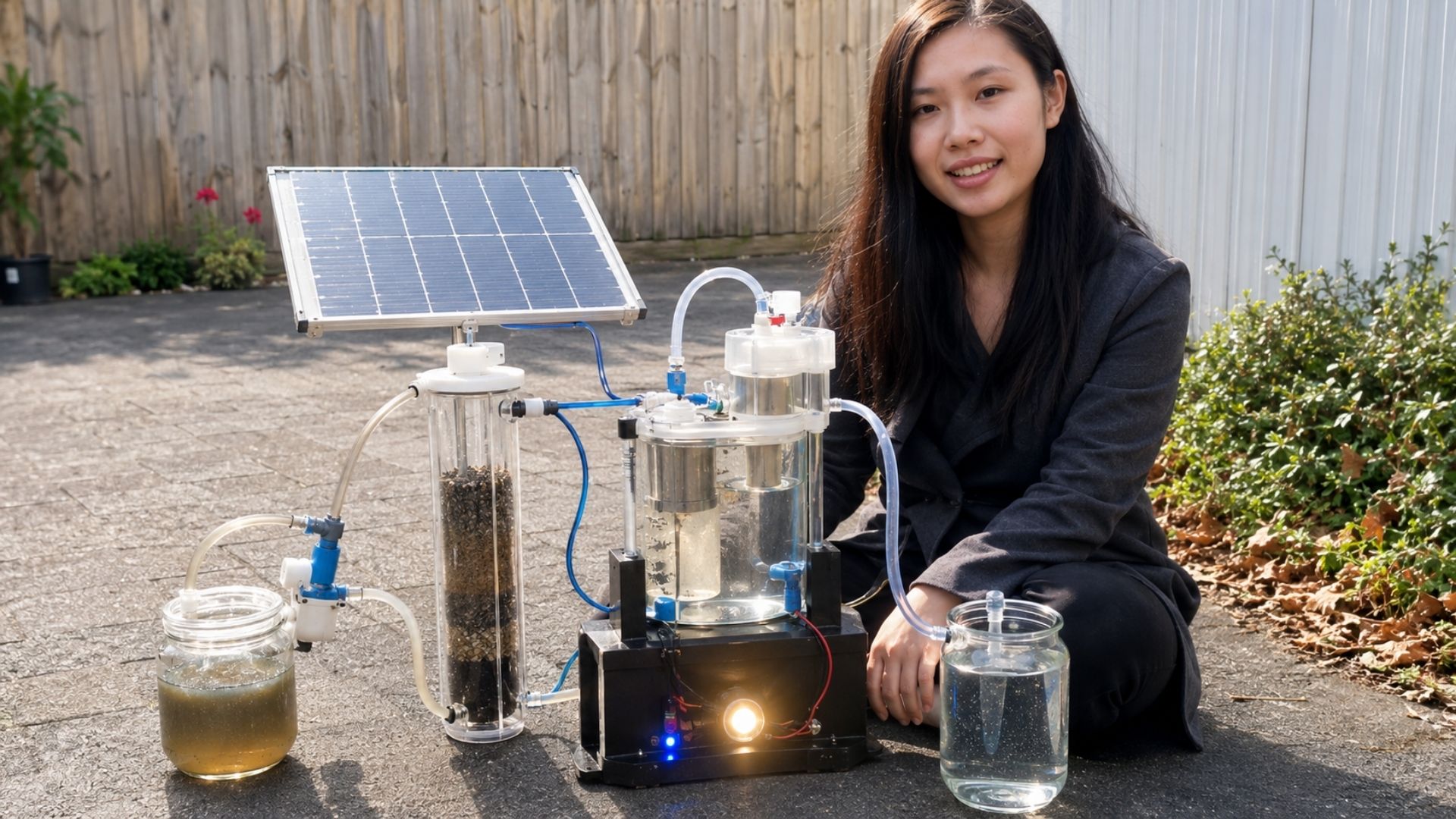

While the world treats water shortage and energy shortage as separate problems, a teenager designed a box that tackles both at once, and even uses water pollution to its advantage
The device that generates water and electricity at the same time seems too good to be true, but that’s exactly what Cynthia Sin Nga Lam built as a teenager. With little more than a titanium screen and sunlight, she transformed dirty water into clean water and, in the same process, into energy.
The detail that makes the project border on the impossible is counterintuitive: the dirtier the water, the better. The pollutants that most filters struggle to remove become, in this system, fuel to produce more energy.
Two problems, one single device
The idea stems from a simple and harsh realization. Lack of drinking water and lack of energy often go hand in hand in the poorest regions, and are almost always addressed by different and expensive solutions.
-
Indian Student Designs Bamboo Houses with Floating Blocks and Recycled Bottles for Flood-Prone Areas; University of Texas Project Aims for Sustainable Housing in Vulnerable Communities

-
Scientists Hatch First Chicks in Shell-less Artificial Eggs, Paving Way for Research on Endangered Birds

-
3D Steel Printing Could Extend the Lifespan of Damaged Bridges by Up to Four Times Without Replacing Entire Parts
-
Archaeologists Discover Nearly Intact 1,500-Year-Old Byzantine Mosaic with Greek Inscriptions, Including a Message to “Burst with Envy”


In 2015, Cynthia tackled both at once. According to Pocket-lint, the device, named H2prO, purifies water and generates clean electricity at the same time, in a single portable equipment.
The appeal is evident. One single device that delivers drinking water and light solves, in one go, the two most basic needs of a community. And it does so without relying on the electrical grid or fuel.
How sunlight cleans the water
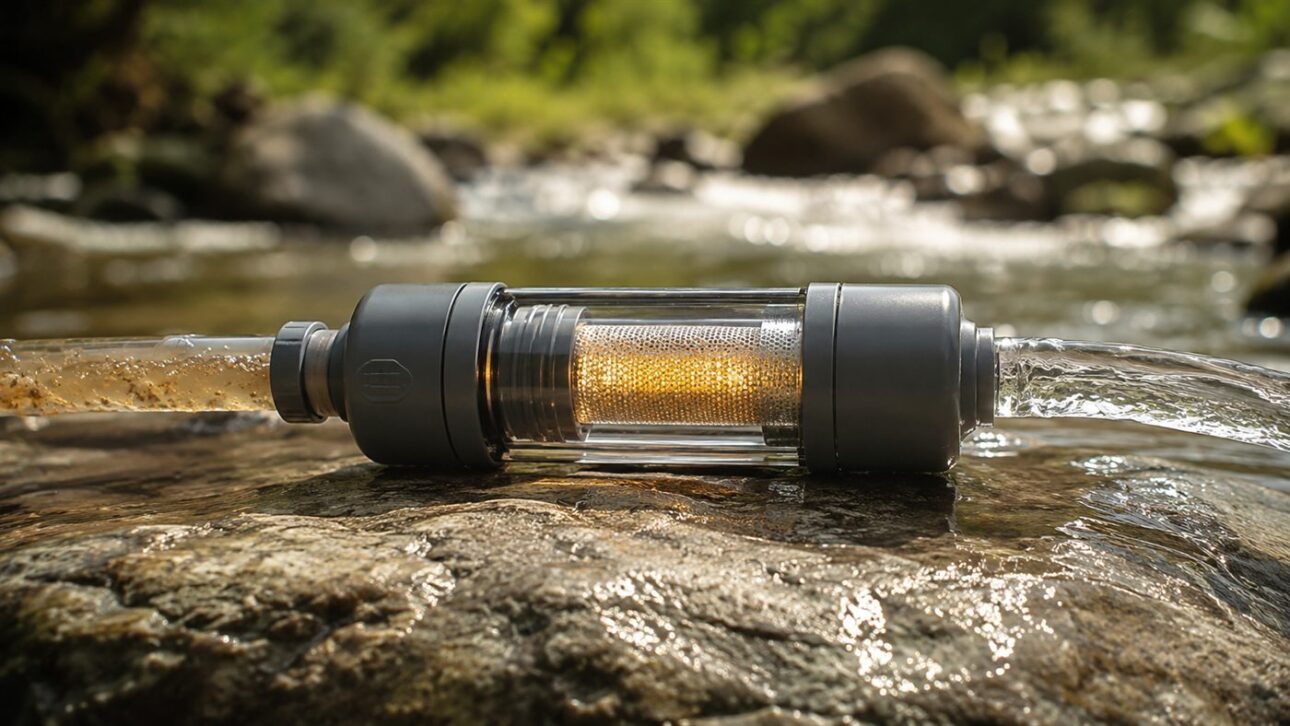
The heart of the system is a light-driven reaction. According to Pocket-lint, a titanium screen activated by sunlight sterilizes the dirty water, which then passes through another filter, in a process of photocatalysis.
This is where the chemical magic happens. According to Pocket-lint, this reaction breaks water into hydrogen and oxygen, and the hydrogen feeds a fuel cell that produces clean energy. The same light that cleans the water also generates the electric current.
It doesn’t take much for everything to work. According to Intelligent Living, Cynthia summarized the principle in one sentence: just sunlight and titania are enough to generate a very efficient source of clean electricity.
When Dirt Becomes Fuel
Here is the most surprising turn of the project. According to Intelligent Living, detergent, soap, and other pollutants present in the water help produce more hydrogen, meaning contamination boosts energy generation.
This reverses the logic of common filters. Where a traditional purifier sees a problem to be removed, the H2prO sees raw material to generate more electricity. Dirt stops being just an obstacle and becomes part of the solution.
This is the kind of insight that separates a good idea from a brilliant one. Taking advantage of exactly what hinders other systems is what makes the device so elegant from an engineering perspective.
Only Needs Titania and Sun
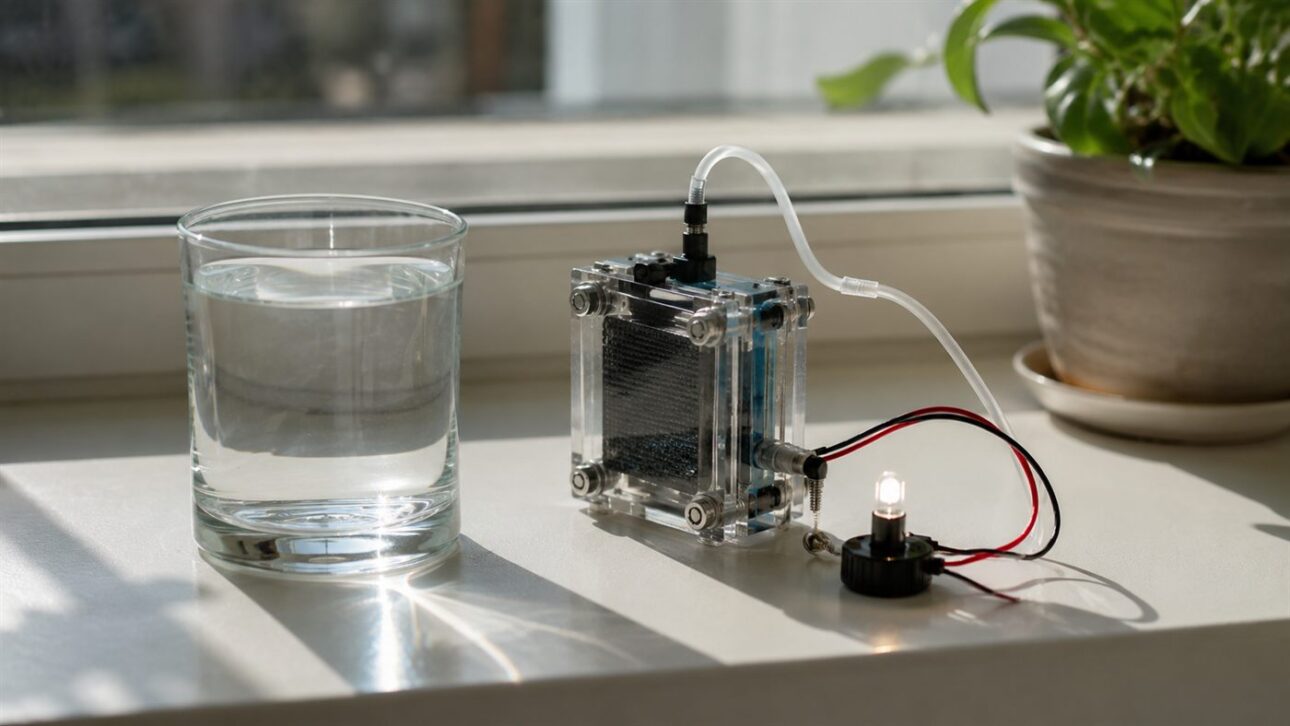
Simplicity is part of the genius. According to Intelligent Living, the equipment is compact, easy to use and maintain, cheap to produce, and does not require any external source of electricity.
This autonomy is what makes it viable outside major centers. According to Pocket-lint, the H2prO only needs sunlight to operate, which makes it accessible to places without a reliable electrical grid.
Photocatalysis with titania, in this arrangement, acts as both engine and filter. Fewer parts, lower cost, and less dependency: exactly what a technology for poor regions needs to have.
From Google Fair to a Leading University


The project was not limited to a school competition. According to Pocket-lint, Cynthia was one of the 15 global finalists of the Google Science Fair with the H2prO, a significant recognition for a student.
And the idea had serious scientific development. According to Intelligent Living, the concept was later adopted by scientists from a leading university in Saudi Arabia, with results published in a prestigious scientific journal. A teenager’s invention became the subject of advanced academic research.
This leap is what validates the work. Going from a fair prototype to the laboratories of a major university is proof that the young woman’s intuition had real foundation.
Designed for those without water or electricity
The purpose behind the device has always been social. According to Pocket-lint, the H2prO could benefit more than 783 million people who currently live without access to clean water.
The motivation came from the inventor herself. According to Pocket-lint, Cynthia stated that she would like to complete the project because it could help people in developing countries by providing water and electricity sustainably, without relying on external aid.
This focus changes the value of the invention. It is not a comfort gadget; it is a tool for survival and autonomy for those who need it most. The technology here was conceived from within the problem, not outside of it.
Why combining water and electricity matters
Cynthia Lam’s story shows that sometimes the advancement is not in solving a problem, but in realizing that two problems may have the same solution. Generating water and electricity in a single device, powered only by the sun, is the kind of idea that redefines what is possible with few resources.
The most provocative lesson from the project remains. If even water dirt can become energy, perhaps what we call a problem is often a resource we have yet to learn to use. Reversing the perspective on waste and pollution may be the key to many solutions.
And here’s the question for you: how many crises that we treat separately, like water and energy, could be solved together if someone had the audacity to view them as a single problem?