






 Portuguese
  Spanish


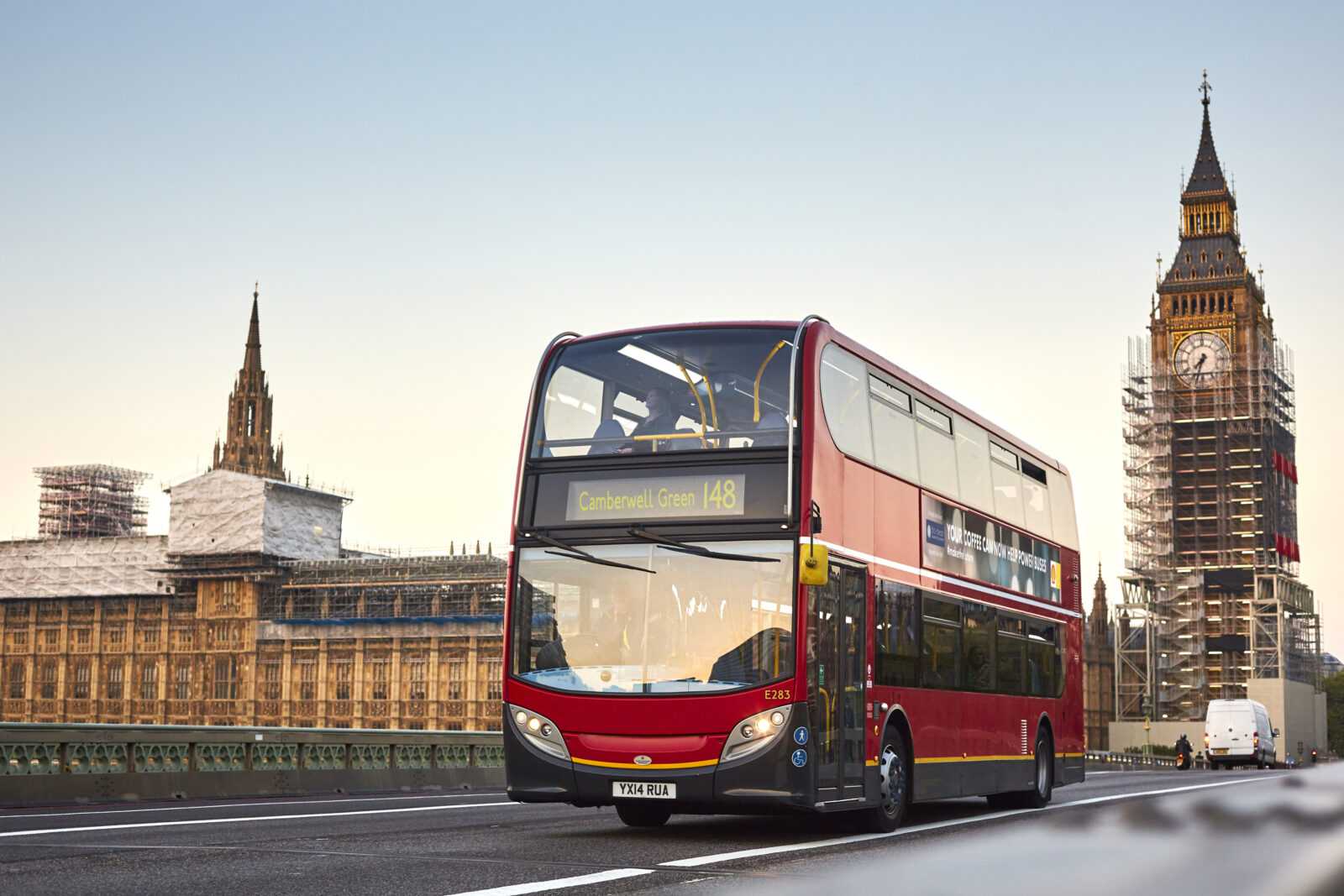

London used coffee grounds in B20 biodiesel for buses, reused urban waste, and tested renewable energy in public transport.
In 2017, London became a showcase for an unusual circular economy experiment in public transport. The company bio-bean, in partnership with Shell and Argent Energy, announced the production of a biofuel partly made from oil extracted from used coffee grounds, incorporated into the supply chain of some of the British capital’s buses.
The initiative gained attention because it combined urban waste, renewable energy, and London buses in a single project. The fuel did not completely replace diesel in the fleet but started to supply some buses through the existing supply network.
How London’s coffee grounds became B20 biodiesel and entered the bus supply chain
The process began with the collection of discarded coffee grounds from cafes, food chains, and factories. This material was dried and processed by bio-bean, which extracted the so-called coffee oil, then sent to Argent Energy to become a component of biofuel.
-
Major Automaker Considers Closing 4 Factories, Putting 45,000 Jobs at Risk Amid Chinese Competition in Brazil

-
Formula 1 Drivers to Swap Million-Dollar Cars for Lego Karts with 28,000 Pieces and Electric Motors at Silverstone, Reaching Speeds of 25 km/h

-
Children Turn $600,000 Ferrari into Slide, Sparking Legal Dispute in China After Video Surpasses 60 Million Views
-
Nikola, once valued at $29 billion for its hydrogen truck promise, files for bankruptcy after prototype scandal.




In the next stage, the oil was mixed with mineral diesel to form a B20 type fuel, with 20% biological component and 80% conventional diesel. According to the official statement released on November 20, 2017, this B20 with part coffee oil was added to the London bus supply chain.


The proposal showed that an abundant food waste could gain an energy function without requiring the immediate creation of a completely new infrastructure. Instead of relying on a complete fleet replacement, the project entered the system as a complementary fuel.
Coffee waste in London exceeds 200,000 tons per year and explains the interest in renewable fuel
One of the most cited data at the project’s launch was the volume of available waste. In the partnership’s statement, Shell and bio-bean stated that the average Londoner consumed 2.3 cups of coffee per day, helping to generate more than 200,000 tons of coffee waste per year in the city.
In a metropolis with massive coffee consumption, the scale of the waste was already sufficient to justify the collection, processing, and industrial transformation of part of this material.
It was precisely this abundance that allowed the idea to be tested in a real urban environment. The project did not start from a rare or difficult-to-obtain residue, but from a daily discard present in large volumes in the city’s routine.
London buses used biodiesel with coffee oil without mechanical adaptation in the fleet
One of the most important points of the project was compatibility with vehicles already in circulation. The official statement informed that the B20 with part coffee oil could be used without the need for modification in the buses, eliminating the requirement to change engines or rebuild the distribution infrastructure.
This feature reduced the barrier to implementation. In large-scale urban systems, any change that requires extensive mechanical adaptation usually increases costs and delays operational tests, while fuels compatible with the existing network can be incorporated more quickly.
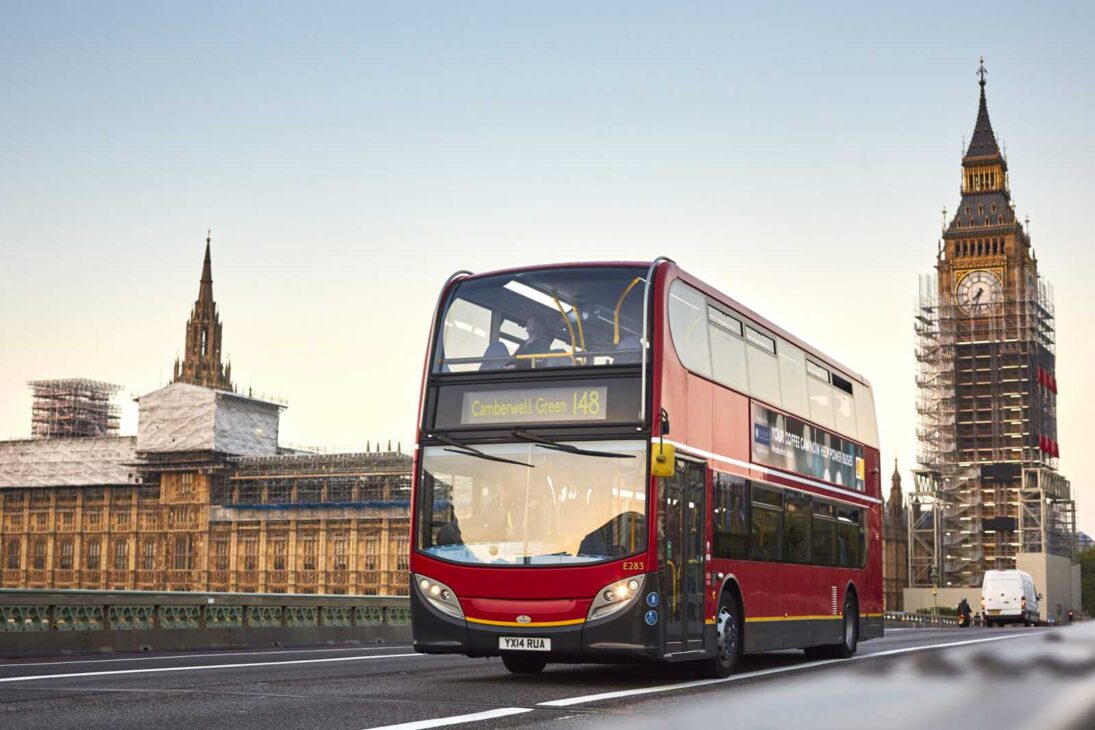
In a response published in 2020, Transport for London itself clarified that the experience was not an operational project of the agency, but an initiative by Bio-Bean and Shell. The agency also informed that operators make their own fuel purchase arrangements and that part of this biodiesel could include inputs such as frying oil, tallow, and, in the case of bio-bean, coffee residues.
Six thousand liters of coffee oil demonstrated the project’s feasibility in London buses
According to the partnership’s statement, the initial phase generated 6,000 liters of coffee oil. This volume, when used as a biological component of B20 and mixed with mineral diesel, could help fuel the equivalent of one London bus for about a year.
At the same time, the disclosed scale shows that it was a partial application, not a complete replacement of the diesel used by the entire fleet. The case gained relevance precisely for testing a complementary renewable energy route within an existing system.
Coffee grounds, circular economy, and public transport put London in the debate on urban renewable energy
The symbolic strength of the project lies in showing that a residue treated as waste can return to the production chain with energy value. Instead of going directly to disposal, part of the coffee grounds began to be processed as an industrial input for a biofuel used in public transport.

The London experience brought together in a single initiative three fronts that have gained importance in large cities: waste management, renewable fuel, and urban mobility.
By utilizing daily waste and integrating it into the already existing supply chain, the project demonstrated a short-term alternative to reuse waste and reduce exclusive dependence on fossil fuel.
Even without representing a total fleet conversion, the case remained relevant by showing that the coffee consumed daily by millions of people could cease to be just waste and become part, even if partially, of the energy infrastructure of some of the world’s most famous buses.


