Portuguese
  Spanish


The bamboo houses proposed by Dakshata Kishor Koli, a master’s student in Sustainable Design at the University of Texas at Austin, use bamboo cubes and recycled plastic bottles to float in floods. According to UT Austin, the idea seeks affordable, modular, and reusable housing in vulnerable rural flooded communities.
The bamboo houses designed by Dakshata Kishor Koli, a second-year master’s student in Sustainable Design at the University of Texas at Austin, were conceived for regions prone to flooding and rising sea levels. The proposal combines bamboo, recycled plastic bottles, and floating structures anchored to the ground.
According to a publication by the University of Texas at Austin on April 22, 2026, the project specifically targets rural and low-altitude communities in South Asia. The idea is to develop sustainable, affordable, and more adaptable housing to flooding scenarios, without relying solely on conventional building materials.
Bamboo enters as a renewable material for construction
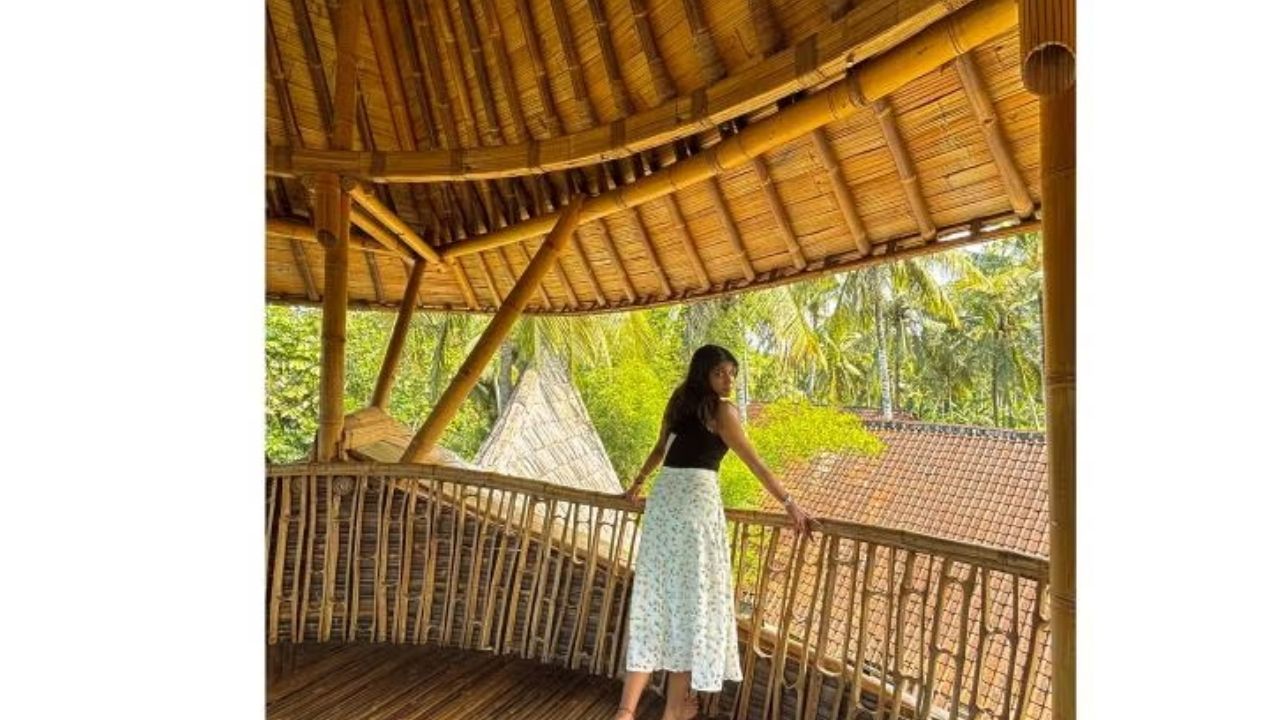
The project starts from an important difference between bamboo and traditional wood. While trees used as wood can take decades to grow, bamboo develops more quickly and regrows in the same location from rhizomes, without the need for replanting by seeds after cutting.
-
Australian Teen Invents Device to Simultaneously Purify Water and Generate Electricity Using Sunlight

-
Scientists Hatch First Chicks in Shell-less Artificial Eggs, Paving Way for Research on Endangered Birds

-
3D Steel Printing Could Extend the Lifespan of Damaged Bridges by Up to Four Times Without Replacing Entire Parts

-
Archaeologists Discover Nearly Intact 1,500-Year-Old Byzantine Mosaic with Greek Inscriptions, Including a Message to “Burst with Envy”


According to UT Austin, bamboo can reach maturity in three to five years, while some species reach the harvest point in five to seven years. This renewability helps explain why the material appears as an alternative for sustainable construction and less pressure on natural resources.
Project targets floods and rising sea levels
The Dakshata proposal was designed for two types of risk. The first is short-term disasters, such as sudden floods, which can affect a community in a short time. The second is the long-term impact of rising sea levels, which gradually changes life in coastal and low-lying areas.
The focus is not just on creating temporary shelter after an emergency. The project also envisions permanent housing built before flooding, with the capacity to respond to rising water. The logic is to prepare the housing to adapt to the event, rather than treating the flood only as a subsequent repair.
Floating blocks are under the house structure
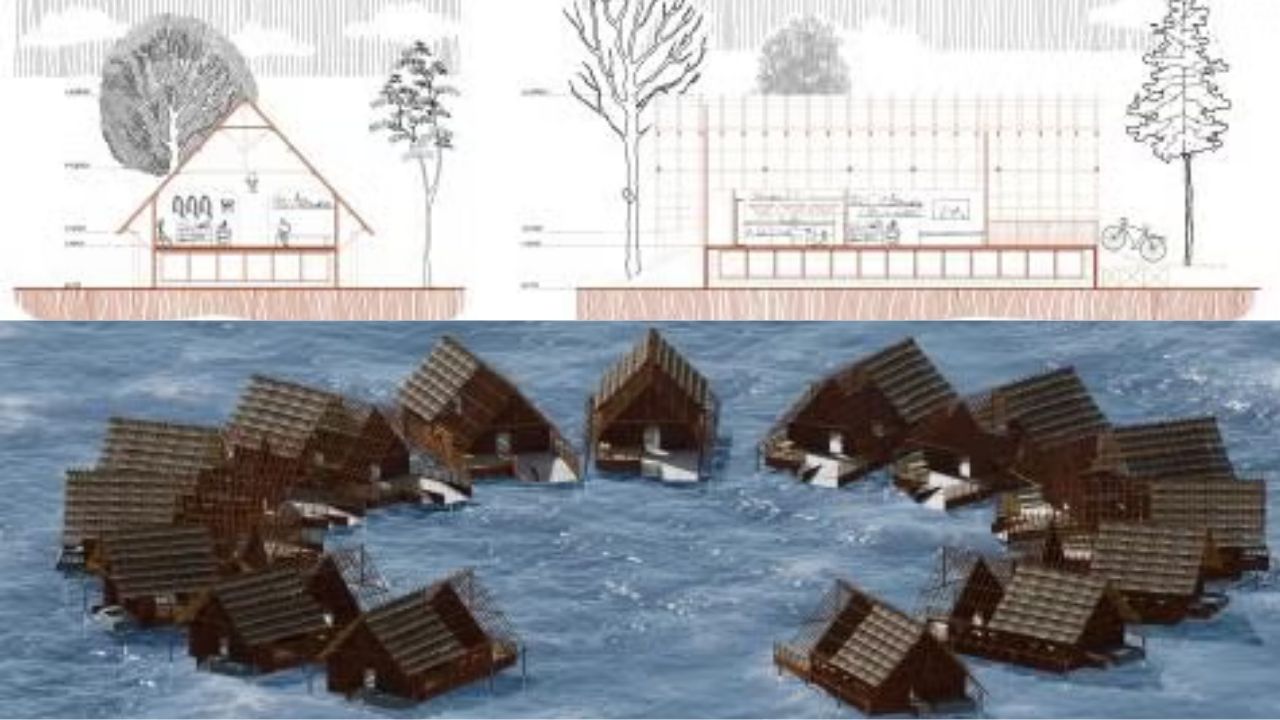
The most visual solution of the project is the floating blocks installed under the house. According to the university, these square cubes are one meter long and are made of a bamboo structure combined with recycled plastic bottles.
These blocks allow the house to rise as the water advances, keeping the construction anchored to the ground. The technical objective is to allow controlled vertical movement, without the housing being carried away by the current during a flood.
Recycled bottles reinforce the reuse logic
The use of recycled plastic bottles in the floating cubes enhances the sustainable nature of the proposal. Instead of treating discarded plastic only as waste, the project incorporates this material into a structural function related to flotation.
This point connects the bamboo houses to the circular economy. Bamboo enters as a renewable raw material, while recycled bottles appear as a reuse component. The combination reduces dependence on conventional materials and creates a lightweight, modular, and adaptable solution.
Permanent Housing and Emergency Shelter Have Different Functions
The proposal presented by the Indian student is not limited to a single model. There is a permanent solution for flood-threatened areas and also a proposal for emergency shelter for post-disaster scenarios, when houses have been damaged or destroyed.
In the emergency model, walls, roof, and floor would be manufactured in parts, similar to prefabricated construction. Then, the sections would be sent to the site and assembled quickly. The source reports that the assembly could occur in one day or in a few hours, depending on the conditions.
Modular Model Facilitates Transport and Assembly
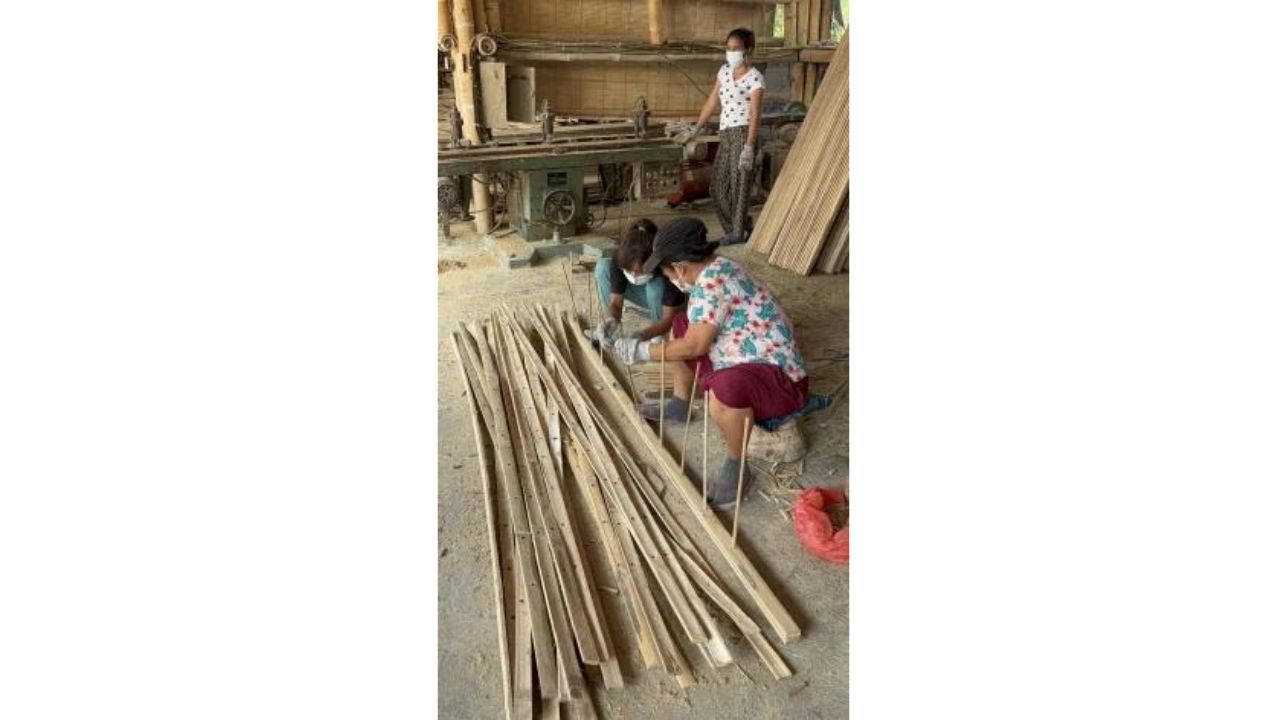
Modularity is one of the foundations of the project. By manufacturing components in parts, the construction can be transported in sections and assembled on-site more quickly than a conventional project executed entirely on location.
This strategy also allows for disassembly and reuse. According to Dakshata, when a family’s original home is restored, the temporary shelter could be dismantled, sent back to the factory, and used again in another disaster. The idea transforms the shelter into a reusable system, not a disposable structure.
South Asia Emerges as a Priority Region
UT Austin reports that the student’s focus is on the countries of South Asia, where rural and low-altitude communities are among the most exposed to floods and sea level changes. This focus helps explain the choice of accessible materials and local construction methods.
The project considers that affected communities can reduce dependency on external assistance when they have access to materials and construction techniques available in their own region. The proposal, therefore, combines architecture, climate adaptation, and construction autonomy in areas with water risk.
Bamboo Treatment is a Decisive Technical Point
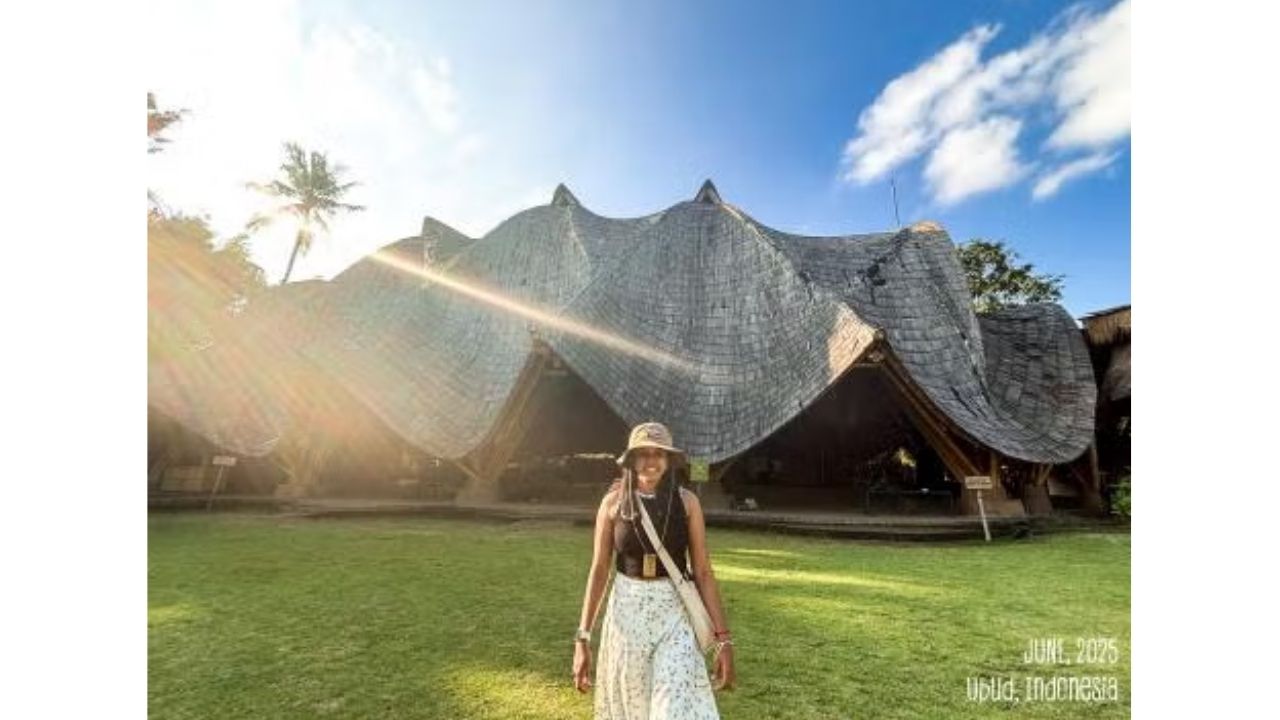
One of the central issues in using bamboo in construction is durability. In 2025, Dakshata received an international travel research grant from the School of Architecture at the University of Texas and visited Indonesia to study practical applications of the material.
During the trip, she observed treatment processes with a boron-based compound. According to the publication, a solution with 4% boric acid, 6% borax, and 90% water can be used to soak the bamboo for seven days. This type of treatment aims to increase resistance to insects and fungi, an essential factor for constructive use.
Acceptance of bamboo is still a market challenge
The source points out that there is still resistance to the idea of using bamboo as a construction material, especially due to cultural associations that position it as a lower-value alternative. This challenge is not only technical but also a matter of market perception.
To increase adoption, the project needs to demonstrate that bamboo can combine performance, aesthetics, proper treatment, and safe constructive application. The material ceases to be seen merely as a simple resource when it is part of systems designed with engineering and clear climatic purpose.
University of Texas connects research and practical application
Dakshata is developing the project in the master’s program in Sustainable Design at the University of Texas at Austin. According to the publication, the program values the combination of scientific knowledge, creative application, experimentation, and interdisciplinary collaboration.
This academic environment helps bring sustainable architecture closer to concrete problems. In the case of bamboo houses, the research does not only discuss design or aesthetics but also materials, assembly, flood response, reuse, and feasibility for communities exposed to environmental risk.
What still needs to advance in the proposal
The source does not inform whether the project has already been built on a real scale, tested in a community, or subjected to engineering standards for commercial implementation. There is also no data on cost per unit, resistance in real floods, lifespan of floating blocks, or long-term maintenance.
These gaps indicate that the proposal still needs validation steps before becoming a widely applied solution. Nevertheless, the concept shows a relevant path: using bamboo, recycled bottles, and modular construction to create housing better prepared for water-prone environments.
Bamboo houses can change construction in flood-prone areas
The bamboo houses proposed by the Indian student show how simple materials can gain new function when combined with sustainable design and engineering. The key is in transforming bamboo and recycled bottles into a structure capable of adapting to rising water levels.
Do you think floating bamboo houses could be used in flood-prone areas in Brazil, or does this type of solution still need a lot of testing before leaving the university? Leave your opinion in the comments and tell us if you would trust a modular home made with bamboo and recycled materials.