Portuguese
  Spanish


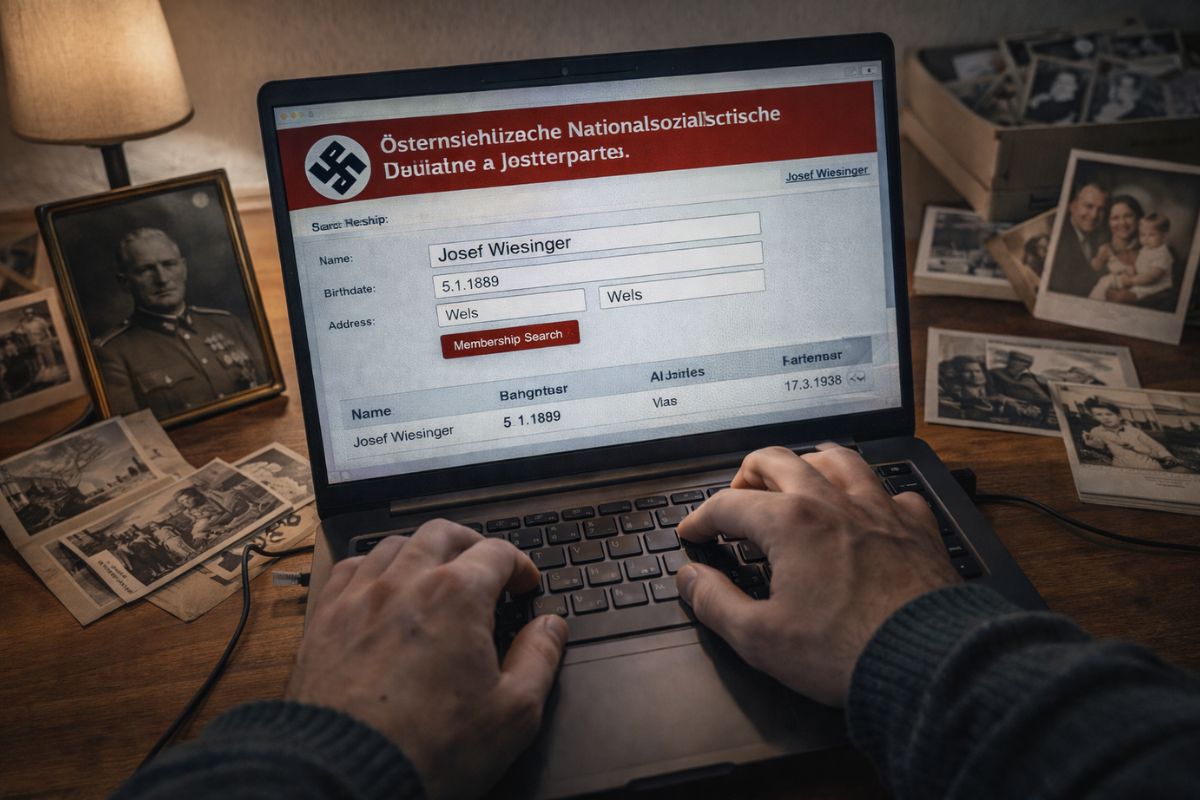

The German newspaper Die Zeit launched a digital tool that allows you to search by first and last name if a person was affiliated with the Nazi Party (NSDAP) between 1925 and 1945. The database contains about 8.2 million membership cards preserved after World War II and has been consulted millions of times since its launch in early April 2026.
It is estimated that 10.2 million Germans joined the NSDAP over two decades. The cards were nearly destroyed at the end of the war but were ultimately preserved and became central to the denazification process in Germany. They were held by the United States until 1994, when they were transferred to the German Federal Archive, with copies sent to the National Archives in the U.S. in Washington.
Until now, consulting these records required a formal request to the official archives or research in microfilms digitized by the American National Archives, which repeatedly went offline due to excessive access.
The Die Zeit tool simplified the process: just register and pay a subscription of less than 1 euro to search any name.
-
The United Kingdom launched 146 giant concrete coffins into the sea, towed the structures through the English Channel, and erected a colossal artificial port in front of the Normandy beaches in a few days.

-
Family cuts the chassis of Elon Musk’s car, fits engine, battery, cameras, and screen into a 1966 Mustang, and makes the classic run silently, receive updates, and even drive with electronic assistance.
-
He lost R$ 340,000 in bets, R$ 75,000 in a single day, and escaped the “mental prison” in the most radical way possible: Thiago Moita, 35, enlisted in the Ukraine war to overcome his gambling addiction.
-
Erected in just 30 minutes over the water that had already engulfed the courtyard, a motorized floating bridge from China evacuated more than 6,000 students trapped inside a school surrounded by the flood in the south of the country, after Typhoon Maysak turned the region into a flooded area.




Who is using it and what are they discovering?

Austrian Christian Rainer, former editor of the magazine Profil, told the BBC that he found his grandfather in seconds.
He discovered that the relative enrolled in the party just days after Austria was annexed by Germany in 1938.
The typical profile of members, according to Die Zeit, was male and young, with a significant concentration of those born between 1900 and 1915, a generation marked by World War I, economic crisis, and political instability.
Die Zeit emphasizes that finding a name in the database does not equate to proving active participation in persecutions or denunciations.
This distinction requires in-depth biographical investigation that, more than 80 years after the end of the war, remains slow and often inconclusive.
The records of Hitler’s family members were archived separately and are not part of the public database.
The tool transforms what used to take months into seconds.
Would you research your family’s past if you had German ancestors? Comment below.