






 Portuguese
  Spanish


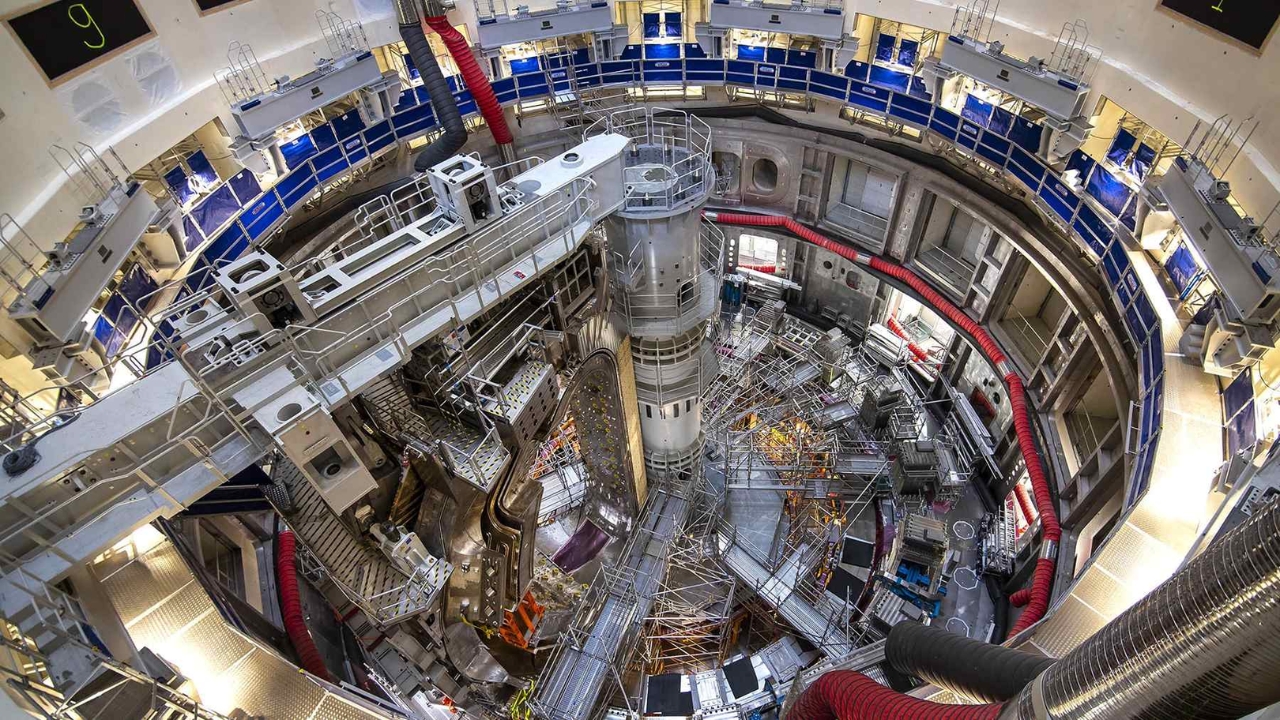
The ITER Fusion Reactor Has Entered the Most Critical Phase With the Assembly of Its Chamber Capable of Reaching 150 Million Degrees. With 400 Ton Steel Parts, the Project Aims to Reproduce the Energy of the Sun on Earth
The quest for a clean, practically infinite source of energy capable of powering the planet for centuries has just taken a decisive step. In the small town of Cadarache, in southern France, Westinghouse Electric Company has begun the final assembly of the ITER core, the largest and most ambitious nuclear fusion experimental reactor ever built by humanity. For many scientists, it is the most important energy project in modern history, a milestone that could completely change the way the world produces electricity.
The proposal is as bold as it is simple to explain: replicate on Earth the same process that makes the Sun shine. At the heart of the reactor, nine gigantic steel sectors, contracted for about US$ 168 million, form a chamber that needs to withstand extreme conditions. It is within this space that the plasma must reach 150 million degrees Celsius, a temperature higher than that of the solar core.
Understand Why the ITER Is So Decisive
Nuclear fusion is considered the “energy of dreams” for a clear reason: unlike fission — used in traditional nuclear power plants, it does not produce long-lived waste, does not pose a risk of chain reaction accidents, and uses light elements, such as hydrogen, to produce colossal amounts of energy.
-
Rotterdam Develops Floodable Square to Absorb Nearly 2 Million Liters of Rainwater, Doubling as Sports, Theater, and Leisure Space When Dry to Combat Urban Flooding

-
U.S. National Park Deploys Robotic Birds Near Wyoming Airport to Protect Endangered Species: Dancing and Sound-Emitting Replicas Aim to Lure Real Birds to a 100-Acre Restored Area Away from Runways After 32 Aircraft-Related Deaths
-
Russia and India Lift 320-Ton Pressure Vessel into Kudankulam Nuclear Plant Reactor, Advancing Project That Has Already Prevented 112 Million Tons of CO2 Emissions

-
Brazilian Student Wins Global Science Fair in the U.S. with Sound Wave Method to Alter Alzheimer’s-Linked Genes


The Problem Has Always Been Engineering
Containing such hot plasma is a challenge that exceeds any previous technological limit. The central structure of the ITER, which is expected to weigh more than 400 tons, functions as a kind of industrial puzzle: each piece needs to fit with millimeter precision. In the words of Bernard Gigot, former director-general of the project, “assembling this reactor is like designing a three-dimensional puzzle on an industrial scale”.
The magnetic and thermal stresses are so intense that a single poorly executed weld could compromise the entire operation. For this reason, the level of monitoring is absolute: sensors, superconducting magnets, calorimeters, and containment systems work together to keep the plasma stable within a “magnetic cage.”
An Unprecedented Global Alliance
The ITER is not just a scientific achievement. It is also a geopolitical phenomenon.
The project has managed to bring together 35 countries, representing more than half of the world’s population and nearly 85% of global GDP, working together toward a common goal. Among the participants are the United States, China, Japan, South Korea, Russia, and practically the entire European Union.
This level of international scientific cooperation finds its only parallel in initiatives like the International Space Station. The difference is that, in this case, the potential impact is even greater: if fusion works stably and scalably, it paves the way for commercial reactors capable of providing abundant, cheap electricity with minimal carbon emissions.

The Future of Energy May Be Starting Now
Although the project progresses slowly, its timeline has always involved decades; each completed stage brings the world closer to a historic turning point. The union of the central components marks the beginning of the most sensitive and awaited phase, in which all engineering will finally be put to the test.
If successful, the ITER could become the prototype of the first system capable of generating energy through nuclear fusion continuously. For scientists and governments, this would mean energy emancipation, a drastic reduction in emissions, and a new era of technological abundance.
The question that remains is: are we about to witness the birth of the greatest energy leap since the mastery of electricity? Many experts believe so, and what happens today in Cadarache could define the future of the planet for generations to come.




-

-

2 people reacted to this.