Portuguese
  Spanish


Axial and Solstício Start 18MWp Solar Plants in Piauí with Axial Tracker Twin to Increase Generation by 30%, Partnership Established at Intersolar South America.
Axial, in collaboration with Solstício Energia, has initiated a significant solar plant project in the state of Piauí, establishing a capacity of 18MWp. This initiative aims not only to expand solar energy generation in the region but also to optimize operational efficiency through innovative technologies. Known for its global operations, Axial provided solar trackers that promise an average 30% improvement in energy generation. The partnership reflects an important step in the expansion of renewable energies in Brazil.
In addition to the established solar plants, the assembly techniques stand out for their modern photovoltaic units, which are crucial for the project’s success. These solar installations are designed to maximize energy absorption even in less than ideal sunlight conditions, demonstrating the superiority of the equipment used. The partnership between the two companies was strengthened during Intersolar South America, where new strategies for future collaborations were discussed. This venture redefines Brazil’s potential in sustainable energies, establishing new standards for the industry.
Partnership for Expansion of Solar Plants in Piauí
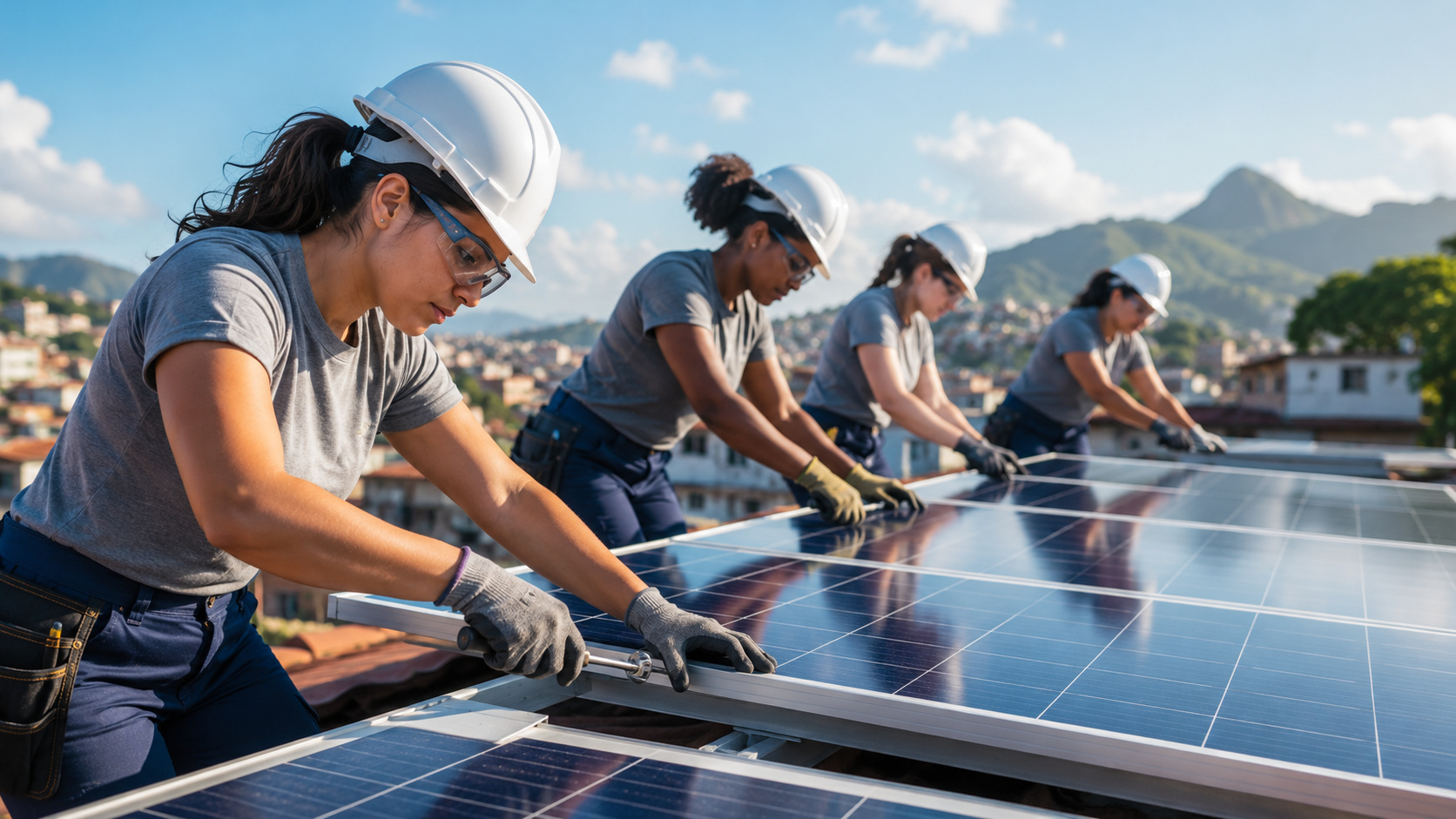
Recently, a joint initiative was established for the construction of four solar plants in the state of Piauí. This promising project will include four photovoltaic units (UFVs) dedicated to distributed generation. Located in cities such as Barras, Esperantina, Valença, and Palmeirais, these solar installations will each have a capacity of 4.5 MWp, totaling 18 MWp.
-
Solar energy can increase property value by up to 10% and become a selling point.

-
Solar and wind energy surpass natural gas for the first time in the world and accelerate energy revolution

-
Africa has about 500,000 cell towers and most still burn diesel to operate, while companies rush to cover antennas with solar energy and avoid signal blackouts.
-
Farmers swapped diesel for solar panels in Pakistan, powered irrigation pumps almost cost-free, expanded rice fields, and now groundwater has become a red alert in the countryside.




The energy produced by the solar plants will be directed to the free market. Axial Brasil is delivering to Solstício a supply of over 230 units of the Axial Tracker Twin. These devices provide essential support to the solar panels, allowing for an average increase in energy generation of about 30%.
Installation and Advances at Intersolar South America
The solar plants, occupying areas between 7.3 and 8.7 hectares, are scheduled to be completed by June of next year. Together, the four UFVs will feature over 25.9 thousand solar panels. The formalization of this agreement between Axial and Solstício occurred during Intersolar South America, the largest solar energy fair in Latin America, held in August 2024 in São Paulo.
On that occasion, Axial’s CEO, José Luis Fayos, flew in directly from Spain to be present at the signing of the partnership alongside Bruno Lima, Executive Director of Solstício Energia. The collaboration between these two companies promises to drive the advancement of solar plants in the region.
The Growth of Solar Energy in Brazil
The Brazilian Association of Photovoltaic Solar Energy (Absolar) reveals that solar energy has already reached 52 gigawatts (GW) of installed capacity in Brazil. This number results from the sum of distributed generation, led by small and medium systems, and large centralized solar plants, which account for 34.8 GW and 17.4 GW of operational power, respectively.
Within the Brazilian electric grid, photovoltaic solar energy now holds the second position, accounting for 21.4% of the total, trailing only hydropower. This is a clear demonstration of the advancement and importance of solar plants and solar installations in the country’s energy landscape, reflecting the success of the free market and the potential of photovoltaic units.
Source: © jacqueline.campos@approach.com.br