






 Portuguese
  Spanish


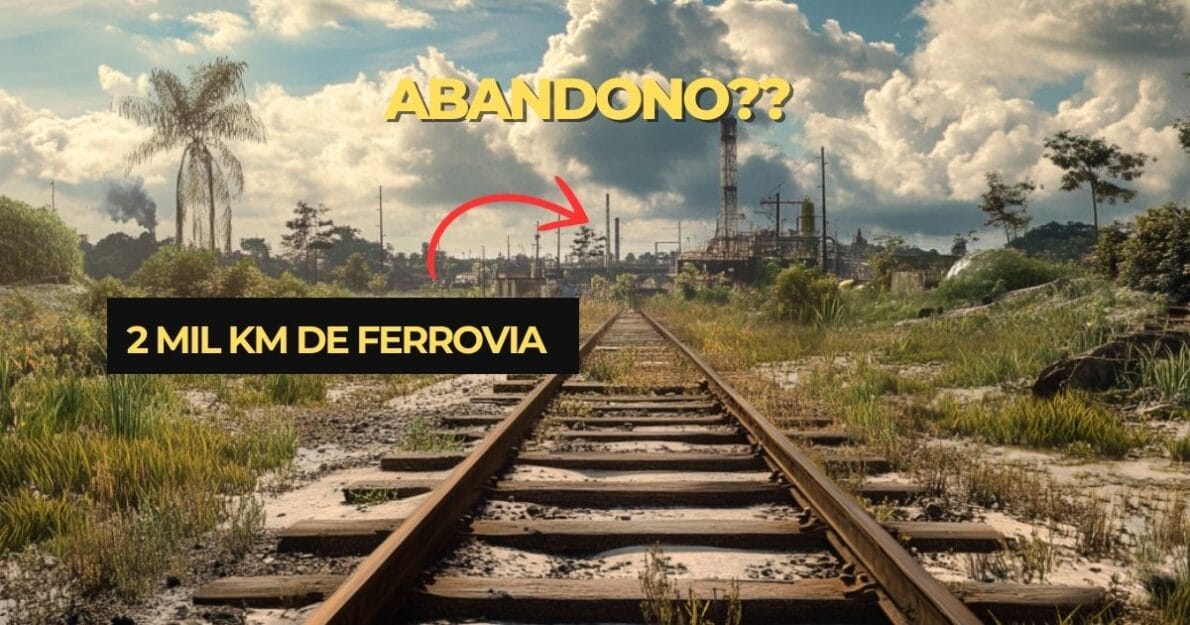

The Future of the Railway Network in Bahia Is at Risk, and the Situation Seems to Be Even More Complicated than Many Imagine.
The concession of the Ferrovia Centro Atlântica (FCA), which runs through important states such as Bahia, Minas Gerais, and Espírito Santo, is set to undergo a significant transformation.
With over R$ 24 billion in planned investments, the company VLI Logística may be about to abandon a vital stretch for the state of Bahia, leaving more than 2,000 kilometers of track out of operation.
But what is behind this decision, and how might it affect the future economic prospects of the region?
-
Brazil’s 2026 Tax Refund: Record 9.58 Million Filers in Largest Payout Ever, But a Key Detail on Priority Recipients Draws Nationwide Attention

-
Itaú Alters Hybrid Work Model, Increasing Office Days from 2028, Prompting Employees to Adjust to New Routine
-
Facing Labor Shortage, Japan Plans to Invest $34 Million to Attract Foreign Workers in Construction, Healthcare, Industry, and Commerce

-
Brazilian City Makes Remarkable Leap, Becomes 4th Wealthiest in the Country with GDP of R$ 134.1 Billion




According to information disclosed by the National Agency of Land Transportation (ANTT), the situation of the FCA will be discussed in a public hearing in Salvador, scheduled for the 18th.
The proposal revolves around extending VLI’s contract for another 30 years, which involves managing 7,800 kilometers of railways across various states.
However, there is a deadlock: the company wishes to return 2,100 kilometers of track, of which 291 kilometers are in Bahia, according to the Federation of Industries of the State of Bahia (Fieb).
Discontinuity Threatens Bahian Economy
The concession contract of the FCA with VLI expires in August 2026.
However, the renewal proposal includes the discontinuation of the stretch that connects Minas Gerais to Bahia, known as the Minas-Bahia corridor.
This corridor, essential for cargo transportation in the state, has already faced criticism from the Bahian government and industry entities, which have been denouncing the “abandonment” of the railway network for decades. Now, with VLI’s possible exit, uncertainty reigns over the local economy.
The management of VLI on the stretch from Corinto (MG) to Campo Formoso (BA) and Candeias, in the Metropolitan Region of Salvador, is a major concern.
Without this corridor, Bahia may face serious logistical problems, impacting strategic sectors such as commerce and industry.
Political Mobilization Grows
The imminent loss of part of this railway network has united residents of Bahia and Minas Gerais in an unprecedented mobilization.
State deputies from the Legislative Assemblies of Bahia and Minas Gerais (Alba and ALMG) have been working together to try to prevent the interruption of the Minas-Bahia stretch.
According to information from ANTT itself, there are four options for the future of this operation: keep VLI in charge with a new management format, transfer the concession to a new operator, or conduct a public call to find another solution.
On the Bahian side, the strategy of pressuring the federal government has already been put into practice.
A letter was sent to President Luiz Inácio Lula da Silva requesting the maintenance of the operation until a new operator is defined, as well as the modernization of the state’s railway network and the creation of a Public-Private Partnership (PPP) for the Minas-Bahia corridor.
Meanwhile, the residents of Minas Gerais are also organizing.
During a public hearing held in September at the Assembly of Minas Gerais, mayors, deputies, and other local leaders called for the continuation of the operation.
The consensus is that the decision should occur at the federal level, with pressure being exerted by the delegations of both states in the National Congress.
The Future of Ferrovia Centro Atlântica
VLI, in a statement, reaffirmed that the operation in the Minas-Bahia corridor will continue until ANTT defines the future of the concession.
In the meantime, the company presented four possible paths: maintain the operation as it is, with adjustments, or conduct a new bidding process to transfer the concession to another operator.
This process is being closely monitored, and the decision will have a direct impact on cargo transportation between the states.
The Ferrovia Centro Atlântica plays a crucial role in the logistics of the country, connecting various regions and driving economic growth.
However, the discontinuation of part of this railway network could represent a significant setback, especially for Bahia.
With VLI’s imminent exit from operations in Bahia, the regional economy risks being severely harmed.
What Lies Ahead?
With the public hearing scheduled for Salvador, the expectation is that the government and society can find a solution to ensure the continuity of the operation of the Minas-Bahia corridor.
Bahia, which already suffers from logistical problems, cannot afford to lose such an important structure for the flow of its production.
The question that remains is: will the state manage to prevent this discontinuity, or will VLI’s billion-dollar decision have irreversible impacts on the Bahian economy?






País de ‘M’ gestão de ‘M’ dá nisso o eterno gigante adormecido.Lamentável