Portuguese
  Spanish


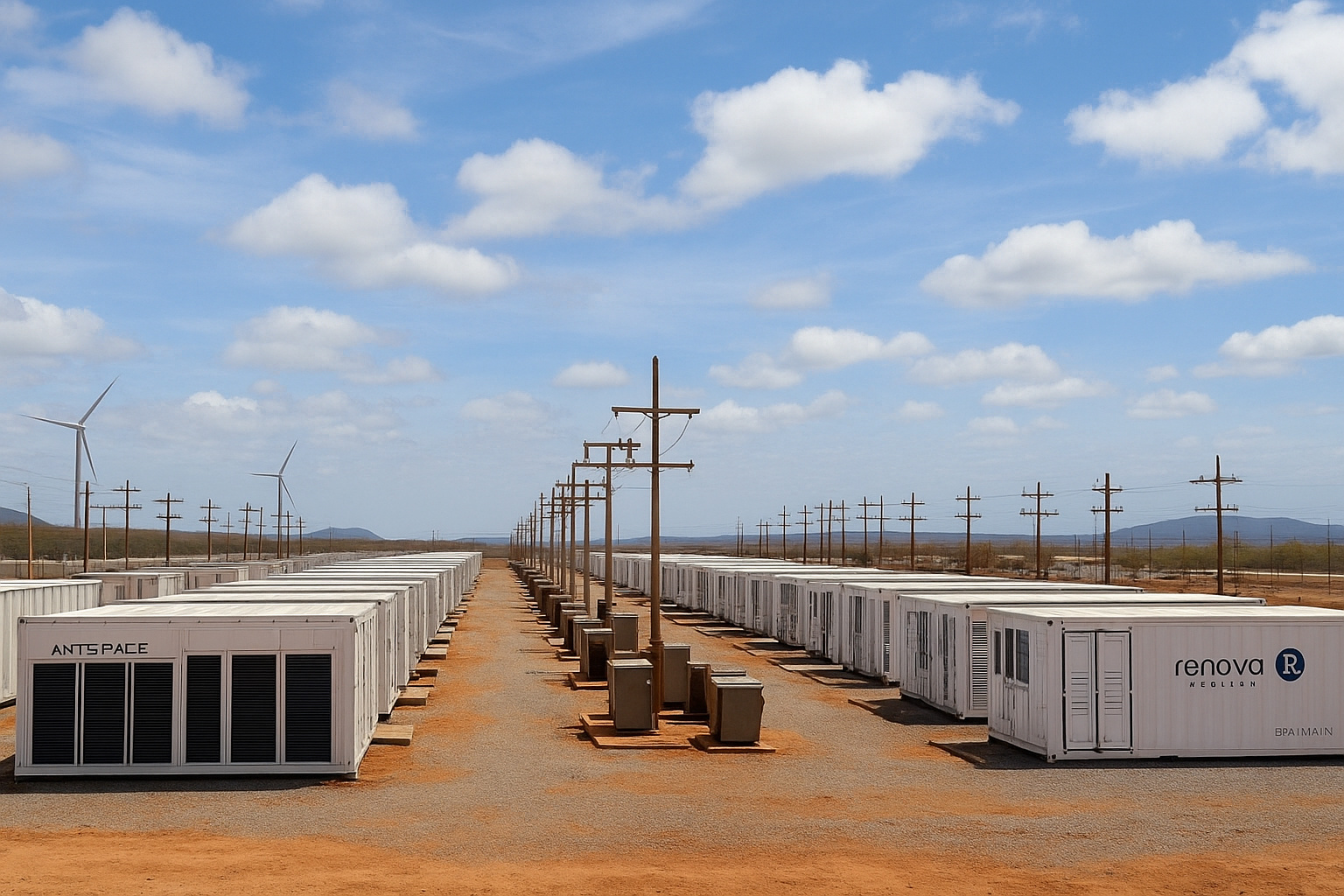


Discover How Bahia Is Advancing to Welcome the First Data Center Integrated with a Wind Farm, Unifying Technological Innovation and Clean Energy.
Bahia is about to achieve an unprecedented milestone in Brazil’s energy and technology sector.
The state is preparing to receive the first data center integrated with a wind farm, a project that symbolizes the union between sustainability, innovation, and efficiency.
Developed by Renova Energia, the venture promises to transform the Bahia hinterland into a hub for renewable energy and digital infrastructure.
The Technological Advancement in the Heart of the Hinterland
The project is being built at the Alto Sertão III Wind Complex, in Igaporã, in southwestern Bahia.
Named Satoshi, the venture will have an initial capacity of 80MW and is set to be energized by the end of the year.
-
Billion-Dollar Winds Propel Wind Energy Growth in Brazil, Boosting Unprecedented Technical Workforce Development

-
Brazil filled the Northeast with wind turbines but now faces the side effect of 705 giant blades reaching the end of their lifespan by 2032 just in Rio Grande do Norte, while the world projects 43 million tons of waste by 2050.
-
Brazil has filled the Northeast with wind turbines, but now it faces the side effect of 705 giant blades reaching the end of their useful life by 2032 just in Rio Grande do Norte, while the world projects 43 million tons of waste by 2050.
-
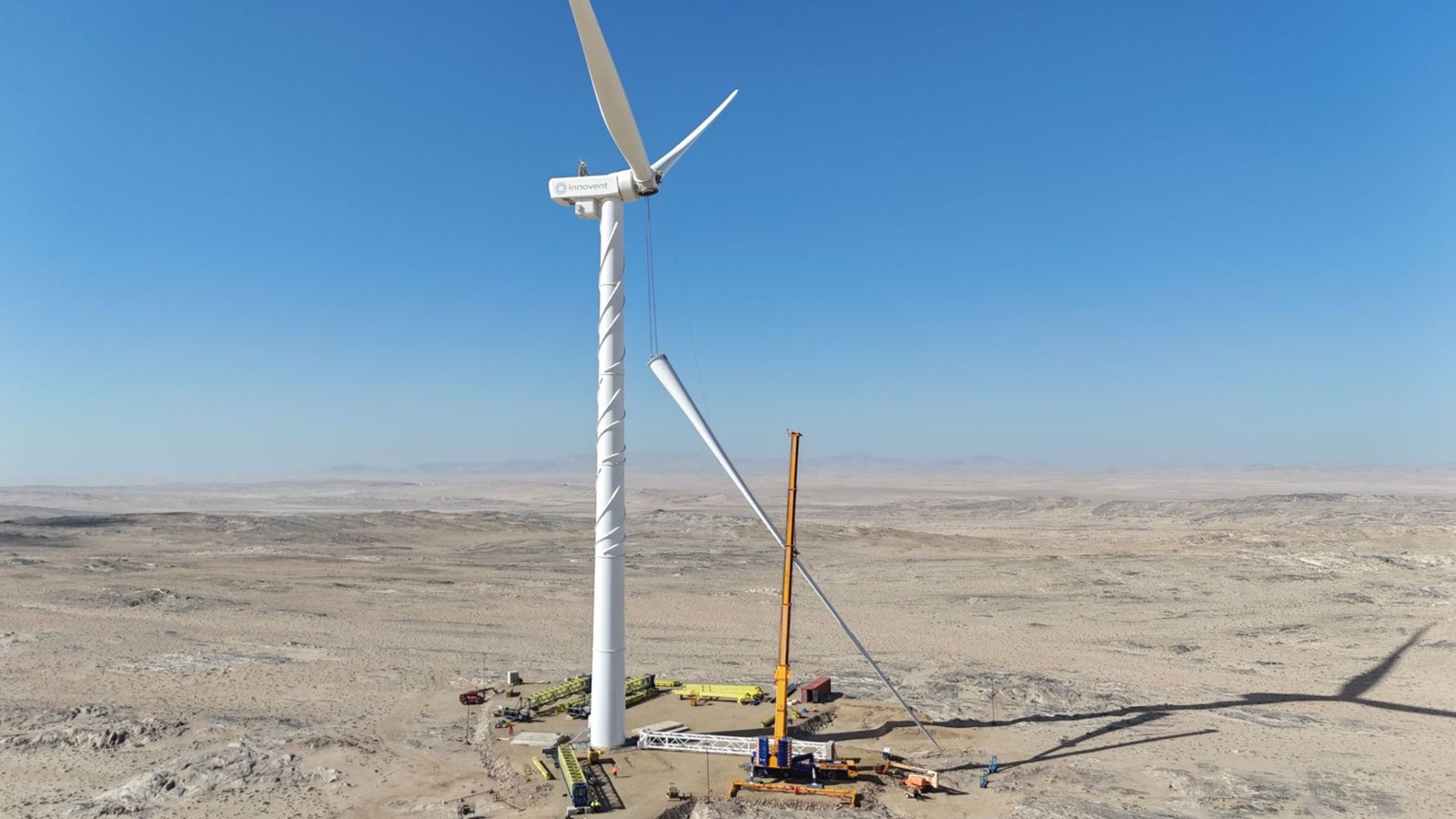
Wind farm in Namibia will have wind turbines assembled without giant cranes and is expected to avoid 200,000 tons of carbon dioxide per year when it becomes operational.


This capacity represents almost 15% of the total data processing capacity installed in Brazil, reinforcing its strategic relevance to the country.
Moreover, the complex will feature two interconnected buildings and already has connection to the national electrical grid approved by the competent authorities.
Renova Energia will be responsible for the electrical infrastructure, while specialized companies will operate the data centers.
Thus, the project becomes a symbol of the convergence between renewable energy and information technology, reaffirming Bahia’s role as a protagonist in the new green economy.
During a recent visit, Bahia’s Secretary of Science, Technology and Innovation, Marcius Gomes, and the mayor of Igaporã, Newton Francisco Neves Cotrim, learned about the progress of the work.
At the time, Renova presented the planning and highlighted that the project represents the first data center built within a wind farm in Brazil, a historic step for the national electric sector.
Energy and Data: The New Frontier of Sustainability
According to Renova’s CEO, Sergio Brasil, the investment in data centers arose as a response to the problem of curtailment, which occurs when there is excess energy generated and the National System Operator (ONS) needs to impose temporary cuts in production.
In the Northeast, where there is a high concentration of wind and solar farms, this situation is frequent due to the lack of transmission lines that connect the energy to the consumption centers in the Southeast.
For this reason, the company decided to install the data centers close to the generating sources, better utilizing the available energy and reducing losses in the electrical system.
This strategy not only avoids waste but also stimulates the local economy and decentralizes cloud computing.
Furthermore, by bringing digital infrastructure to the interior, Renova strengthens regions with little industrial activity, creating new development opportunities.
Thus, the project aims to balance generation and consumption, transforming excess renewable energy into a competitive advantage.
As a result, the Northeast consolidates itself as a fertile territory for the development of sustainable technological infrastructures, uniting innovation, efficiency, and environmental responsibility.
From Crisis to Innovation: The Restructuring of Renova
To understand the importance of this initiative, it is essential to remember the path taken by Renova Energia.
The company faced a long judicial recovery process that began in 2019, when financial difficulties and construction delays threatened its operations.
However, in February 2025, the company concluded the recovery process, marking the beginning of a new phase.
During the restructuring, Cemig exited the controlling shareholder position, and the FIP VC Energia II fund took over management.
From then on, the company began to invest in projects that combine energy efficiency, technology, and innovation, repositioning itself in the market.
The Alto Sertão III Complex, where the data center will be installed, became a symbol of this growth resurgence.
Currently, Renova has 12GW in generation projects, comprising 7GW wind and 5GW solar.
This robust portfolio demonstrates market confidence and reinforces the company’s commitment to the sustainable future of Brazil’s electric matrix.
Moreover, the experience gained in renewable energy generation allows the company to explore new opportunities for integration between electricity and information technology.
Bahia: Territory of Energy and Digital Future
In recent decades, Bahia has established itself as a leader in wind energy generation in Brazil, accounting for about one-third of the country’s installed capacity.
This leadership has been achieved thanks to a combination of constant winds, government incentives, and private investments.
Now, with the first data center integrated with a wind farm, the state is taking a bold and transformative step.
This movement reinforces Bahia’s role as a benchmark in energy transition and technological innovation.
The new project not only expands the economic potential of the region but also attracts companies in green computing, artificial intelligence, and sustainable data storage.
Thus, the state positions itself at the forefront of Brazil’s digital economy, uniting science, energy, and technology.
In addition to Satoshi in Igaporã, Renova is preparing other similar projects in the municipalities of Caetité, Pindaí, and Licínio de Almeida, all located in Bahia.
While they are still in the early documentation stages with the Ministry of Mines and Energy (MME), these ventures show that the integration between data centers and wind farms could become a model for technological expansion in the country.
The Future of Integration Between Energy and Technology
The creation of a data center integrated with a wind farm represents a silent revolution in how Brazil thinks about energy generation and consumption.
By uniting clean production and a growing digital demand, the country demonstrates that it is possible to grow sustainably and innovatively at the same time.
This type of integration inaugurates the concept of digitized energy, where each megawatt generated lights up cities and powers servers that drive the modern economy.
Thus, wind energy ceases to be merely a environmentally correct alternative and becomes a strategic base for national technological development.
Renova Energia shows that challenges can turn into opportunities.
The limitation of transmission lines, which was once an obstacle, now drives creative and sustainable solutions.
With this, the company and Bahia reinforce Brazil’s leadership in building a future of clean energy and connected innovation.
Therefore, the data center integrated with a wind farm in Bahia is not just a pioneering project, but the reflection of a new era.
The wind that moves the turbines now powers the servers that fuel the information age.
This convergence of nature and technology shows that it is possible to build a more efficient, balanced, and sustainable future.