Portuguese
  Spanish


Vestas and SENAI graduate the first class in the country in a technical course in Electromechanics created for the wind industry amid the resumption of billion-dollar projects in Brazil
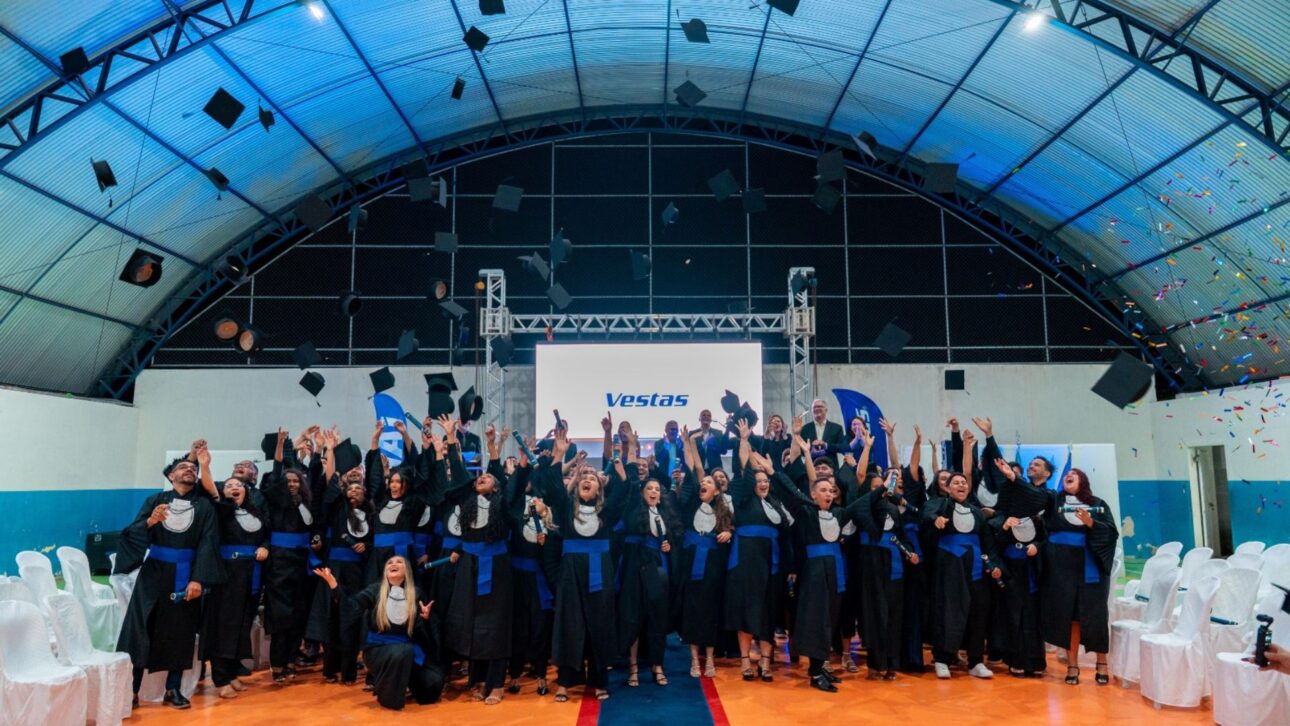
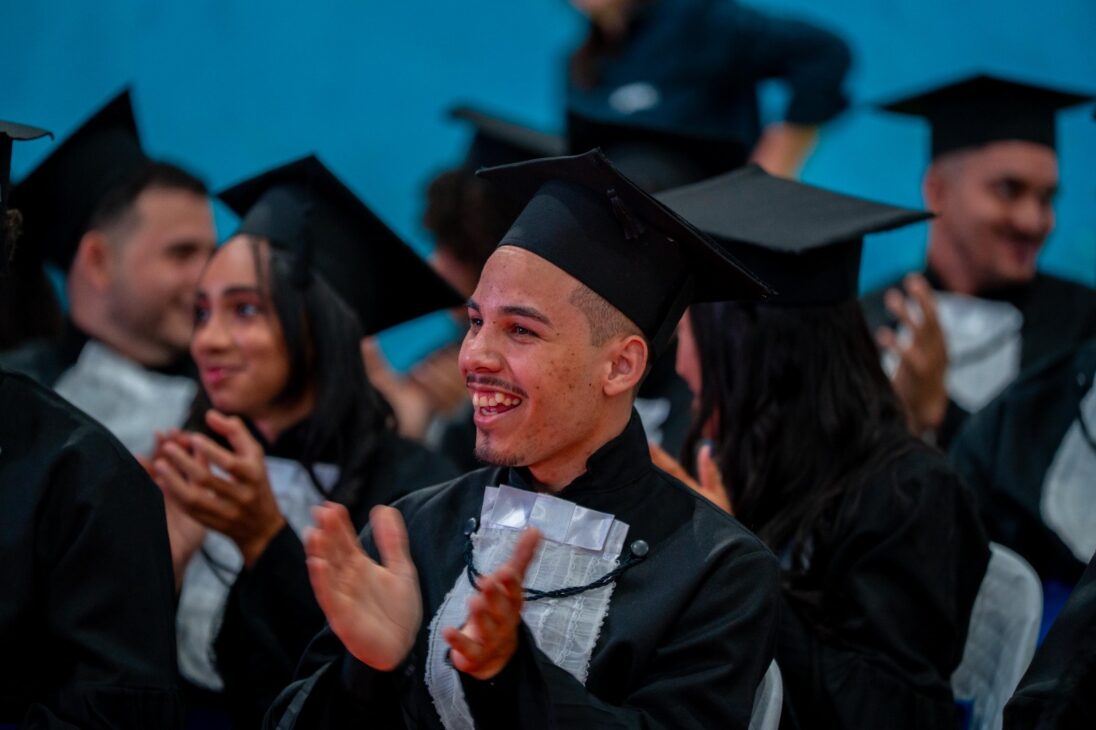
Vestas and SENAI-RN have completed in Lagoa Nova, in the interior of Rio Grande do Norte, the first class in the country of a technical course in Electromechanics specifically designed to meet the demands of the wind industry. The training marked the end of a two-year cycle aimed at qualifying the workforce for a sector that is regaining momentum in Brazil.
The initiative gained additional weight because it arises at a time when the Brazilian wind market is beginning to react after a period of slowdown. In recent months, Vestas announced two significant movements in the country, the Dom Inocêncio complex in Piauí, with 828 MW, and the Esquina do Vento project in Rio Grande do Norte, with 230 MW, totaling about 1.1 GW in capacity.
First class of technical course in Electromechanics for the wind industry was formed in Lagoa Nova with a direct focus on employability
According to SENAI-RN, the graduation ceremony marked the completion of the first Brazilian class of a technical program in Electromechanics structured for the reality of wind energy.
-
Brazil filled the Northeast with wind turbines but now faces the side effect of 705 giant blades reaching the end of their lifespan by 2032 just in Rio Grande do Norte, while the world projects 43 million tons of waste by 2050.

-
Brazil has filled the Northeast with wind turbines, but now it faces the side effect of 705 giant blades reaching the end of their useful life by 2032 just in Rio Grande do Norte, while the world projects 43 million tons of waste by 2050.
-
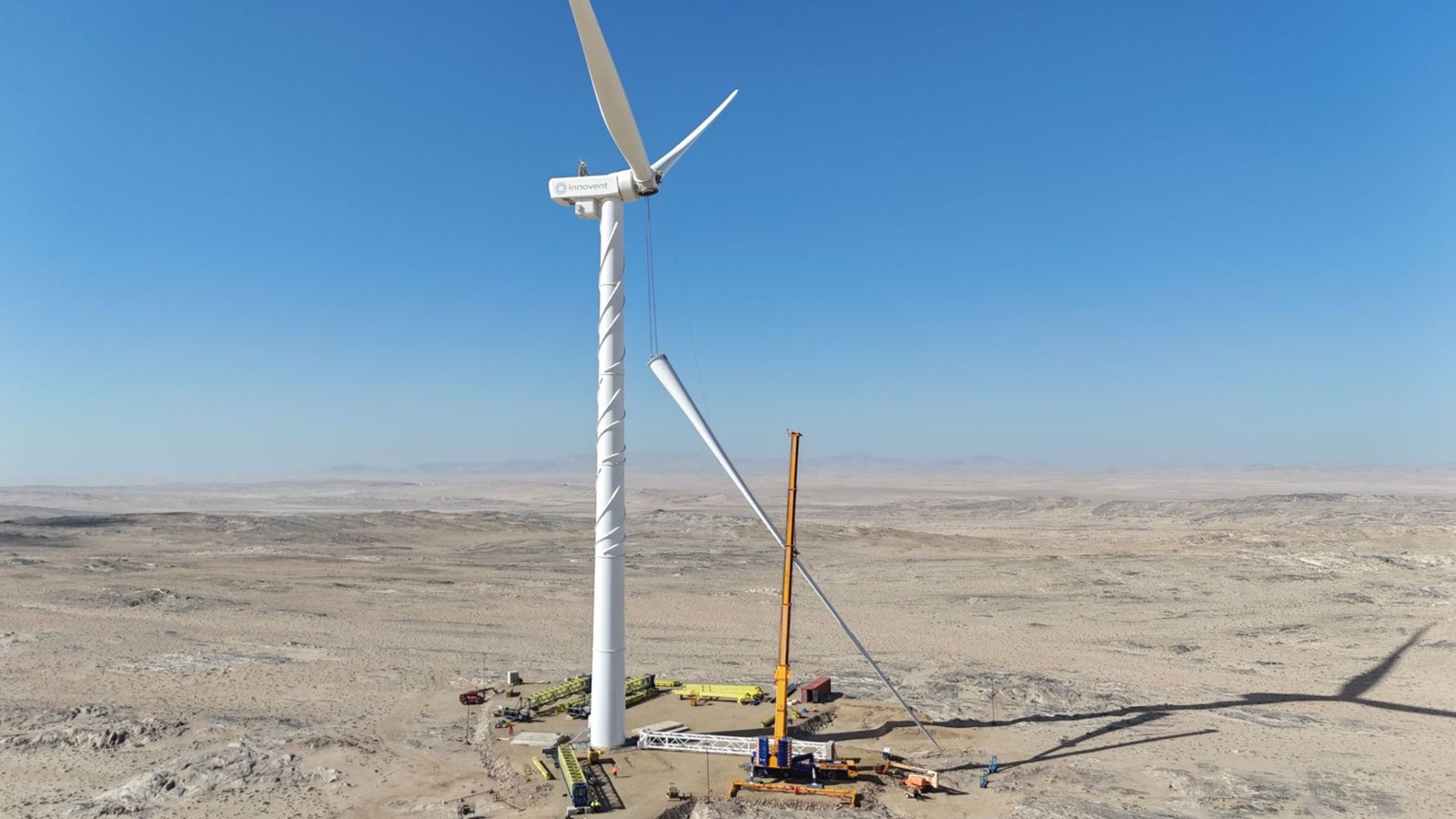
Wind farm in Namibia will have wind turbines assembled without giant cranes and is expected to avoid 200,000 tons of carbon dioxide per year when it becomes operational.

-
Taller than the Statue of Liberty, thousands of wind turbines are being planted in the middle of U.S. fields, creating two-story farms where corn and soybeans grow below while the wind turns into electricity above.


The course was held in Lagoa Nova (RN) and was born from the partnership between Vestas and SENAI-RN to bring professional education closer to the job market in one of the most strategic segments of the energy transition.
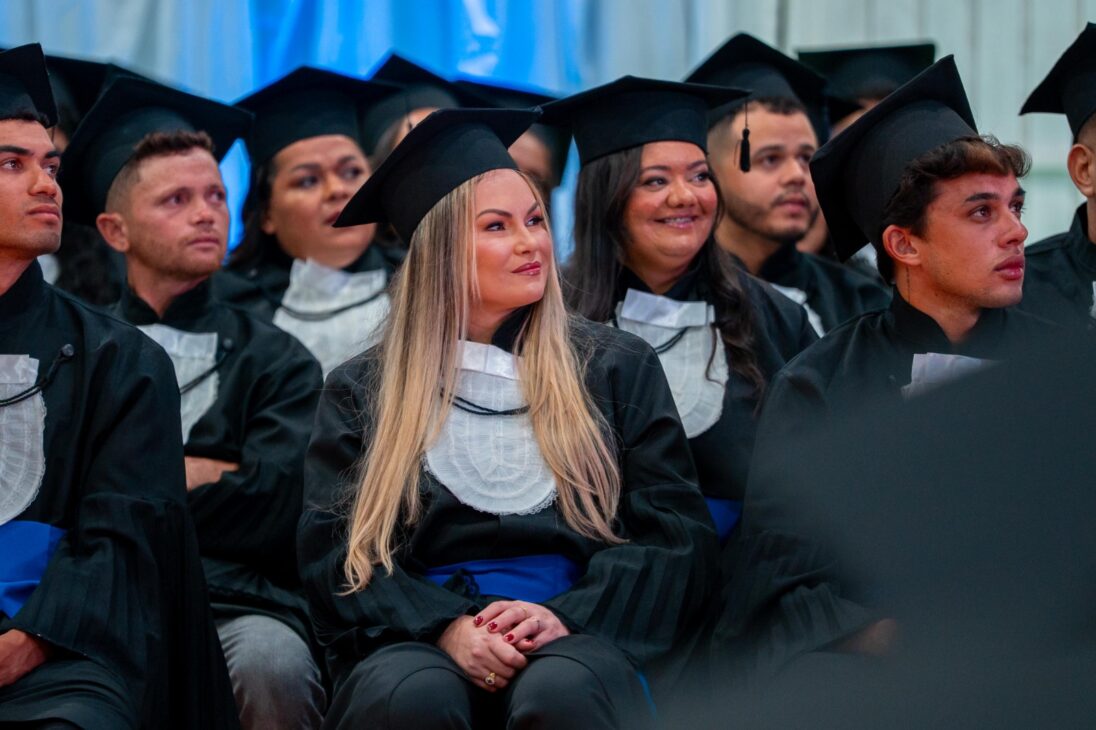
The training was designed to meet the concrete needs of field operations. The content was adapted to the industry’s routine, with an emphasis on skills related to maintenance, operation, and safety, reducing the gap between the classroom and the real demands of the sector.
The course had 1,440 hours and was offered free of charge. The activities combined classroom theory, laboratory practice, and training with the participation of instructors from CTGAS-ER, a SENAI-RN structure focused on gas and renewable energies.
“The partnership between SENAI and Vestas in the training of Electromechanical Technicians represents a strategic initiative to strengthen professional education and contribute to the development of talents prepared to meet the demands of the industry. For SENAI, the great challenge is to bring quality technical training to where the students are, promoting learning that combines theoretical knowledge and practical experience,” comments Amora Vieira – Director of SENAI/CTGAS—ER.
Partnership between Vestas and SENAI-RN bets on local technical training to meet the demand for wind energy in the Northeast
The model adopted by the partnership prioritized training in the very territory where the industry operates. SENAI-RN reported that the program was designed to qualify professionals in the interior of the state, strengthening the local workforce and increasing the chances of entering the job market in regions directly impacted by the expansion of wind farms.
The initiative also incorporated an inclusion agenda. According to SENAI-RN, half of the vacancies were allocated to women, in an attempt to increase female participation in a segment still marked by male predominance.
“Brazil has already demonstrated its competitiveness in renewable energy generation. The next growth cycle of wind energy will depend not only on new investments but also on the ability to develop talents and prepare people for the jobs that this energy transition will generate. Initiatives like this show that the energy transition is also a social transition, capable of creating real development opportunities for communities and strengthening the sector’s competitiveness in the long term,” states Eduardo Ricotta, CEO of Vestas for Latin America.
In addition to technical training, the program was structured to shorten the adaptation curve of students to wind turbines and industry processes. This logic helps explain why the partnership was treated by SENAI and Vestas as a pioneering model for the country and for the renewable chain itself.
Resumption of wind energy investments in Brazil reinforces the pressure for qualified professionals
The backdrop of the graduation is the reactivation of large wind projects in the country. In December 2025, Vestas announced with Casa dos Ventos a new agreement for the Dom Inocêncio complex, in the south of Piauí, with 184 V150-4.5 MW turbines and a total capacity of 828 MW. The company reported that construction is expected to begin in 2026 and that final commissioning is scheduled for 2028.
A few months later, in March 2026, the company announced the Esquina do Vento project, in Rio Grande do Norte, acquired by Equinor through Rio Energy. The project has 230 MW and will feature 51 V163-4.5 MW turbines, with installation expected to begin in March 2027.
Together, the two announcements served as a concrete signal of the large-scale wind market recovery in Brazil. In this scenario, the demand for more skilled technicians is growing, especially in areas related to assembly, operation, maintenance, and specialized services.
“Training talent is a strategic agenda for the future of the wind sector in Brazil. Therefore, we seek to build, together with SENAI, a pioneering program capable of bringing education and industry closer, preparing professionals to respond to the demands of an increasingly technological and sophisticated market,” highlights João Guilherme Alves, Vice President of People and Culture at Vestas for Latin America.
Technical course adapted to the wind industry aims to reduce the gap between professional qualification and sector expansion
One of the main objectives of the program was to address an old bottleneck in the industry: the difficulty of finding professionals already familiar with the reality of wind farms. SENAI-RN recorded that the curriculum was reviewed in conjunction with the company precisely to align technical training with the specific demands of the sector.
This strategy gains importance in a market that becomes more technological and demanding with each new investment cycle. Instead of relying solely on generalist courses, the partnership sought to prepare students with a repertoire more aligned with the operation and industrial environment of renewable energy.
The result is a training with a more applied profile and with the potential for a quicker response to the needs of companies. For the wind sector, this means reducing adaptation time, increasing productivity, and sustaining growth with trained professionals closer to the operation hubs.
“Our partnership with SENAI began more than five years ago, through different initiatives aimed at social development and talent training. Throughout this journey, we have impacted more than 250 people. This program represents a natural evolution of this collaboration by bringing education and the job market even closer, creating concrete opportunities for young people and strengthening the development of the regions where we operate,” says Luciana Leite, Marketing Communications & ESG Strategist at Vestas for Latin America.
Lagoa Nova becomes a showcase for professional training in the wind sector at a decisive moment in the energy transition
The choice of Lagoa Nova was not by chance. The municipality is located in a strategic region for wind energy in the Northeast, and local training reinforces a logic increasingly valued by the industry: generating qualification and opportunity near the generation assets.
With the completion of the first class, the partnership between Vestas and SENAI-RN becomes a reference for new training initiatives aimed at the wind chain. The combination of technical education, applied practice, and direct connection with the market places the program at the center of a larger discussion on how to prepare workers for the next phase of renewable expansion in Brazil.
In a sector where new billion-dollar contracts are reappearing, training professionals has ceased to be just an education agenda. It has become part of the necessary infrastructure for the wind energy revival to truly translate into employment, industrial competitiveness, and regional development.
“This program was born from the understanding that the sustainable growth of the wind industry necessarily involves the training of people. The result we celebrate today was only possible thanks to the extraordinary commitment of the Vestas and SENAI teams, who went beyond expectations to build a pioneering model in the country. More than training professionals, we are contributing to prepare the next generation of talents that will support the development of the Brazilian wind sector,” says Maycon Silva, Head of the LATAM Vestas Academy.