






 Portuguese
  Spanish
  2 min of reading
  0 comments


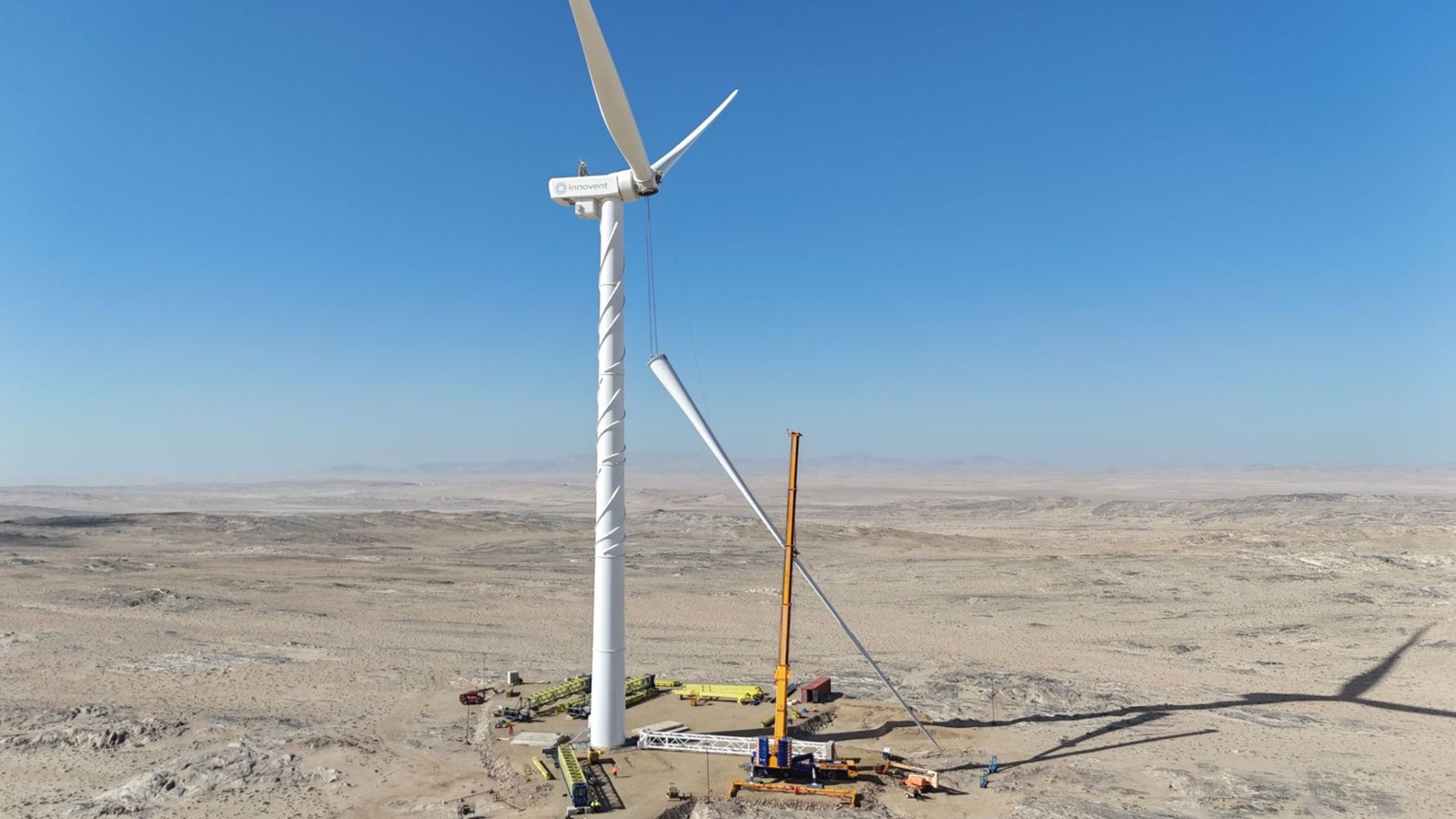
Project at InnoVent Diaz wind farm demonstrated the installation of a Goldwind GW165/6000 turbine of 6 MW without a traditional crane, using a self-assembly system in desert conditions, with strong winds, target of seven units and expected generation of 230 gigawatt-hours per year
Installation in the Namibian desert shows how new self-assembly techniques can reduce dependence on heavy cranes in renewable projects, allowing the erection of 6 MW wind turbines in remote areas, with strong winds and a goal to expand clean generation in the country.
A 6-megawatt wind turbine was installed at the InnoVent Diaz park in Namibia without a traditional crane. The advancement by Nabrawind shows how wind turbines can reach remote areas.
Wind turbines advance without heavy cranes
The installation involved the first Goldwind GW165/6000, conducted by Nabrawind, a company acquired by Fortescue. The method addresses a common limitation in remote parks: transporting cranes over remote terrains.
-
Brazil filled the Northeast with wind turbines but now faces the side effect of 705 giant blades reaching the end of their lifespan by 2032 just in Rio Grande do Norte, while the world projects 43 million tons of waste by 2050.

-
Brazil has filled the Northeast with wind turbines, but now it faces the side effect of 705 giant blades reaching the end of their useful life by 2032 just in Rio Grande do Norte, while the world projects 43 million tons of waste by 2050.
-
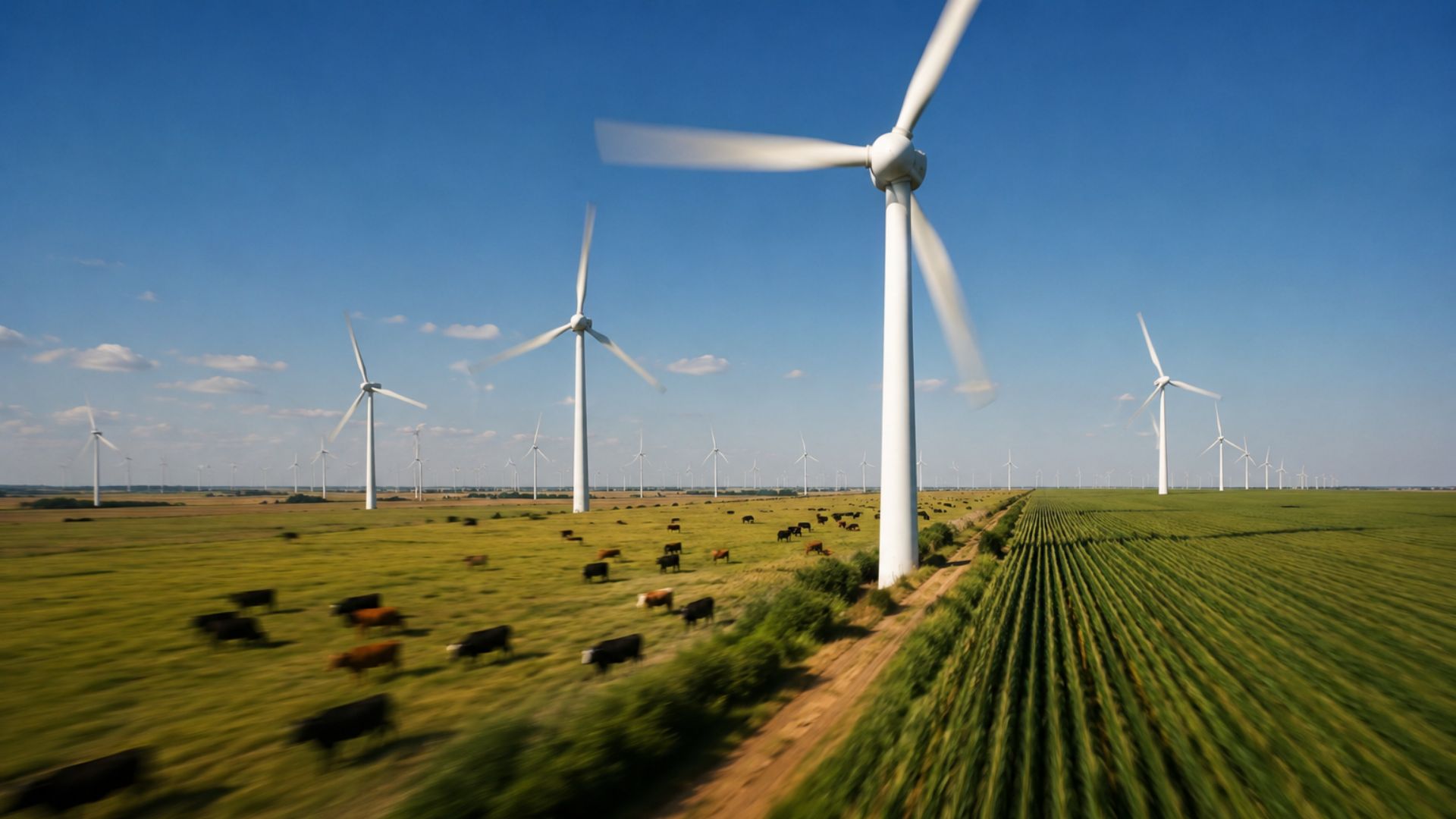
Taller than the Statue of Liberty, thousands of wind turbines are being planted in the middle of U.S. fields, creating two-story farms where corn and soybeans grow below while the wind turns into electricity above.
-
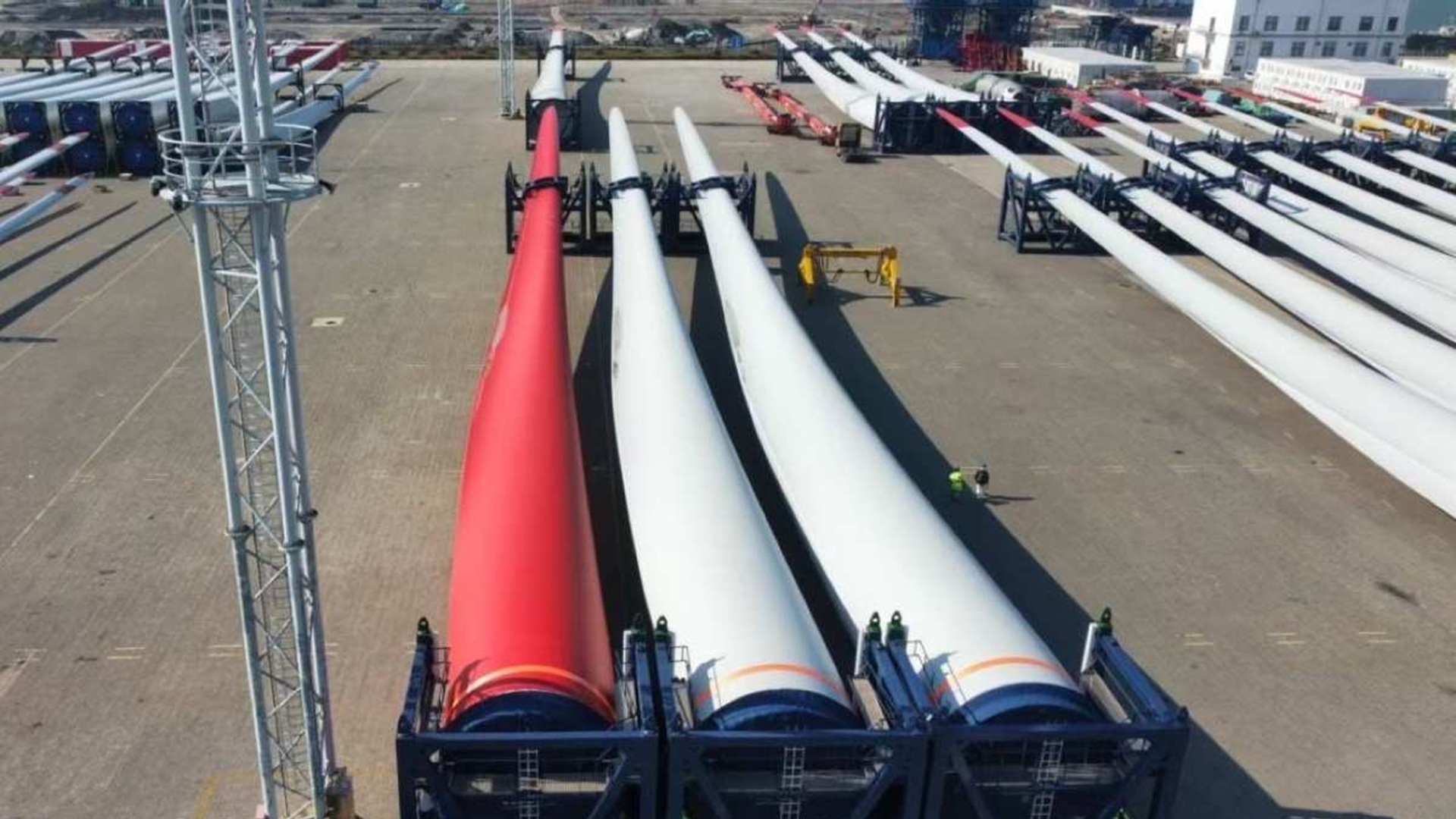
Dongfang breaks world record and manufactures 26 MW wind turbine in China with 137-meter blades that spin so slowly they appear stationary on the horizon.



Besides the transportation, the wind often interrupts critical stages. Conventional cranes cease to operate safely when the speed exceeds 21.5 to 28.7 km/h. In the Namibian desert, the team worked with winds of 54 km/h and gusts of 72 km/h.
Self-assembly system changes the operation
The solution used the Total Self-Assembly System, known as SES, and Skylift technology. With the update, teams can lift tower models after the main rotor is positioned between 30 and 40 meters.
The system allows lifting thin-walled sections without compromising strength. For the direct-drive Goldwind turbine, engineers created a specific procedure to handle heavy generator parts and keep the rotor stable.
After raising the first section of the tower and the nacelle, two blades were fixed at a 30-degree angle to the ground. A counterweight stabilized the assembly. Then, the BladeRunner replaced the counterweight with the third blade.
Park expected to generate clean energy for Namibia
The InnoVent Diaz will have seven Goldwind GW165/6000 turbines without the use of cranes. The goal is to reduce assembly to a net cycle of one week on the seventh unit.
The final project also includes four XMEC-Darwind XE93-2000 turbines on Nabrabase foundations. Connected to the grid, the park is expected to generate 230 gigawatt-hours per year, supply 6% of Namibia’s electricity, and avoid 200,000 tons of carbon dioxide annually.







Be the first to react!