






 Portuguese
  Spanish
  6 min of reading
  0 comments


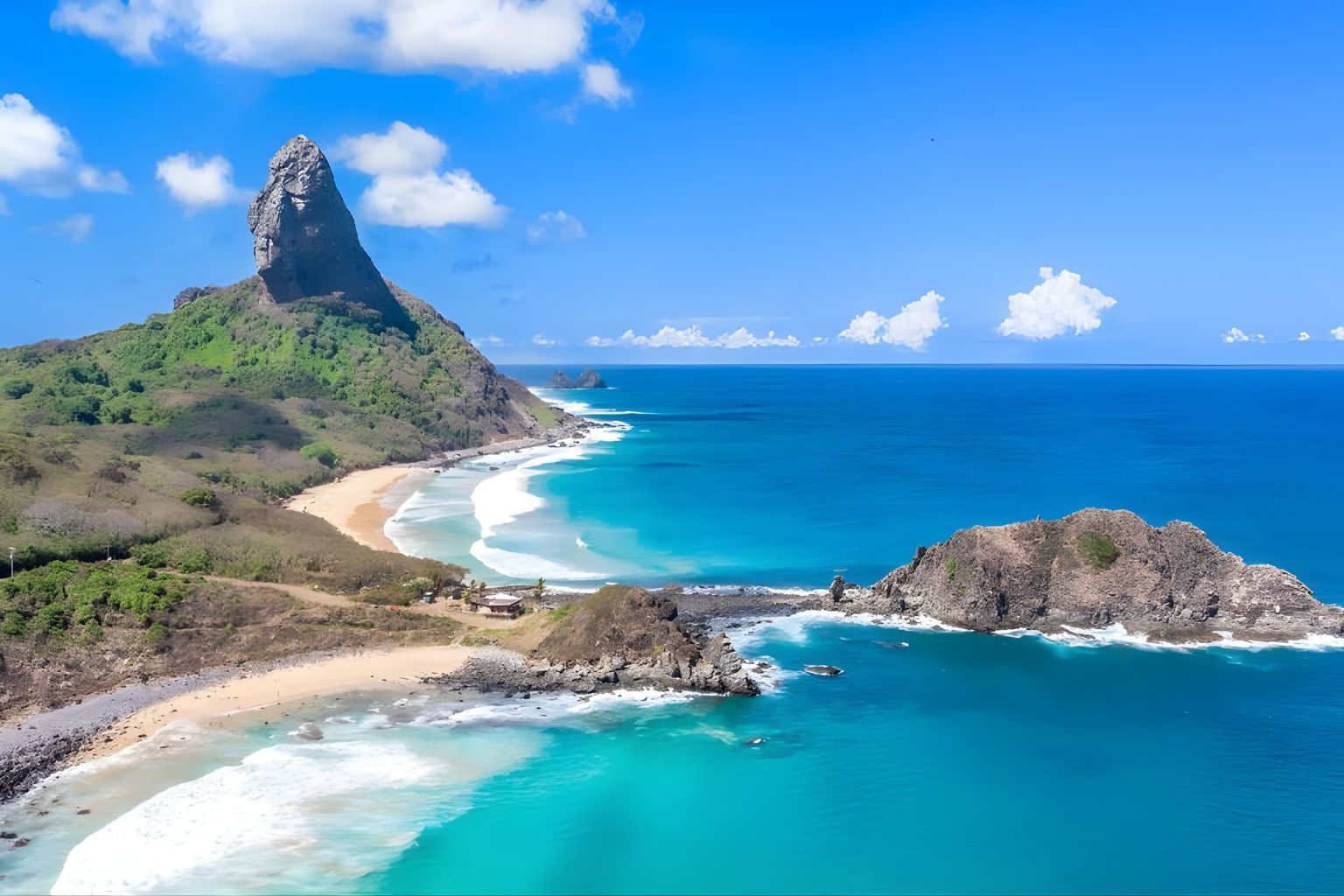
Baía do Sancho Is Elected Best Beach in the World for the 7th Time by TripAdvisor 2025 and Reinforces Sustainable Model That Generated R$ 41.5 Million in Environmental Fees in 2024, Consolidating Fernando de Noronha as a Global Reference in High-Value Tourism.
Baía do Sancho was elected the best beach in the world for the seventh time in the TripAdvisor Travelers’ Choice Best of the Best 2025 ranking. The award consolidated a sustainable economic model that generated R$ 41.5 million in revenue from environmental preservation fees alone in 2024. This victory positions Fernando de Noronha as a global reference in high-value tourism with controlled environmental impact.
Located in Fernando de Noronha Marine National Park 354 kilometers off the coast of Pernambuco, the beach integrates an exclusive economic model. The archipelago limits visitation to 246 tourists per day in protected areas, ensuring exclusivity while preserving the ecosystem. This strategy allows for premium pricing, generating R$ 500 million annually in the local economy, according to data from the island’s administration.
Seventh Victory Consolidates Global Premium Positioning of Baía do Sancho/Praia do Sancho
International recognition by TripAdvisor marks the seventh historic win for Baía do Sancho in the global ranking. The Brazilian beach won in 2014, 2015, 2017, 2019, 2020, 2023, and 2025, surpassing traditional destinations such as the Caribbean, Maldives, Hawaii, and Greece. The title is based on over 8,700 five-star reviews from real travelers over the past 12 months, placing the destination among the top 1% of the eight million attractions listed globally.
-
Brazilian Joins Homeownership Consortium, Faces Decade of Dual Payments Totaling $141,000, Surpassing Traditional Mortgage

-
Land Rover to Halt Production in July, Putting 371 Jobs at Risk, as Chinese Automaker Negotiates to Convert Factory to 100,000 Vehicles Annually by 2027

-
Mexican Pest Threatens U.S. Cattle Herds at Historic Lows, Potentially Boosting Brazilian Beef Exports as Burger Prices Soar

-
Brazilian Freight Bill Progresses in Congress with $5,000 Minimum Wage, 70% Advance Payment, and Fines Up to $1 Million, as Agriculture and Industry Warn of Rising Costs and Legal Uncertainty


Consecutive victories create an international brand that justifies premium pricing across the entire tourism chain. Five-star inns such as Maravilha charge R$ 5,000 per night, while mid-range options range between R$ 2,000 and R$ 3,500.
Even more affordable accommodations cost a minimum of R$ 400 per day. Meals in restaurants range from R$ 150 to R$ 300 per person.


Visitor profile with high purchasing power generates an economic multiplier greater than 1.80 according to a study by the Ministry of the Environment.
Every real invested in tourism generates an additional R$ 1.80 in the local economy through a ripple effect. The average expenditure per tourist reaches R$ 5,000 during an average stay of five days in the archipelago.
Preservation Fee Generates R$ 41.5 Million Annually
The Environmental Preservation Fee charged to all non-resident visitors represents the main source of public revenue for the district. The fee was increased to R$ 105.79 per day in January 2026, following the variation of the IPCA. The charge generated R$ 41.5 million in revenue during 2024, with the arrival of 132,000 tourists over the year.
The fee structure adopts a progressive model to discourage prolonged stays. A visitor staying seven days pays R$ 709, while a 15-day stay costs R$ 1,673. Those who exceed the authorized period are charged double for each additional day. This mechanism controls flow, keeping capacity within established environmental limits.

Revenue from the TPA finances essential infrastructure, environmental conservation, desalinated water systems, and sewage treatment.
Resources also fund the oversight of protected areas, scientific research on marine biodiversity, and educational programs for visitors. An investment of R$ 1.2 million in a new desalination plant expands water supply, supporting sustainable tourism.
Entry to the Marine National Park costs R$ 192 per person, valid for 10 days. ICMBio raised R$ 12.6 million just from ticket sales in 2024. The park covers 70% of the archipelago, including famous beaches like Sancho, Leão, Sueste, and Atalaia. Entry is a mandatory requirement to access main tourist attractions.
Visitor Limit Creates Economic Exclusivity
A shared management agreement approved by the STF sets a cap of 132,000 annual visitors and 11,000 monthly. The quantitative restriction was exceeded in 2025 when the park received 139,901 people, generating a debate about capacity.
The limit acts as a natural filter, creating a perception of exclusivity that justifies high prices across the entire value chain.

Access control to Baía do Sancho restricts visitation to 246 people per day within the National Park. A vertical staircase embedded in rock fissures with 208 steps serves as an additional natural barrier. Only 30% of the island’s visitors access the beach daily due to physical challenges and time limitations.
The economic model concentrates revenue from a smaller volume of tourists with greater purchasing power. This strategy contrasts with mass tourism destinations where millions of visitors pay low prices, causing environmental degradation. Noronha receives 15 times fewer tourists than Cancun, generating 12 times the per capita income according to comparative analysis.
The predominant profile consists of high-income Brazilians representing 92% of visitors. The Southeast accounts for 45% of the flow, followed by the Northeast with 34% and the South with 13%. Foreigners represent only 8%, with the majority being Argentinians, Italians, North Americans, French, and Germans. The goal for 2026 is to raise international participation to 15%.
Tourism Generates 4,000 Direct Jobs in Small Island
The tourism activity directly employs 4,000 people on an island with a population of only 3,000 permanent residents.
This proportion demonstrates the local economy’s total dependency on visitor flow. Jobs concentrate in hospitality, representing 30% of occupations, tour agencies at 27%, and restaurants completing the service chain.
Seasonality affects occupancy throughout the year. Inns operate at an average occupancy rate of 50% to 60%, but the period between September and October reaches nearly 80% capacity. The months of August to November see the highest demand due to favorable weather conditions with less rain and calmer seas ideal for diving.
Jobs generated present a higher multiplier than other economic activities. Each direct position in tourism creates 1.8 indirect jobs in sectors such as transportation, construction, commerce, and services. This model sustains entire families as the island has no other relevant productive activities besides small-scale artisanal fishing.
Professional training has become an essential requirement. Sebrae and Empetur offer regular training for tourism agents, accredited guides, inn managers, and local entrepreneurs. Programs focus on hospitality, languages, sustainable practices, and meeting the profile of premium customers seeking personalized experiences.
Model Becomes a Benchmark Copied by 30 Countries
The environmental management system of Fernando de Noronha has become an international case study. More than 30 countries have consulted the island’s administration to replicate a model that balances preservation with income generation. Destinations such as Galapagos in Ecuador, Seychelles in Africa, and Raja Ampat in Indonesia adapted principles of visitor limitation and progressive fees.
Recognition as Natural Heritage of Humanity by UNESCO since 2001 validates this approach. The title attracts conscious visitors willing to pay a premium for experiences in a genuinely preserved environment.
International certification works as a quality seal, distinguishing Noronha from destinations degraded by predatory tourism.
Researchers point out that maintaining environmental quality is essential for long-term economic sustainability. Degradation of coral reefs, water pollution, or disturbance of marine wildlife would destroy the foundation of the tourism business. Investment in conservation represents insurance for future generations to maintain their source of income.
A shared management agreement between the federal and state governments establishes a replicable framework. The Union administers the National Park through ICMBio, while the State of Pernambuco manages the state district, collecting the TPA. A clear division of responsibilities eliminates historical conflicts, allowing focus on measurable results.
Challenges of Sustainable Growth
Exceeding the limit of 132,000 annual visitors in 2025 raised a red flag. A total of 139,901 people accessed the park, representing 5% above the established ceiling. ICMBio points out that airlines did not respect maximum occupancy restrictions per flight after the return of large aircraft in March 2025.
Overload affects critical infrastructure systems. The supply of desalinated water, sewage treatment, and waste collection operate at technical limits. Additional pressure on sensitive areas such as Praia do Atalaia and Baía dos Golfinhos increases the risk of irreversible damage to the marine ecosystem.
The administration is considering tightening inspections and increasing fines for operators who violate agreements. Environmental infractions accumulated R$ 6.8 million in fines imposed between 2019 and 2024. There were 58 infractions recorded, 18 seizures, nine embargoes, and two destructions related to non-compliance with protection norms.
Debate over revising the visitor cap divides managers. Visite Fernando de Noronha argues that the limit was not based on robust technical studies and structural improvements would allow for more tourists. ICMBio argues that carrying capacity should prioritize conservation over short-term economic gains.
Baía do Sancho proves that an economic model focused on quality surpasses volume in unique natural destinations. The seventh victory in the world ranking reinforces premium positioning, generating R$ 500 million annually with controlled environmental impact. The challenge for the next decade is to maintain a balance between economic growth and preservation that supports the brand.





-

1 person reacted to this.