Portuguese
  Spanish


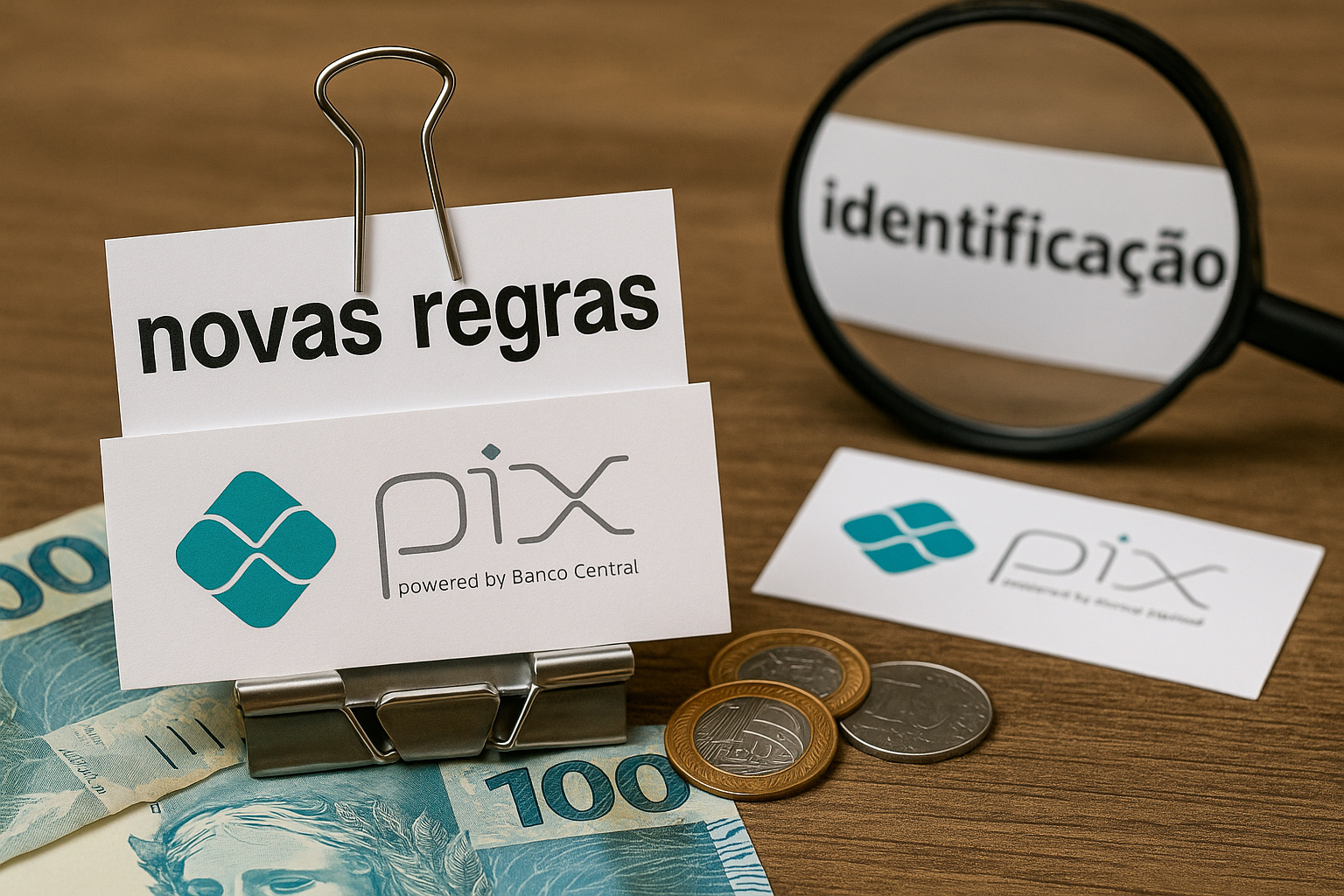


The Central Bank Determined That Banks Strengthen the Identification of Unusual Transactions in Pix by Adopting Their Own Mechanisms and Evaluating Historical and Behavioral Patterns
The Central Bank published, on November 18, 2024, a resolution that alters how direct participants of SPI monitor unusual transactions.
The regulation, signed by Monetary Policy Director, Nilton José Schneider David, comes into effect on December 1, 2024, requiring immediate adjustments.
As a result, the regulatory framework of Pix is undergoing one of the most significant changes since 2020.
How SPI Works and Impact on Security
The SPI, created by the Central Bank and initiated in November 2020, acts as centralized infrastructure to settle each transaction between institutions.
Thus, the system processes transactions in real-time, ensuring agility.
For this reason, the Central Bank asserts that security depends on continuous monitoring, as all settlements occur in PI Accounts, maintained by the Central Bank itself.
Mandatory Identification of Unusual Patterns
The resolution requires institutions to identify “possible fraud and unusual transactions based on historical and behavioral patterns”.
Thus, banks must assess deviations and immediately interrupt suspicious transactions, preserving security and operational integrity.
In addition, the Central Bank emphasizes that this analysis must occur in real-time, without delays.
-
Major Appliance Manufacturer Closes Factory in Argentina, Shifts Production to Brazil, and Restructures in Latin America with Mexico Closure, Investing Up to $165 Million

-
China to Revive $3.6 Billion Mega-Dam Project in Myanmar, Stalled Since 2011, Promising 6 GW Capacity and Completion in Eight Years

-
Foreign Company Wins Auction for Brazil’s First Immersed Tunnel, a $1.3 Billion Project with $14 Million Contract Under Federal Investigation

-
China’s Century Megaproject Wows the World: Massive Water Transfer Network Moves Water from Wet South to Arid North, with Ambitious Plans in the Tibetan Plateau Involving Giant Tunnels at Altitudes up to 4,000 Meters




Authorization for Manual Blocks and Unblocks
Another important change appears in the permission to perform manual blocks and unblocks of payment orders.
Thus, institutions will be able to configure parameters such as minimum balance amount and intensity level of communications regarding unusual transactions.
In this way, each participant will adjust internal controls aligned with operational risk.
Immediate Adaptation Requirement for Institutions
According to the Central Bank, institutions need to review processes, train teams, and adapt systems by December 1, 2024, the official deadline for implementation.
Consequently, the ability to respond quickly becomes essential to ensure regulatory compliance.
Central Objective of the Changes
The Central Bank emphasizes that Pix has evolved since 2020, and therefore, the system requires periodic updates.
Thus, the new rules aim to enhance security, reduce risks, and strengthen the reliability of the instant payment ecosystem.
In addition, the agency states that it will continue to analyze operational data to adjust future regulations when necessary.
Responsibility of Participating Institutions
With the changes, it is evident that direct participants need to strengthen internal controls and adopt preventive measures continuously.
Thus, the Central Bank reinforces that the stability of the SPI directly depends on the rigorous actions of financial institutions.
And you, do you believe these changes will bring more stability to the Pix ecosystem?