






 Portuguese
  Spanish


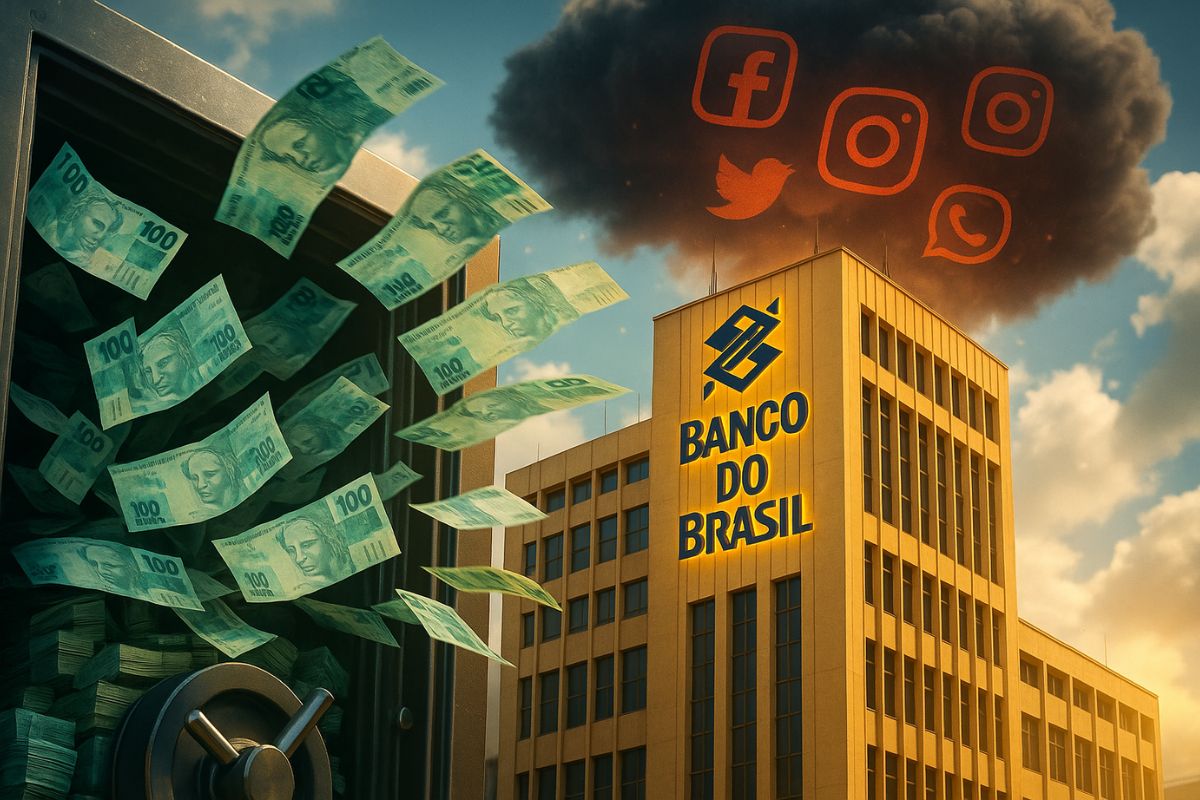


Is Banco do Brasil Going to Fail? Mass Withdrawals Raise Doubts About Fake News and Financial Stability. Raul Sena Explains Why Rumors of Banco do Brasil’s Bankruptcy Lack Technical Basis and How Misinformation Can Cause Panic
In recent weeks, rumors about mass withdrawals have raised the question: “Is Banco do Brasil going to fail?” The spread of false information on social media has made customers worry about the institution’s solidity, even though there is no evidence of immediate risk. According to financial analyst Raul Sena, known as “Investidor Sardinha,” this is a classic case in which fake news can create an artificial bank run.
The topic gained momentum after the release of a decline in the bank’s profits in its latest report. The reduction was misinterpreted by some content creators, who suggested a risk of bankruptcy. The result was the propagation of rumors about international restrictions and liquidity problems, forcing the institution itself and Brazilian authorities to officially refute the claims.
Why Did the Rumor That Banco do Brasil Is Going to Fail Arise?
According to Raul Sena, the origin of the panic lies in the misinterpretation of the balance sheet numbers. Banco do Brasil reported a 60% decline in net profit and signaled a reduction in dividend payments, measures that are normal in market adjustments. However, some channels distorted this data, insinuating that the institution was on the verge of bankruptcy.
-
Brazil’s 2026 Tax Refund: Record 9.58 Million Filers in Largest Payout Ever, But a Key Detail on Priority Recipients Draws Nationwide Attention

-
Itaú Alters Hybrid Work Model, Increasing Office Days from 2028, Prompting Employees to Adjust to New Routine
-
Facing Labor Shortage, Japan Plans to Invest $34 Million to Attract Foreign Workers in Construction, Healthcare, Industry, and Commerce

-
Brazilian City Makes Remarkable Leap, Becomes 4th Wealthiest in the Country with GDP of R$ 134.1 Billion




The situation worsened because, when talking about “mass withdrawals,” part of the public began to withdraw funds, reinforcing the sense of instability. This psychological effect is common in the financial sector: it only takes the perception of risk for the problem to become real, even without technical foundations.
Can Banco do Brasil Go Bankrupt?
According to experts, the answer is no. Banco do Brasil is controlled by the Union, which holds 51% of the shares, ensuring support in case of need. If the institution faced severe difficulties, there would be public capital injection or special credit lines from the Central Bank and BNDES.
Moreover, the bank plays a central role in financing agribusiness and paying public servants. Allowing Banco do Brasil to fail would mean compromising entire sectors of the economy, which is politically and financially unfeasible. Raul Sena emphasizes that the only way the bank could “fail” would be in a scenario of national economic collapse — which would involve the entire state structure, not just one institution.
What Is Really Happening with Withdrawals?
The reports of “mass withdrawals” have not been confirmed by official numbers. What happened was isolated movements by clients scared by false news. The institution’s international branch, BB Americas, even issued a statement denying liquidity problems and announcing legal measures against those responsible for the misinformation.
In Brazil, the Attorney General’s Office was also called to investigate profiles that spread rumors about the supposed bankruptcy. The legislation itself provides limits on withdrawals and protection mechanisms, preventing a bank of this size from running out of funds overnight.
The Systemic Risk of Financial Fake News
More than a real crisis, the episode shows how misinformation can shake confidence in solid institutions. Content creators can manipulate public perception for their own gain, whether by attracting followers or benefiting financial interests.
For consumers, the recommendation is clear: do not base financial decisions on social media rumors, but seek official data in reports from the Securities and Exchange Commission (CVM), Central Bank, and communications from the institution itself.
The question “Is Banco do Brasil going to fail?” has gained traction in recent weeks, but lacks technical support. The institution remains solid, backed by the federal government and essential for the economy’s functioning. What exists, in practice, is a warning about the dangers of fake news in the financial market.
And you, do you believe that rumors like this can really shake confidence in state banks or do you think that Banco do Brasil’s solidity is sufficient to withstand? Share your opinion in the comments — we want to hear from those living this reality.









Não confio nem no BB, nem na notícia e nem no governo. Se der prejuízo o governo banca com nossa grana, não precisa se preocupar. Tem gente criticando o financiamento para o agro, quero ver o que vocês vão comer quanfo não plantarem mais nada no país.
Incrivel como a mídia se esforça em distorcer a realidade! A grande maioria das pessoas comuns, correntistas de bancos, não acompanham tais relatórios, ou sequer entendem de mercado financeiro. O que motivou os saques em massa, são as sanções da lei Magnitsky, após o banco declarar que não irá seguir a norma. Sejam mais honestos, a maior fonte de fake news da atualidade, é a imprensa. 🥱
O problema é que o governo não transmite confiança e o país não demonstra instabilidade jurídica isso nos deixa apreensivos mais temos que ter cautela. Boatos são prejudiciais.