Portuguese
  Spanish


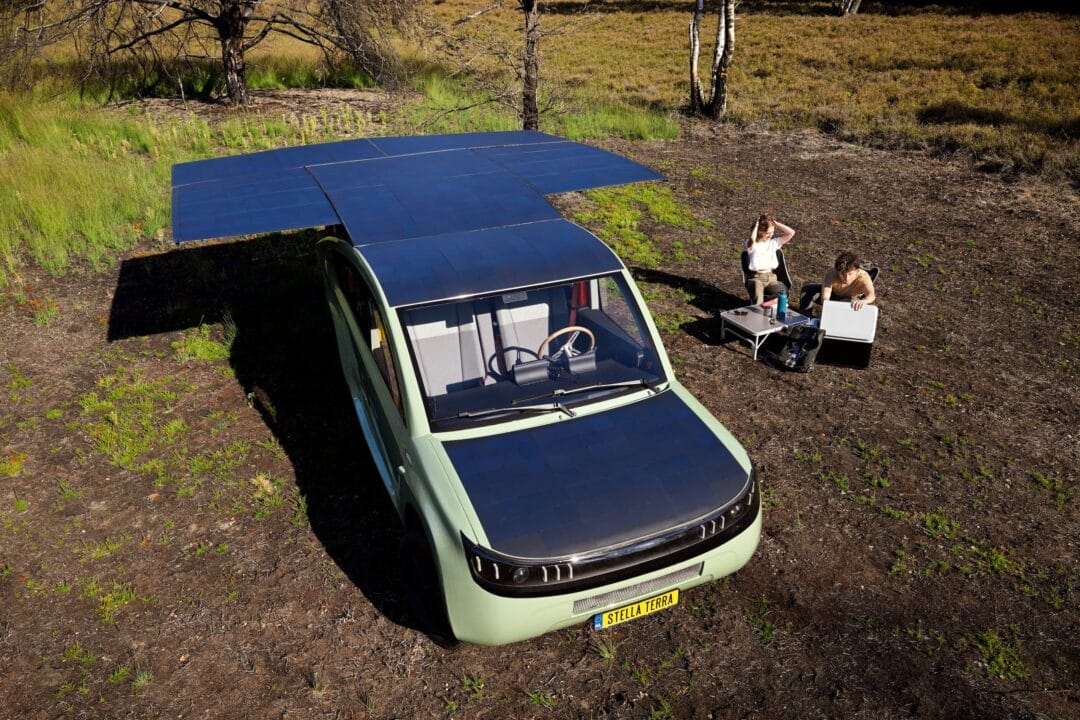

Researchers From Holland Developed A Solar-Powered Car Capable Of Delivering 700 Km Of Range. The Solar-Powered Car Reaches 97% Efficiency.
A solar-powered car developed by students aged up to 25 completed a test drive of no less than 1,000 km in tests in northern Africa. It is considered the first in the world with the capacity to cover long distances “off-road”, that is, off the road, without recharging.
Meet The Solar-Powered Car That Delivers Over 710 Km Of Range
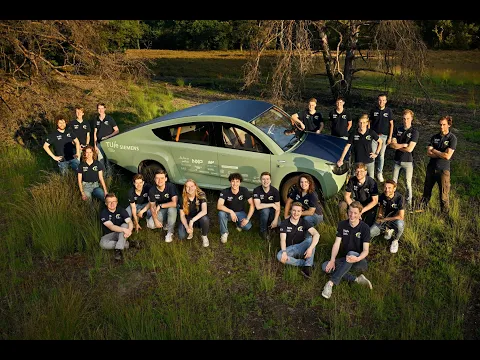

Called Stell Terra, the model is the result of the work of 22 students from the Eindhoven University of Technology in the Netherlands. The solar car operates with energy generated by solar panels in its body, can reach a maximum speed of 145 km per hour, and has a range of at least 710 km on a sunny day, according to the developers.
Wisse Bos, manager of the Solar Team Eindhoven, stated in a university statement that the technology used in the solar-powered car, which combines a lightweight structure with very efficient solar panels, is a decade ahead of any product on the market.
-
Fired during apartheid and with a little borrowed money, an electrician started with a borrowed truck and transformed electrical services into a group connected to energy, real estate, and infrastructure in South Africa.

-
Wood has ceased to be just a construction material in Yale research and has become insulation for electrical transformers that face intense heat, aging, and increasing pressure from the renewable energy-powered grid.
-
More than 1,000 residents of a remote island in Kiribati now have clean water and electricity with solar systems operated by the community itself.
-
End of an era in Brazil: beloved sedan by Brazilians is discontinued despite having a 2.0 engine with 151 hp, CVT transmission, 466-liter trunk, and up to 650 km of range.



During tests, the solar car consumed 30% less energy than expected, according to the team. The solar car must withstand harsh off-road conditions, remaining efficient and light enough to be powered by the sun.
In this way, the students had to develop almost everything, from the suspension to the inverters of the solar panels. The model is pushing the limits of technology. The solar-powered car features a rechargeable lithium-ion battery, which also allows it to operate in less favorable climates, albeit over shorter distances.
Solar-Powered Car Achieves 97% Efficiency In Converting Solar Light
The custom converter of the solar car for the solar panels achieved an established efficiency of 97% in converting light absorbed by the photovoltaic cells into electric charge. So much so that the car has enough electricity to charge devices like cell phones or a camera.
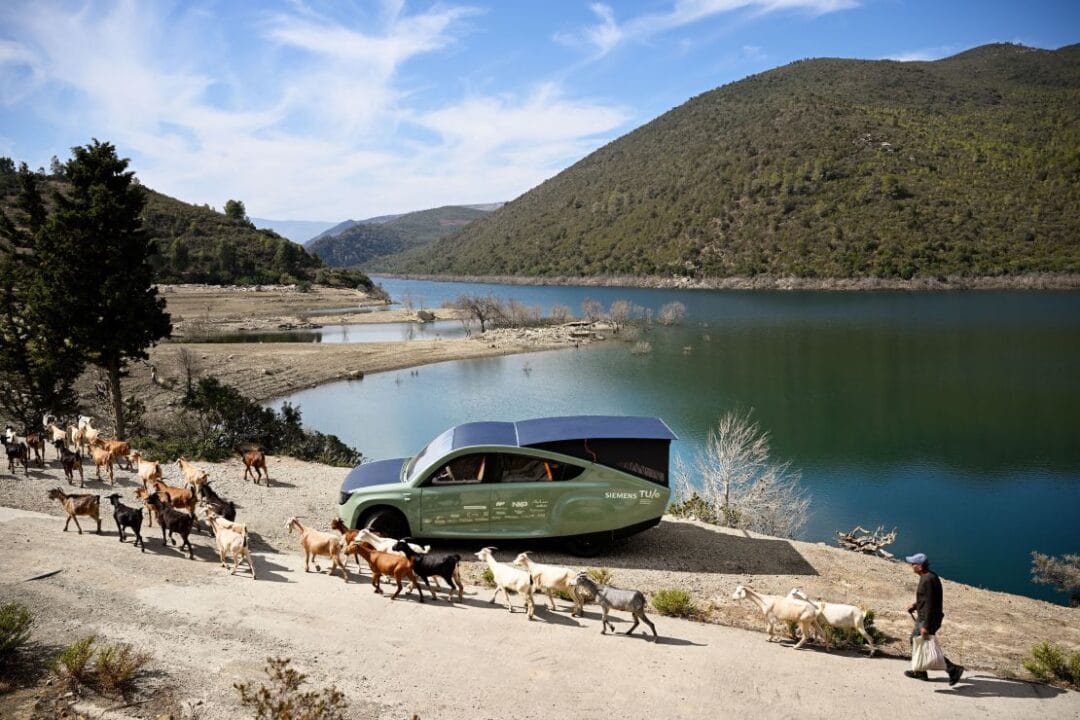
The steering system presented some failures during the tests; however, it was quickly corrected, according to the project’s technical manager, Bob van Ginkel, 24. The solar-powered car was indeed very comfortable in off-road conditions, as it is much lighter and does not get stuck.
Ginkel also highlighted that his team estimates that the experiment with the solar-powered car could inspire other electric vehicle manufacturers like BMW and Land Rover to make the industry increasingly sustainable and clean.
Challenge Faced By The Developers
Currently, what is considered the biggest challenge in developing solar-powered cars is the limited surface area to place the panels.
Highly efficient panels that can generate enough energy to power vehicles for long distances are expensive to manufacture, and the most efficient ones sold on the market typically achieve around 45% efficiency, while many have about 15% to 20% efficiency.
However, with the successful tests conducted with the solar-powered car, Stella Terra, the team from Holland estimates that having such vehicles in people’s daily lives will become much easier. According to Bos, the development team wants to demonstrate that it is possible to be optimistic about the transition to a sustainable future and encourage individuals and companies to drive the energy transition.