Portuguese
  Spanish


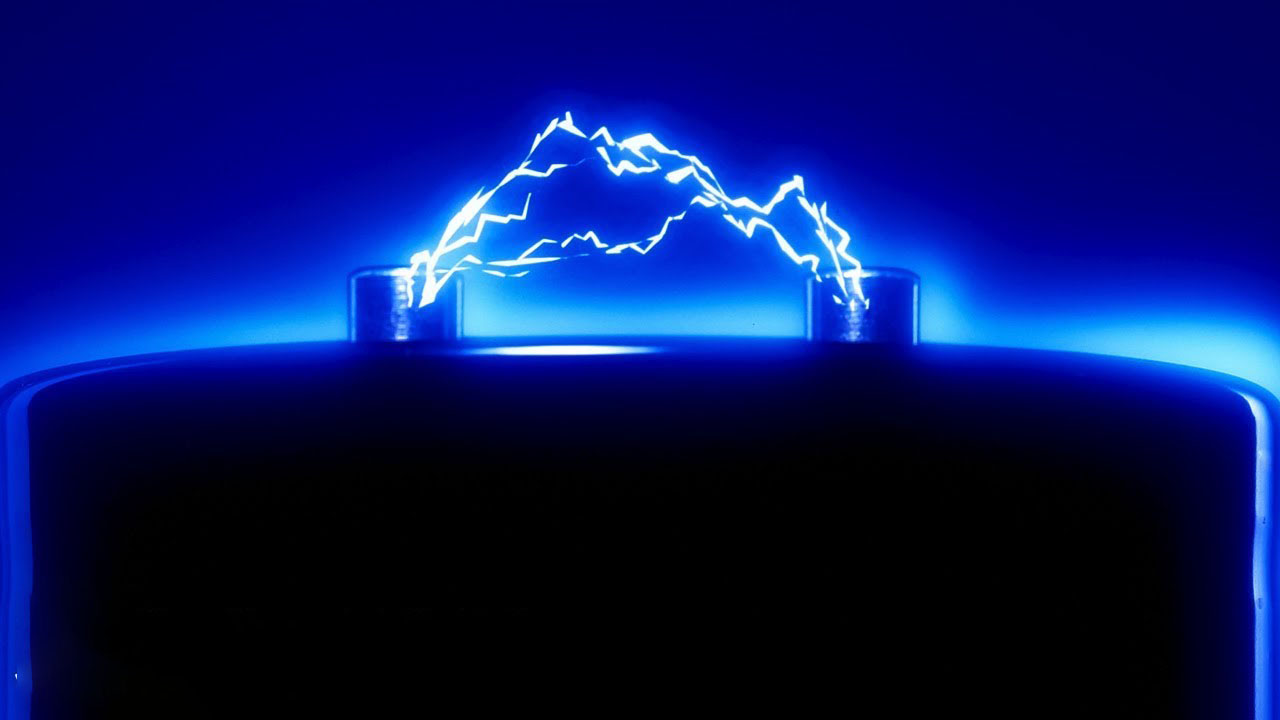

Quantum Batteries Could Become One of the Great Promises in the Future of Energy. Although Distant, It Is Closer Now
Nowadays, the world needs better and better batteries, and that is why the announcement that the theoretical principle necessary for quantum batteries to be possible has finally been proven makes us think of new horizons for an electrified world with renewable, green, and diversified energy matrices.
The recent discovery by an international team of scientists takes another step toward this future, which can be considered almost utopian. The scientists were able to prove a scientific concept that was previously only theoretical, which will allow quantum batteries to be possible. These will be, at least for now, the fastest charging batteries, which would be incredible for electric vehicles and many other applications.
- Made from Ice and Cellulose, New Sodium and Potassium Ion Batteries Become Promising, with Energy Retention Capacity of Over 83%
- Renewable Energies in Focus at Rio Innovation Week: Panel Discusses New Paths for Electric Power at Latin America’s Largest Innovation Event
- Janus Graphene: Newly Discovered Technology Could Change the Electric Vehicle Industry by Creating High-Capacity Sodium Batteries
What Is the Concept Behind Quantum Batteries?
The concept of superabsorption was already known, at least theoretically, as a natural opposite to the concept of superradiance, which had already been proven.
-
Brazil’s 2026 Tax Refund: Record 9.58 Million Filers in Largest Payout Ever, But a Key Detail on Priority Recipients Draws Nationwide Attention

-
Itaú Alters Hybrid Work Model, Increasing Office Days from 2028, Prompting Employees to Adjust to New Routine
-
Facing Labor Shortage, Japan Plans to Invest $34 Million to Attract Foreign Workers in Construction, Healthcare, Industry, and Commerce

-
Brazilian City Makes Remarkable Leap, Becomes 4th Wealthiest in the Country with GDP of R$ 134.1 Billion




The concept of superabsorption involves the fact that aligned receivers, receiving energy simultaneously and in a chain, absorb energy faster than isolated receivers.
The point is that to trigger this reaction, the creation of nano devices is necessary for the effect to be relevant. Fortunately, this was proven through a joint international study led by physicist James Quach, along with a team of physicists from Australia, Italy, and the United Kingdom.
The experiment was conducted with several cavities made of small layers of silicon dioxide and niobium pentoxide, creating a system of continuous reflection within the cavities.
After that, the cavities were coated with a layer of a natural semiconductor, a dye called lumogen orange-F.
Then, the cavities were individually energized with laser light and began to store energy. The individual capacities of each were measured to store energy, then more cavities were placed in series, and the laser power was increased, and the result was as expected.
The more energy and the more cavities were placed within the system, the less time was needed to invest the same amount of energy that was obtained separately, which proved the theory of superabsorption.
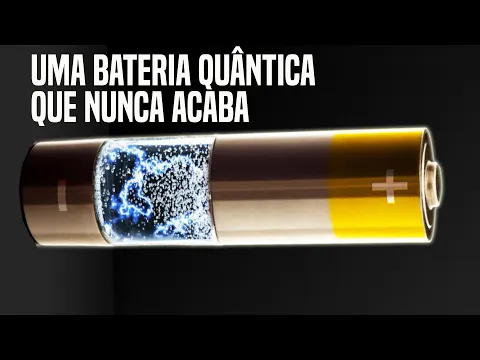

“Underlying the superabsorbing effect of quantum batteries is the idea that all molecules act collectively, through a property known as quantum superposition,” explained Professor James Quach from the University of Adelaide in Australia.
As is known, the scientific process will reproduce and put all of Quach and his team’s research into review and try to reproduce the phenomenon. If this is proven, it could be an incredible advancement in the search for quantum batteries.
How Long Until This Technology Will Be Available?
This is a very difficult question to answer at this moment. Quantum batteries will likely not be in stores within the next 5 years, as only the possibility of using the concept of superabsorption for the creation of quantum batteries has been proven.
Moreover, there is still the entire issue of mass manufacturing of these batteries, as we are talking about nano construction, very similar to what happens, for example, with microchips, which as we have recently discovered are not that simple to produce.
In conclusion: there is still a need to review these studies, produce experiments, and, based on that, the race for the perfect quantum battery design begins.
In this sense, it will be necessary for companies to take an interest in this new technology and start researching an effective way, in market terms, to develop these batteries cost-effectively and efficiently as a product.
Quantum batteries could be one of the great technologies of the future, so we will stay tuned and bring updates on them as soon as they emerge.