Portuguese
  Spanish


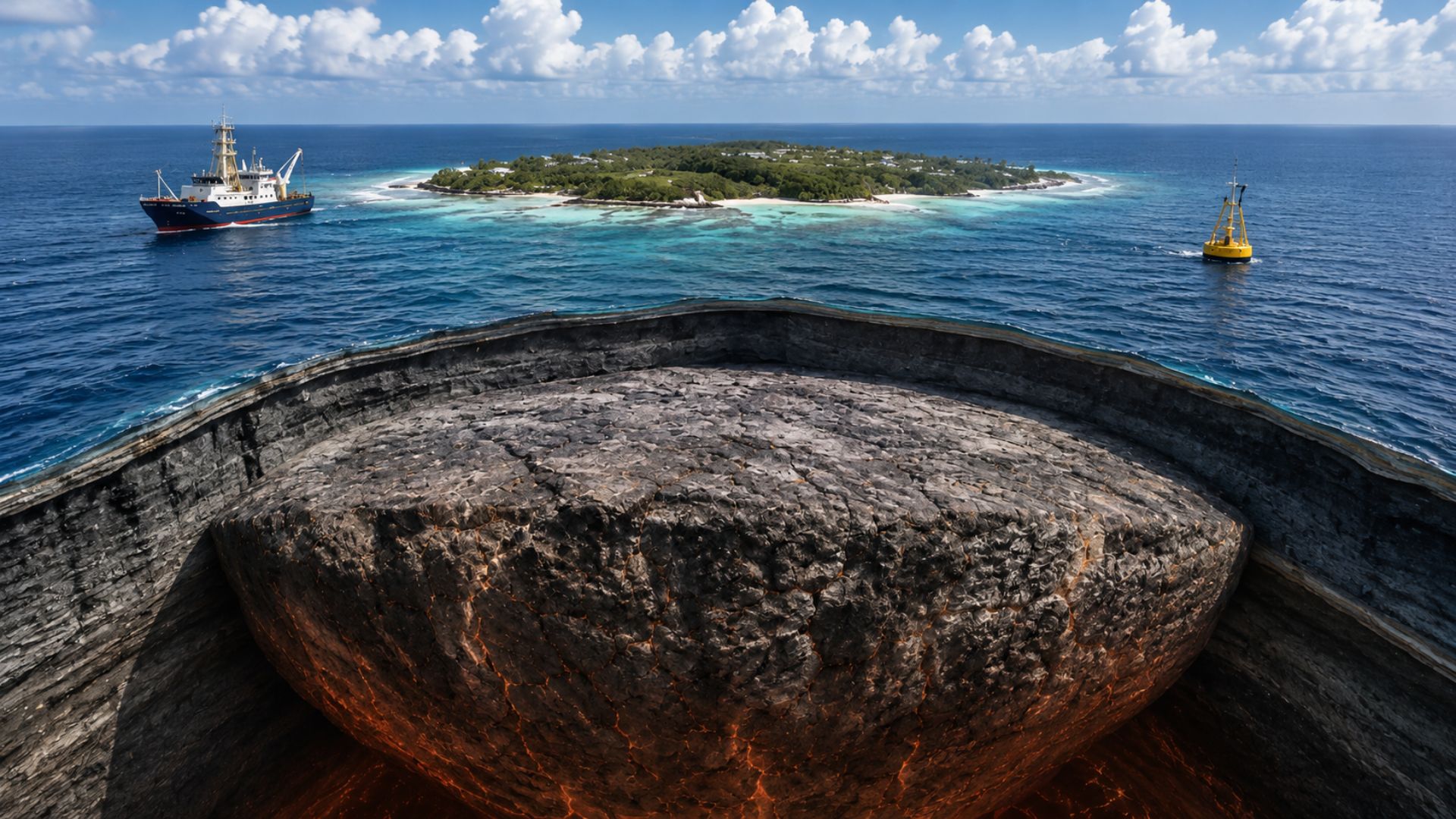

Mystery associated with the Bermuda Triangle gained a new scientific interpretation after the identification of a deep rock layer beneath Bermuda, an ancient and unusual structure that may help explain why the island remains elevated in the North Atlantic even without recent active volcanism.
The Bermuda Triangle has returned to scientific debate for a reason related to geology, not the reports of disappearances that made the region known in popular narratives.
A study published in the journal Geophysical Research Letters identified a rock layer about 20 kilometers thick below the oceanic crust, pointed out by researchers as a possible explanation for the unusual elevation of Bermuda in the North Atlantic.
The research was conducted by William D. Frazer, seismologist at Carnegie Science, and Jeffrey Park, professor at Yale University, based on seismic data recorded by a permanent station installed in Bermuda.
-
15-Year-Old Entrepreneur Malu Lira Publishes 20 Children’s Books on Financial Education, Earns $500,000, and Expands Her Project to the Amazon Rainforest

-
Entrepreneur Turns Rio Cemetery Canteen into a Successful Snack Chain Generating $4.9 Million Annually and Expanding to Metro Stations

-
Rare fox feared “extinct” found alive on Caribbean island after over two decades without official sightings

-
21-Year-Old Brazilian Student Turns Homemade Popsicle Hobby into $100,000-a-Month Business





With these records, the scientists analyzed how waves from distant earthquakes traversed the Earth’s internal layers and constructed an image of the geological structure up to about 50 kilometers below the island.
Although the area is often associated with episodes involving ships and planes, the study presents no evidence of extraordinary causes for maritime or aerial incidents.
The object of the investigation is the so-called Bermuda swell, a broad elevation of the ocean floor that keeps the archipelago above the surroundings, even after tens of millions of years without recent volcanic activity.
Rock layer beneath Bermuda helps explain elevated island in the Atlantic
Researchers describe Bermuda as an unusual geological case because the island does not fully follow the pattern observed in various oceanic volcanic formations.
In chains like Hawaii, the elevation of the ocean floor is usually associated with mantle plumes, columns of hot rock that rise from the Earth’s interior and fuel volcanic processes.
Beneath Bermuda, according to the study’s authors, there is no evidence of an active mantle plume capable of solely explaining the current relief support.
The last known volcanic activity in the region occurred more than 30 million years ago, with estimates mentioned in scientific materials between 30 million and 35 million years.
Even without active volcanism, the island remains on a large submarine elevation, a characteristic that led researchers to investigate the internal structure beneath the archipelago.
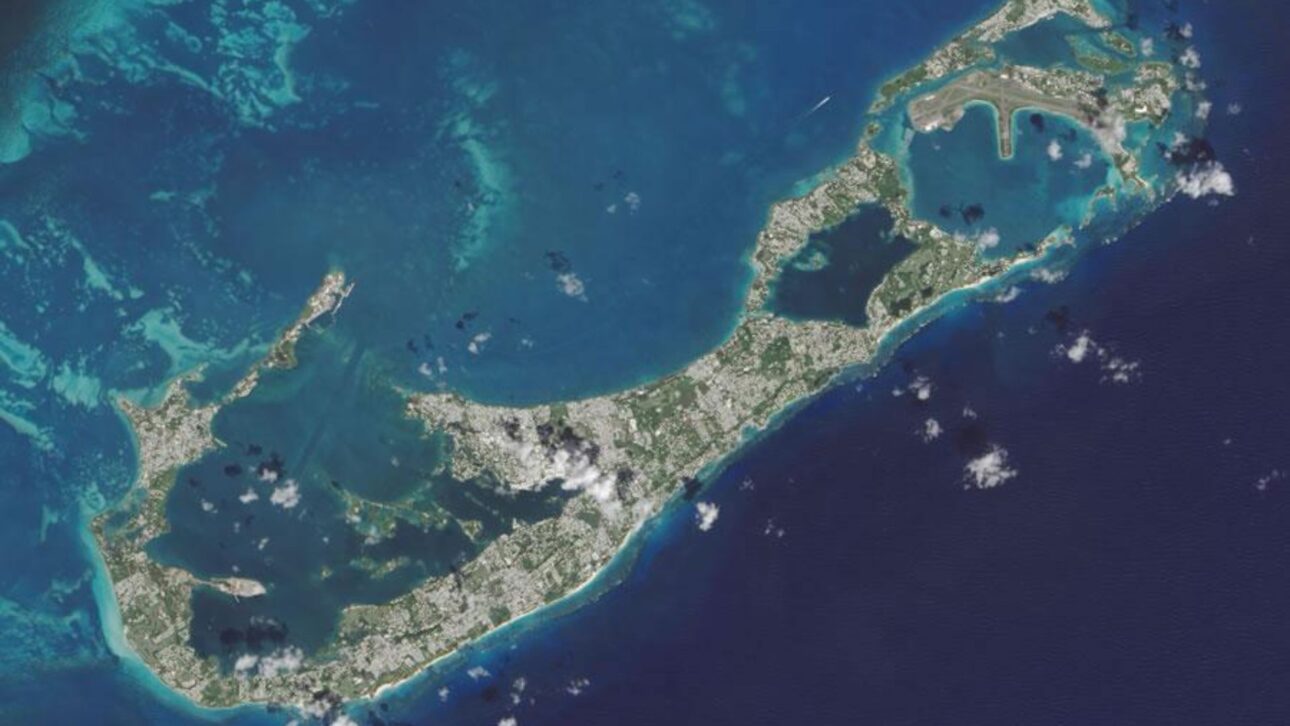
According to Carnegie Science, Bermuda is about 1,600 feet, or approximately 500 meters, above the surrounding ocean floor.
This elevation difference is one of the factors that motivated the analysis of which mechanism could sustain the relief for such a long period after the end of volcanism.
The explanation proposed in the study involves a layer known as underplating, formed when magmatic material settles at the base of the crust and cools in place.
In the case of Bermuda, this layer appears as a thicker structure than those recorded beneath most oceanic islands already analyzed by similar methods.
Seismic waves revealed deep structure in the Bermuda Triangle
To identify the rocky layer, researchers did not conduct deep drilling on the Atlantic floor.
The analysis was carried out using seismic waves generated by large earthquakes occurring in different regions of the planet, then recorded by instruments installed in Bermuda.
As they travel through the Earth’s interior, these waves change behavior when they encounter materials with different density, composition, or temperature.
These variations allowed Frazer and Park to map the oceanic crust, the Mohorovičić discontinuity, known as Moho, and an additional layer located below the crust.
The structure described in the article is about 12.4 miles, or approximately 20 kilometers, and lies between the oceanic crust and deeper regions of the upper mantle.
According to the interpretation presented by the authors, the material of this layer is less dense than the surrounding rocks.
This characteristic may contribute to the geological buoyancy associated with the Bermuda swell, helping to explain why part of the ocean floor remains elevated.
In an interview with Live Science, Frazer stated that, under usual conditions, the mantle is expected to be found just below the oceanic crust.
Under Bermuda, however, the data indicated the presence of an additional layer within the tectonic plate where the archipelago is settled.
Ancient volcanic origin may explain 20-kilometer layer


The hypothesis put forward by the authors is that the layer was formed during Bermuda’s ancient volcanic phase, when molten material rose and accumulated beneath the crust.
After this accumulation, the material would have cooled and solidified without necessarily reaching the surface in the form of new eruptions.
This process, according to the study’s interpretation, would have produced a rocky base less dense than the surrounding material.
Instead of relying on a current heat source pushing the crust upwards, Bermuda’s relief could be supported by this ancient structure preserved beneath the island.
The article published by Geophysical Research Letters describes features associated with a layer about 20 kilometers below the oceanic crust.
The structure is considered by researchers as an unusual occurrence in this type of geological environment, especially due to its thickness and its relation to the support of the swell.
Scientific dissemination materials about the study claim that the layer was likely installed when Bermuda was still undergoing volcanic activity, between 30 million and 35 million years ago.
The explanation, however, does not eliminate all uncertainties about the origin of the structure.
Live Science reported that the scientists themselves are still investigating how and why this layer formed, although the data indicate a likely relationship with the ancient volcanic history of the archipelago.
Discovery does not confirm legends about disappearances

The research does not provide evidence that the Bermuda Triangle has any extraordinary mechanism associated with disappearances.
The study is limited to the geological structure beneath Bermuda and the explanation of the ocean floor elevation, without establishing a direct relationship with navigation or aviation episodes.
The area popularly known as the Bermuda Triangle is often described as being between Bermuda, Florida, and Puerto Rico.
In this case, scientific analysis shifts attention to the internal formation of the island, where seismic data indicates unusual behavior of the crust and upper mantle.
Reports of incidents in the region should be examined individually, considering factors such as weather, mechanical failures, human error, heavy traffic, and navigation conditions.
Deep geology helps explain the shape of the ocean floor but does not provide a basis for classifying the area as a zone of supernatural phenomena.
This distinction separates the popular narratives associated with the Bermuda Triangle from a specific scientific question about the elevation of Bermuda.
On one side, there are stories of disappearances repeated over decades; on the other, there is the investigation into why the island remains elevated long after the end of its volcanism.
Study may change the understanding of oceanic islands
The layer found beneath Bermuda indicates, according to researchers, that some oceanic islands may have more complex internal structures than traditional models suggest.
The presence of thick and less dense underplating shows that the support of oceanic reliefs does not always depend solely on an active hot plume in the mantle.
Frazer told Carnegie Science that Bermuda is relevant for this type of investigation because several geological features of the island do not fit the classic mantle plume model.
According to him, the combination of thick underplating and recent geochemical observations points to convective processes in the mantle that are not yet fully understood.
The research may also guide studies in other oceanic regions.
Based on the results in Bermuda, Frazer began examining other islands to verify if similar structures exist in different parts of the planet.
If similar layers are identified in other areas, models on the formation, support, and sinking of volcanic islands could be revised with new seismic data.
This line of investigation interests geoscientists because the Atlantic preserves records related to the opening of the ocean and the reorganization of ancient continental masses.
So far, the evidence described in more detail is beneath Bermuda.
The structure of 20 kilometers does not explain maritime reports but offers a physical basis for understanding an out-of-the-ordinary oceanic relief: an ancient, thick, and less dense layer preserved beneath the crust since the volcanic phase of the archipelago.