






 Portuguese
  Spanish


Giant porcelain tiles require more rigorous installation techniques, as larger pieces depend on suitable mortar, double gluing, and a well-prepared base to reduce hidden flaws, hollow sounds, detachment, and expensive rework after the project is completed.
Large format porcelain tiles have changed the way floors, walls, and facades are planned in residential and commercial projects, while also increasing the technical requirements for installing coverings that were previously treated as common pieces.
Larger, heavier pieces with lower water absorption should not be installed using the same logic as traditional ceramic coverings, because they depend on suitable adhesive mortar, correct base preparation, and efficient filling on the back of the tile.
In this scenario, ACIII-E mortar has gained space in projects using large porcelain tiles, especially when the priority is to increase adhesion, reduce contact failures, and avoid expensive rework after the project is completed.
-
72-Year-Old Man Spends Six Years Building a Rotating House for His Wife, Completing a Full Turn in 22 Seconds

-
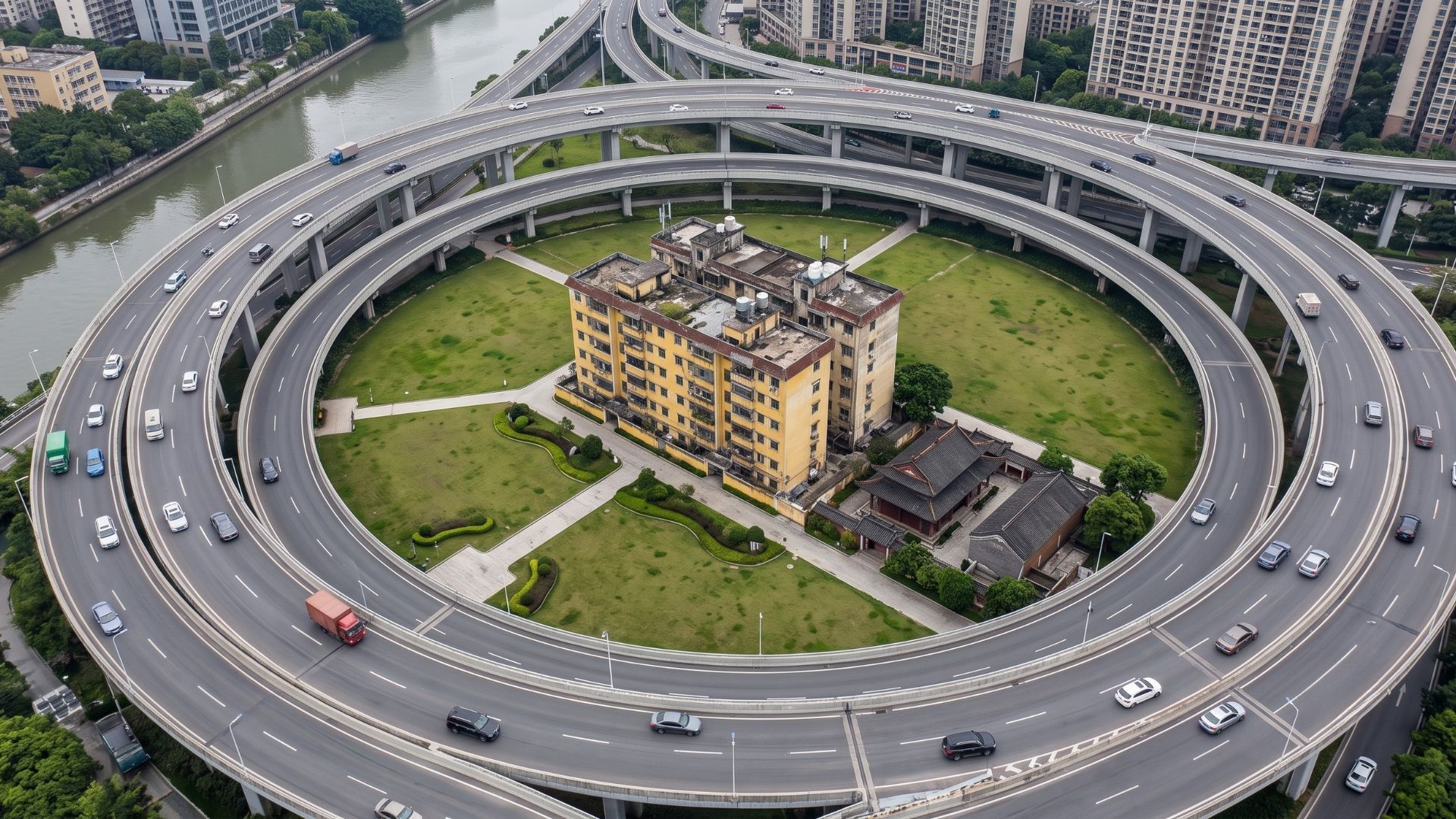
Chinese Residential Building Surrounded by Circular Overpass After Residents Reject Compensation

-
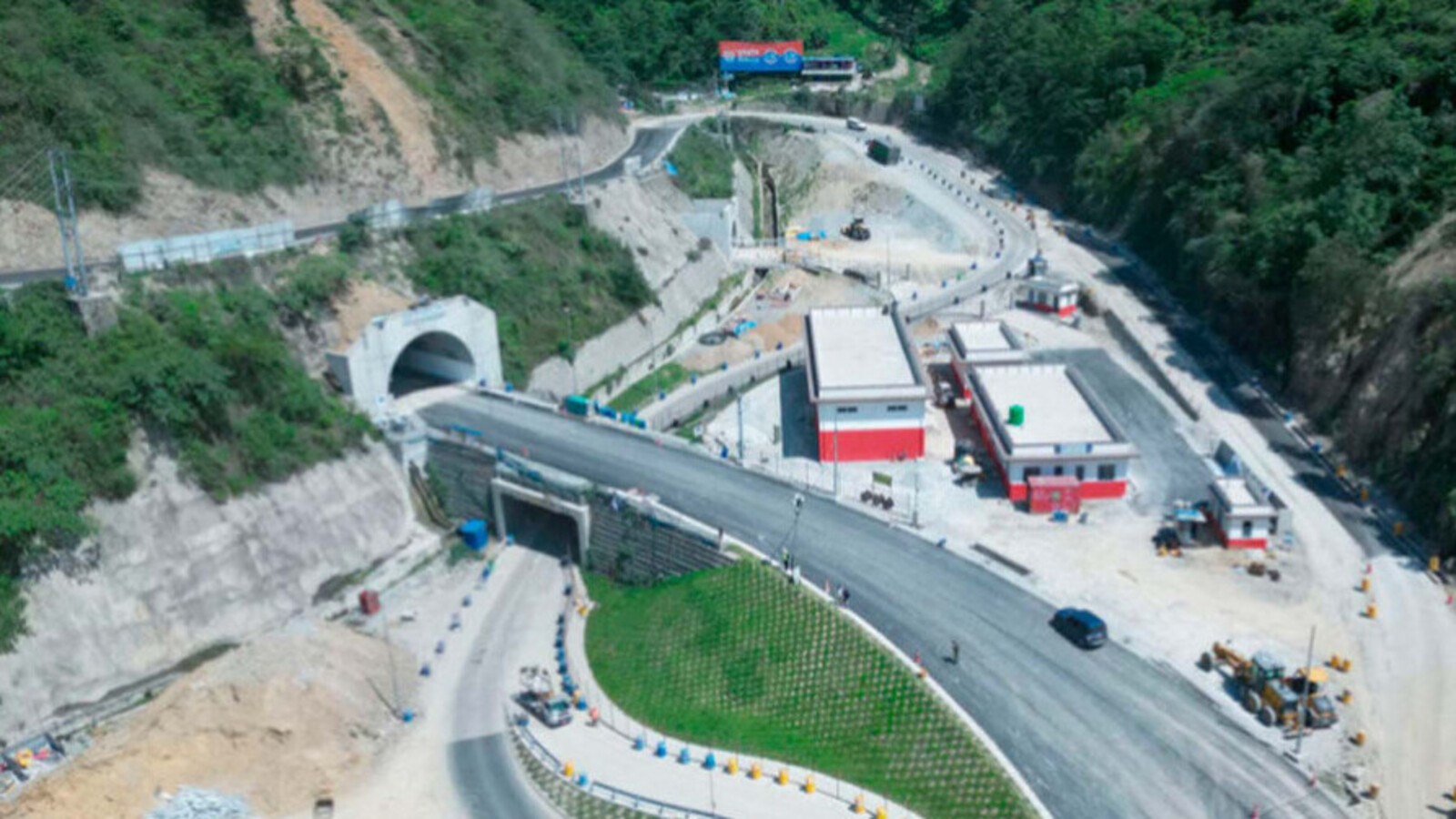
After 79 Months and $145 Million Investment, Nepal Set to Open First 2.7 km Road Tunnel to Ease Traffic in Kathmandu Valley

-
In China, 23 Families Spent Over 4 Years Carving a 1.2 km Road Through a Cliff to Overcome Isolation and Transform a Remote Village


The product is recommended for applications that require superior performance, flexibility, and longer open time, an important condition in services where the installation involves large pieces, careful adjustments, and greater control over the area covered by the mortar.
ACIII-E Mortar Gains Space in Large Format Porcelain Tiles
According to the Anfacer, National Association of Manufacturers of Ceramic Tiles, Sanitary Ware, and Related Products, the use of AC-III E mortar is recommended for large format coverings in projects that require higher technical performance.
According to the entity, this type of mortar offers high performance, flexibility, high adhesion, and extended drying time, providing more time between applying the mortar on the piece and the base during the installation service.
The fixation of the covering directly depends on the correct choice of mortar, especially because porcelain tiles have low water absorption and require a system capable of maintaining efficient contact between the piece, the mortar, and the base.
In larger tiles, any contact failure can compromise the performance of the assembly, creating weak points that later appear in the form of hollow sounds, detachment, localized breaks, or the need for removal and reinstallation.
The acronym ACIII-E identifies a high-performance adhesive mortar with extended open time, a feature that helps professionals work more safely when the piece requires precise positioning and longer adjustment.
In practice, the material maintains suitable conditions for receiving the coating for a longer time after being spread, which favors projects where execution requires care, regularity, and control over the area covered by the mortar.
Larger pieces increase demands on the base and application
This technical detail becomes even more relevant when the coating is no longer a small piece and starts to cover large areas with a single slab, requiring uniform contact to avoid hidden flaws under the finish.
Large-format porcelain tiles reduce the number of visible joints, enhance the visual appeal of the space, and create more continuous surfaces, but this result depends on a technical base that does not appear in the first days after installation.
Among the execution precautions, the double bonding technique appears as one of the most important points to ensure better contact between the coating and the base, especially in large pieces.
Instead of applying mortar only on the subfloor or wall, the professional also spreads the material on the back of the piece, increasing the contact area and reducing empty spaces between the coating and the prepared surface.
In large slabs, this care becomes important because small filling flaws can turn into points of weakness, affecting the durability of the coating and increasing the risk of problems after the project is completed.
When common mortar is used outside the technical indication, the problem may not appear immediately, as the floor may seem aligned and the wall may maintain a uniform appearance right after completion.
With everyday use, however, the lack of adequate adhesion tends to reveal itself through the natural movement of materials, temperature variations, daily impacts, and the pressure exerted on the installed coating.
Hollow sound and loose pieces become signs of installation failure
In indoor floors, the failure is usually noticed by the hollow sound when walking or lightly tapping on the piece, a sign that may indicate a lack of adequate contact between the porcelain, mortar, and base.
In outdoor areas and facades, the technical requirement increases because the coating is subjected to sun, rain, wind, and thermal variations, factors that make the choice of a compatible system with the location even more important.
Anfacer highlights that the installation of large formats requires mortar with a high dosage of additives, water retention, high adhesion, extended open time, and good workability during application.
These requirements help explain why common mortar is losing ground in this type of service, not as a matter of trend, but due to the need to match the product with the size, weight, and behavior of the tiles.
In addition to the choice of material, the advancement of large porcelain tiles has also increased the responsibility of the workforce, as installation requires attention to base leveling, cleaning, and the use of the correct trowel.
During installation, it is also necessary to observe the direction of application of the mortar lines and move the piece to crush them, a procedure that improves contact and reduces voids under the covering.
Even a high-performance mortar may not deliver the expected result when these precautions are ignored, as the durability of the system depends on the combination of the appropriate product, prepared base, and correct execution.
Wrong choice of mortar can increase the cost of the finished work
Before purchasing, the choice of mortar needs to consider the size of the tile, the type of covering, the application environment, and the manufacturer’s guidelines, avoiding the adoption of products incompatible with the work’s requirements.
A product suitable for common ceramic in an indoor area may not meet the same requirements as a large porcelain tile installed on a facade, balcony, gourmet area, or high-traffic floor.
Although the initial cost of ACIII-E is usually higher than that of simpler mortars, the comparison should not be limited to the package price or the immediate expense during the purchase of materials.
In projects with large porcelain tiles, the damage of a loose, cracked, or poorly installed piece can include loss of covering, additional labor, removal of hardened mortar, purchase of new material, and delivery delay.
The search for more sophisticated finishes in Brazilian renovations helps explain the relevance of the topic, as large-format porcelain tiles appear in integrated living rooms, bathrooms, kitchens, facades, and outdoor areas.
These coverings create wider surfaces, visually clean and with fewer visible joints, but the final finish depends on a technical base that often remains hidden under the piece.
Giant porcelain tile requires a compatible installation system
The ACIII-E mortar does not replace the project, base analysis, or professional execution, as it is part of an installation system that needs to follow the technical recommendation for each application.
Mixing, usage time, thickness, double bonding, and environmental conditions must be respected so that the covering delivers performance compatible with the size of the tile and the installation location.
The final performance arises from the combination of the correct product and correct application, especially in projects where large porcelain tiles increase the demand for adhesion, leveling, filling, and execution control.
For the consumer, the main change is in understanding that large porcelain tiles are not just a bigger version of the common floor, but a covering that alters the level of installation requirements.
The piece changes the visual standard of the project and also influences the choice of mortar, making this decision directly linked to durability, finish, and the risk of rework after the environment is already finished.
If the giant porcelain tile has become a symbol of modern finishing, how many projects are still using common mortar where the technique already calls for a high-performance system?


