






 Portuguese
  Spanish


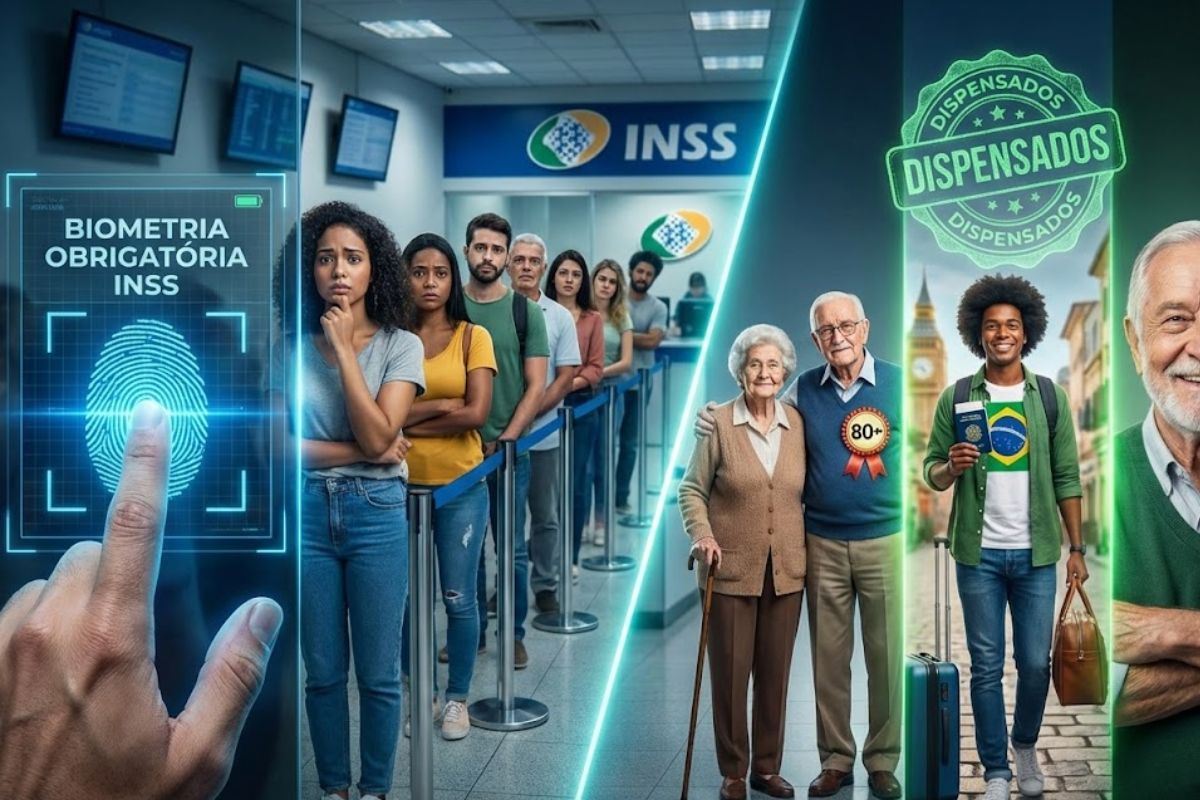
INSS Biometric Data Became Mandatory for New Requests Since November 21, and Will Be Required to Request, Renew, and Maintain Benefits Starting in 2028, but Retirees, Pensioners, People Over 80, Brazilians Abroad, and Groups with Difficulty in Mobility Are Temporarily Exempt for Now
Since November 21, the INSS Biometric Data has become mandatory for all new benefit requests, in a change the government aims to consolidate by 2028, when the procedure will also be required to request, renew, and maintain payments. The measure was created with the objective of fighting fraud and making the system more secure, strengthening control over who receives money from Social Security.
According to the portal ndmais, despite the new rule, those who are already retired, pensioners, or receive any assistance do not need to take any immediate action. A portion of the insured remains exempt from INSS biometric data for now, including people over 80, Brazilians residing abroad, and citizens in specific health situations or with difficult access, who will receive special treatment until the government provides adequate alternatives.
What Changed with the INSS Biometric Data
As of November 21, every new benefit request at the INSS will require biometric verification. This means that when requesting a benefit for the first time, the citizen will have to identify themselves using the INSS Biometric Data, as part of the analysis and granting process.
-
Controversial 6-day Workweek Elimination in Brazil Faces Economic Criticism Over Productivity Claims

-
Itaú to Refund Customers After 14 Years of Unauthorized Credit Card Charges; Agreement Includes No Interest or Adjustments, Deadline by 2028, with Potential Impact of Up to $6.5 Billion

-
Brazilian Company Grows from Bartering Soap for Food to Producing 30 Million Units Monthly, Challenges Global Giants with $100 Million Revenue and Expands into Premium Cosmetics
-
Petrobras and Engeko’s New Investment Plan Promises Billions and Thousands of Jobs, Capturing Market Attention


According to the institute itself, the goal is to reduce fraud and ensure that public money goes to those who truly have the right to it, making the system more reliable.
The biometric data creates a direct link between the benefit and the holder’s identity, making it more difficult to register false claims and misuse third-party data.
However, this requirement does not automatically apply to those already receiving benefits. The INSS emphasizes that retirees, pensioners, and assistance beneficiaries will continue receiving normally, without the need to rush to update their INSS biometric data at this time.
Starting in 2028, Rule Also for Renewing and Maintaining Benefits
The major turning point is expected to be in 2028. Starting that year, the INSS Biometric Data will be a requirement not only for requesting new benefits but also for requesting, renewing, and maintaining the payments already being made.
Nevertheless, the institute informs that the implementation will be gradual. Each citizen will be individually notified in advance if they need to update their INSS biometric data in the future.
The guidance is that, when this occurs, the insured should provide the CIN, National Identity Card, a document that will consolidate the biometric data used by the government.
Another crucial point is that there will be no cuts, suspensions, or automatic blocks for those already receiving benefits regularly due to biometric data.
In other words, no one will have their benefits interrupted unexpectedly just because the new requirement has not yet been met. The idea is to give time and conditions for everyone to adapt to the new requirements.
Who Is Exempt from INSS Biometric Data at This Time
The regulation of INSS Biometric Data provides a list of situations in which the requirement is temporarily waived, while the government does not offer adequate alternatives. Those officially exempt from mandatory biometric data for now include:
- People over 80
- People with mobility difficulties due to health reasons, provided there is proof of this condition
- Residents of hard-to-reach areas, such as riverside communities served by the PREVBarco program
- Migrants, refugees, and stateless persons
- Brazilians residing abroad
In practice, this means that not everyone will be required to travel to comply with the INSS biometric data requirement immediately, especially those already facing significant physical or geographic obstacles. The rule recognizes that public infrastructure still cannot meet these groups’ needs as easily as those of other insured individuals.
Retirees and Pensioners: Why They Don’t Need to Rush Now
Even if they are not in all the groups listed above, retirees, pensioners, and assistance beneficiaries do not need to do anything at this time. The INSS itself advises that those already receiving benefits continue to monitor official information, but without the rush to update their INSS biometric data.
These insured individuals will not have their payments interrupted simply because they have not yet completed the biometric verification, as the process will be implemented gradually. When it is really necessary, the citizen will be individually notified with time to organize, which reduces the risk of lines, crowds, and last-minute rush.
How the Gradual Implementation of Biometric Data Will Be
The INSS Biometric Data will not be implemented all at once for everyone. The process will be progressive, starting with new requests and advancing over the next few years to those already on the payroll.
At each stage, the institute should identify the groups that need to update their data and, before any impact on benefits, send direct communication outlining deadlines and guidance for the insured to perform the INSS biometric verification and obtain the National Identity Card.
While this phase has not yet arrived, keep in mind one central message: biometric data is here to stay, but the adjustment will be made at a controlled pace, with special attention to groups facing mobility limitations or living in hard-to-reach areas.
What to Do If You’re Not Exempt
If you’re not in any of the exempt groups, the main recommendation is to follow the official calendar and notifications. The INSS itself advises that, in these cases, the insured should remain alert to complete their INSS biometric data within the deadline and avoid the risk of losing benefits when the requirement starts to apply to the maintenance of payments.
For those who are still going to request a new benefit, the change is immediate. Since November 21, every new request already undergoes biometric verification, making it important to arrive at the appointment with the necessary documentation and readiness to fulfill this identification step.
Until then, there’s no reason to panic, but rather to plan. Keeping documents updated, such as the future CIN, and following the official INSS channels helps avoid surprises when it’s time for biometric verification.
In your case, do you already know if you are on the list of exempt from INSS biometric data, or do you still have questions about what you will have to do when the new rules apply to everyone?


-

-

3 people reacted to this.