






 Portuguese
  Spanish


Sinter from Monte Mor built a R$ 500 million business manufacturing bar soap for third parties and own brands, with 30 million units monthly, while betting on hair cosmetics, a new factory, and higher value products to grow beyond the most contested shelf in the Brazilian supermarket today.
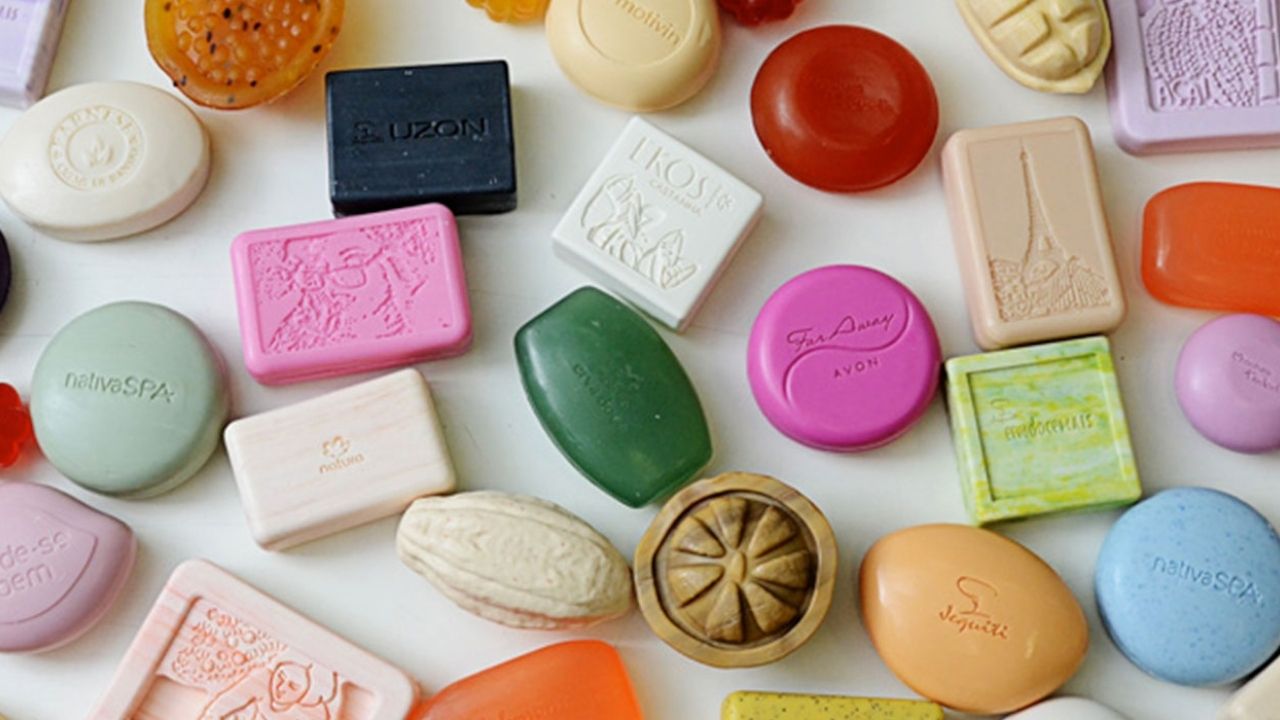
The bar soap was the starting point for Sinter, a company from Monte Mor, in the metropolitan region of Campinas, which today manufactures about 30 million units per month and earns approximately R$ 500 million. The trajectory was reported by Exame on June 22, 2026.
Sinter operates both in outsourcing for large clients and in own brands, such as Farnese, Cloy, and Gipsy. Now, after 35 years of history, it tries to expand its market with hair cosmetics, a new factory, and higher value items.
From cheap product to half-billion business

The bar soap market is known for tight margins, price competition, and quick decisions on the shelf. Even in this pressured environment, Sinter managed to build a large-scale industrial operation in Monte Mor, about 120 kilometers from São Paulo.
-
Controversial 6-day Workweek Elimination in Brazil Faces Economic Criticism Over Productivity Claims

-
Itaú to Refund Customers After 14 Years of Unauthorized Credit Card Charges; Agreement Includes No Interest or Adjustments, Deadline by 2028, with Potential Impact of Up to $6.5 Billion

-
Petrobras and Engeko’s New Investment Plan Promises Billions and Thousands of Jobs, Capturing Market Attention

-
JBS Halts Beef Production for China as Brazil Exceeds 50% of 1.106 Million-Ton Quota; Tariff May Rise from 12% to 67%, Raising Concerns Over Cattle Prices.


According to Exame, the company has 15 high-capacity production lines and delivers, on average, 30 million soaps per month. The volume helps explain how a product sold for R$ 1 or R$ 2 can sustain a company with an annual revenue of R$ 500 million.
Sinter’s revenue comes from two models. Part of the production is done for large clients who outsource manufacturing. The other part carries the company’s own brands, such as Farnese, Cloy, and Gipsy.
Today, these two branches are balanced, each accounting for about half of the annual revenue. This division reduces dependence on a single path and gives the company presence both behind the scenes of the industry and in direct competition for the consumer.
The exchange for basic food baskets that opened the first door
The origin of Sinter’s own brand has a curious episode. Breno Grou joined the company about 20 years ago with a different vision from his father, Rogério Grou, who had built the industrial base of the business after a career in multinationals, including Unilever.
While the father technically mastered bar soap production and saw strength in outsourcing, Breno wanted to test direct sales to retail. It was a riskier model because it required marketing, buyer relationships, and competition for shelf space.
The first order came from a barter. Sinter was buying R$ 50,000 per month in basic food baskets from a supplier, and Breno proposed paying half of that amount in soap. From there, smaller monthly orders, distributors, and the first APAS fair followed.
What started as an exchange turned into a commercial channel. Today, own brands account for about 4% of the Brazilian bar soap market, according to the company, and generate approximately R$ 250 million in revenue.
Outsourcing provided stability to grow
Before competing for the end consumer, Sinter had already found space in outsourcing. The idea came from Rogério Grou, who saw an opportunity in a model still underdeveloped in Brazil in the 1990s: producing for other brands.
The operation started in an artisanal way, with manual presses that produced six units per minute. Today, the current equipment reaches 400 soaps per minute each, showing the distance between the company’s beginning and the current scale.
A contract with Natura marked an important turning point. The agreement gave Sinter scale and helped consolidate the company as a supplier for larger clients. In outsourcing, closed contracts bring predictability and can add significant production volume.
This branch remains the company’s most stable business. For a factory with high installed capacity, ensuring recurring demand is essential, especially in a sector where price, volume, and industrial efficiency determine competitiveness.
Own brands took Sinter to the shelf
The entry into private labels placed Sinter in a different type of competition. Instead of selling only to companies that would put their brands on the final product, the company began negotiating with retail and trying to convince the consumer directly.
Farnese is the oldest and best-selling brand. It was positioned as an option of “affordable luxury,” with packaging inspired by Italian tradition. Cloy targets consumers with dry skin, while Gipsy completes the trio of private labels.
This move made the company more exposed to consumer behavior. In the supermarket, the decision can happen in seconds, and the bar soap competes on price, fragrance, packaging, perception of quality, and shelf space.
At the same time, private labels allow for margin and identity building. For Sinter, this path brought growth but also showed limits: the bar soap category started to become small for the company’s ambitions.
The focus is now on hair and cosmetics
Sinter’s recent big shift is the entry into hair products. The company launched the Hair Biocare line under the Farnese brand, with 15 products aimed at different hair types.
According to Exame, it was the first time the company invested heavily outside of bar soap. The formulation took about a year to be ready and required a dedicated production line, as the old equipment was not suitable for this new category.
The proprietary BioCare technology combines prebiotic actives, aimed at balancing the microbiota, with components like biotin. The strategy is to sell higher-value products, but still within a mass market range, where the highest consumption is.
This is a central point for Sinter’s future. The company wants to stop relying solely on products priced at R$ 1 or R$ 2 and start competing in items priced at R$ 5 to R$ 10, increasing ticket, margin, and growth possibilities.
Whindersson Nunes joined as a creative advisor
To communicate the new phase with a smaller budget than multinationals, Sinter decided to bet on an unusual move. The company hired comedian and entrepreneur Whindersson Nunes as a creative advisor.
His role, according to Exame, is to help develop products and translate technical messages for a broad audience, using humor. The bet shows that the competition is not just in the factory, but also in the ability to explain the product to the consumer.
Breno Grou states that the company competes with global giants. In this scenario, communicating differentiators simply can be as important as developing a good formula.
Whindersson’s presence also brings the brand closer to Brazilian digital culture. For an industrial company that grew behind the scenes and now wants to strengthen its own products, this audience insight can help bridge the gap between innovation and the shelf.
New factory should support the next phase
The new cosmetics factory is the centerpiece of the growth plan. Sinter intends to expand manufacturing capacity and make room for higher value-added products.
According to Exame, the company operates debt-free and has never worked in a leveraged way, which, in the CEO’s view, provides stability to support investments. The company is close to 700 employees and still maintains manual operations in some stages, such as assembling promotional kits.
The challenge will be to grow without losing efficiency. Moving up a category requires formula, packaging, communication, distribution, and delivery consistency, especially when the competitor has more money for media and national presence.
The Southeast is the strongest region in sales, followed by the Midwest. National distribution is supported by more than 100 representatives, a structure that can be decisive in taking the new cosmetics beyond the base built by soap.
Moving away from cheap products without abandoning scale
Sinter’s history shows how a company from Monte Mor moved from a soap-based operation, built industrial scale, entered retail through a barter with basic food baskets, and reached a revenue of R$ 500 million.
Now, the challenge is more difficult: maintaining strength in the cheap product, facing global giants, and convincing consumers to buy higher-value cosmetics. Do you think a Brazilian company that grew in low-priced soap can also compete in mass premium hair and beauty? Leave your opinion in the comments.


Be the first to react!