Portuguese
  Spanish


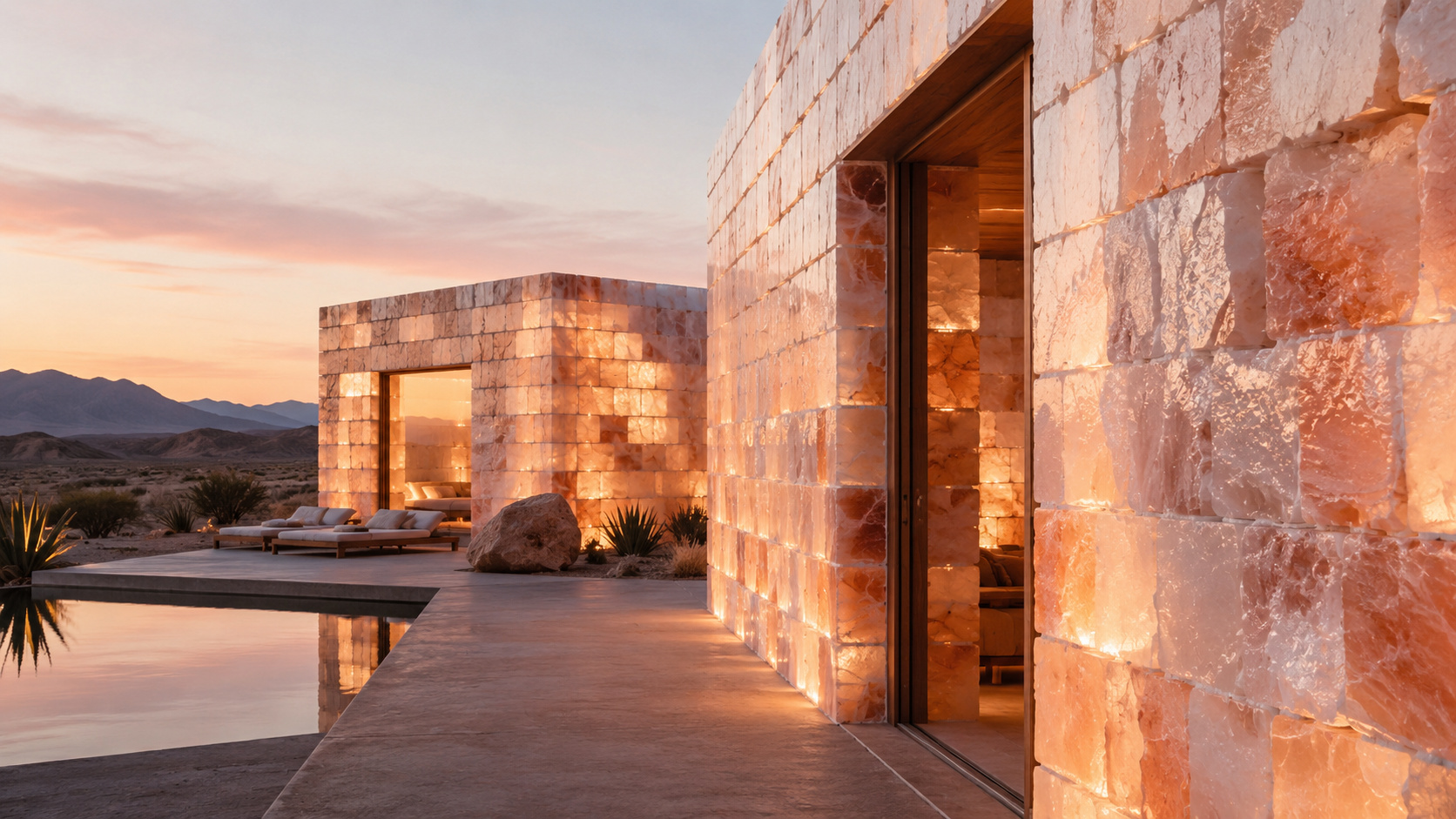


Salt blocks are being used in hotels, pavilions, and architectural projects that challenge the limits of conventional construction in arid regions.
For centuries, salt was primarily seen as food, a preservative, or an industrial raw material. In construction, however, it always carried a problematic reputation. Its tendency to absorb moisture, cause corrosion, and degrade in humid environments made it an enemy of structures. Nevertheless, architects and engineers in some of the driest regions on the planet decided to take the opposite path: turning salt itself into a building element.
The best-known example is in the Salar de Uyuni, in Bolivia, where blocks extracted directly from the world’s largest salt flat have been used in the construction of hotels, furniture, walls, and coverings. The result is architecture that seems impossible at first glance: buildings erected with a material that would normally be considered unsuitable for conventional works.
How salt became a building material in one of the planet’s most extreme landscapes
The Salar de Uyuni covers approximately 10,582 square kilometers, being considered the largest salt flat in the world. In a region where wood, stone, and other traditional materials are scarce, the most abundant resource has always been under the feet of the local inhabitants: the salt itself.
-
On the world’s highest navigable lake, the Uros people have hand-built around 100 floating straw islands, living on them for 3,000 years without concrete or foundations.

-
Newly Completed Brazilian Highway in the Serra da Rocinha Becomes a 16.5 km Cycling Challenge and Boost for Local Tourism

-
Innovative Mortar Technique Enhances Porcelain Tile Stability, Reduces Buckling and Detachment Risks, and Provides Durable Finish Under Heavy Use

-
Giant Robots Build Entire Neighborhood of 100 3D-Printed Homes in the U.S., Showcasing Technology’s Impact on Construction Industry


It was from this reality that the concept of salt hotels emerged. The most famous case is the Palacio de Sal, located near Uyuni.
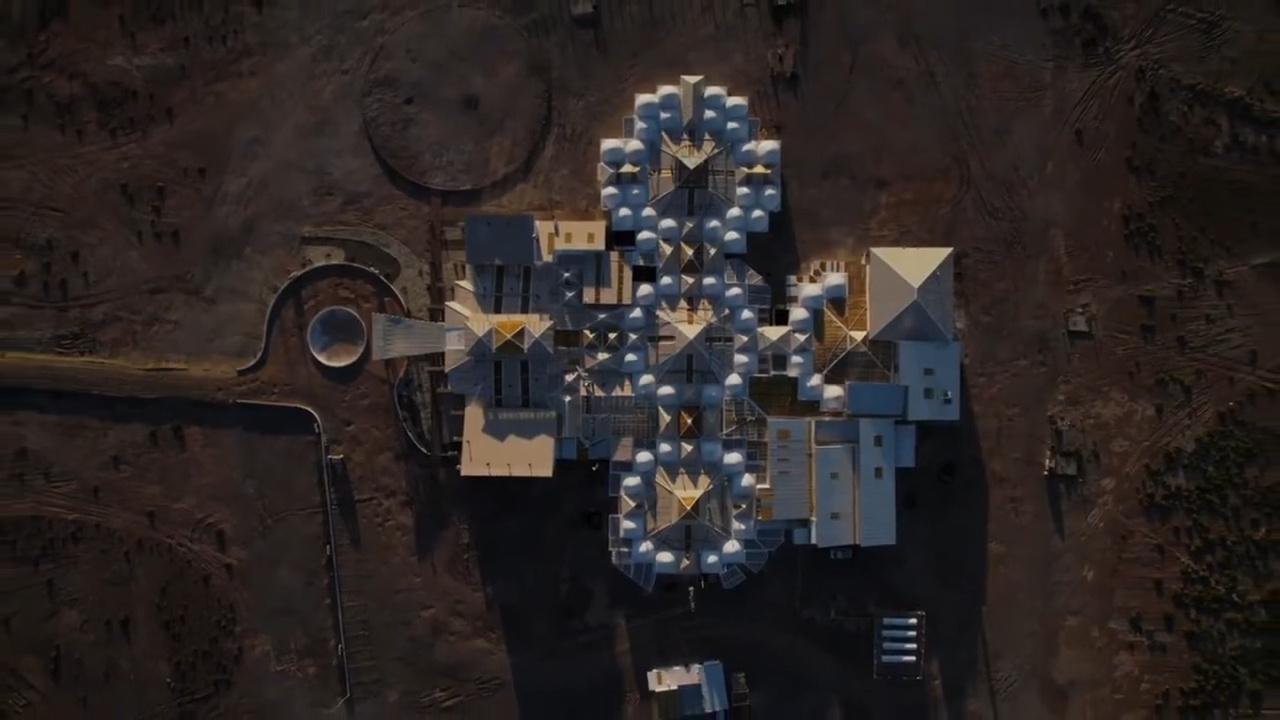
According to the enterprise itself, the structure was built using more than one million compacted salt blocks, extracted directly from the surface of the salt flat. The blocks are joined by a kind of mortar made with ground salt and water, creating walls, floors, and entire architectural elements made from the same material.
The use of salt in construction is not limited to the walls. Information from the hotel indicates that tables, chairs, sculptures, and various internal components are also produced from salt blocks.
The construction has become one of the region’s most well-known attractions precisely because it demonstrates that a material considered unsuitable by traditional engineering can take on unexpected architectural functions in specific conditions.
The big problem that prevents salt from replacing concrete and bricks
Despite its impressive appearance, salt has severe limitations as a building material. The main one is its vulnerability to water.
According to analyses published by Inhabitat, salt has high sensitivity to moisture, which can lead to water absorption, erosion, and structural problems when exposed to unsuitable environments. This characteristic explains why such projects are usually developed in extremely arid regions, where precipitation is limited and evaporation occurs quickly.
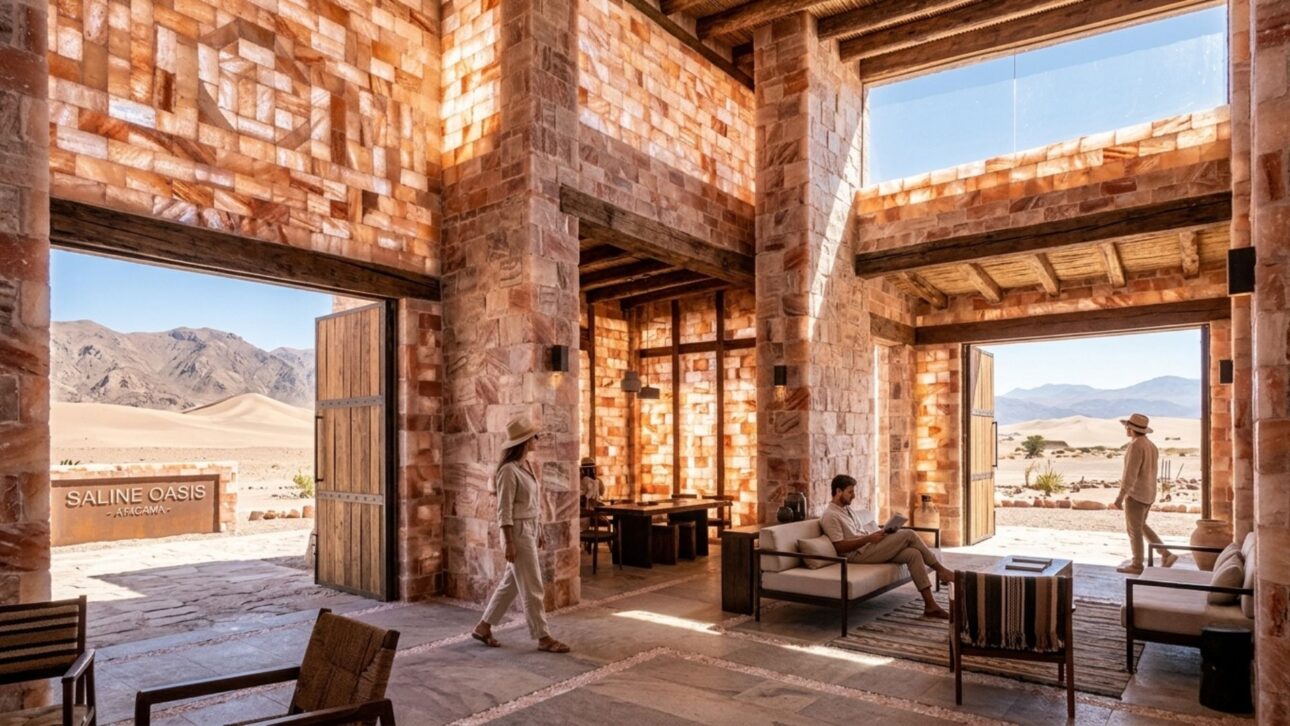
The Palacio de Sal itself highlights this limitation. The hotel reports that after each rainy season, about 10% of the structure needs to be rebuilt, using new salt blocks supplied by local cooperatives. In other words, maintenance is part of the building’s life cycle.
This need for constant reconstruction helps explain why salt has not become a global alternative to concrete, steel, or ceramic bricks. Its application remains restricted to very specific geographical contexts, especially salt deserts and indoor environments protected from water.
Architects see the use of salt in construction as a new frontier for mineral materials
Although the structural use of salt remains an exception, researchers and architects have been increasingly focusing on the material.
In 2025, ArchDaily highlighted research conducted by Chilean architect and researcher Mále Uribe, who investigates the potential of salt and mineral waste as architectural materials. The work discusses new ways to reuse abundant mineral resources, reducing waste and exploring applications that go beyond conventional industry uses.
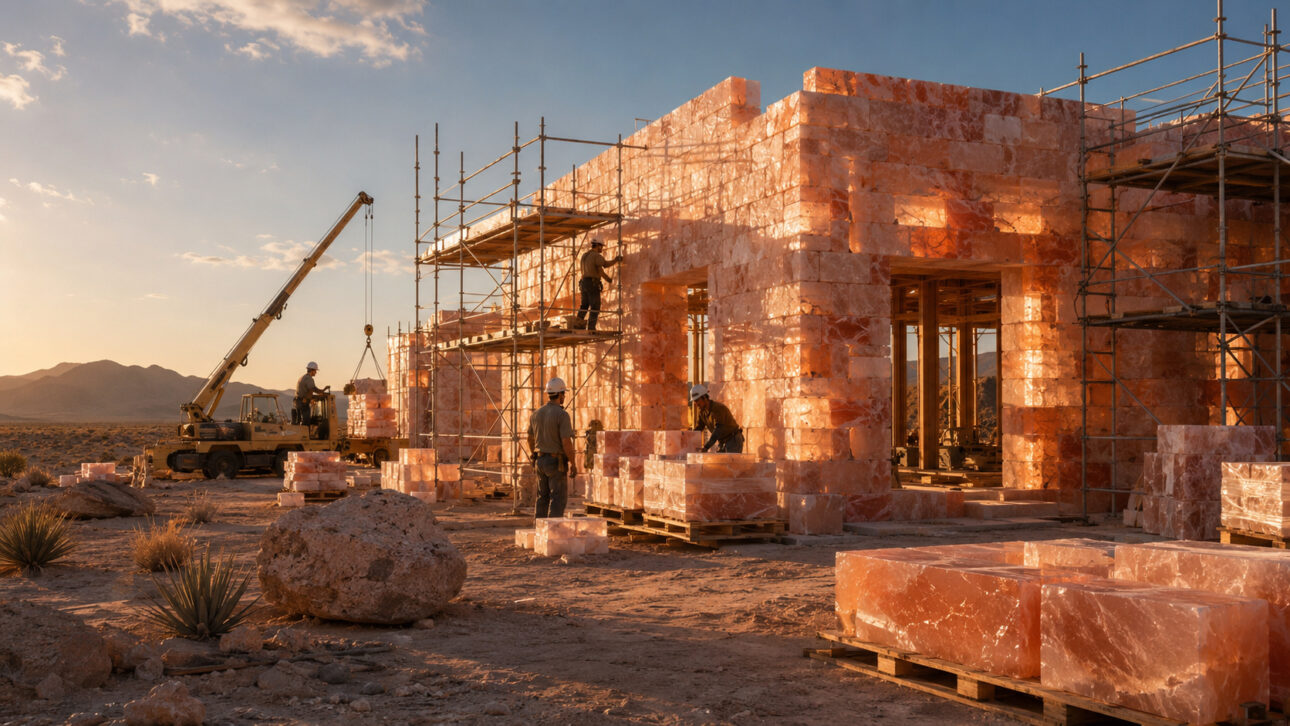
Another initiative highlighted by ArchDaily was the Wall of Salt project, considered the first large-scale application of crystallized salt panels for architectural cladding. The installation used approximately 560 square meters of surface covered with elements produced from crystallized salt.
These experiments show that the current interest is not necessarily in replacing concrete or steel, but in discovering specific applications for a material abundant in certain regions and historically ignored by modern construction.
What this mineral architecture reveals about the future of construction
The use of salt in civil construction remains a highly specialized niche. Nevertheless, it illustrates an increasingly present trend in contemporary engineering: the search for local materials capable of reducing transportation, utilizing abundant resources, and adapting buildings to the specific characteristics of each territory.
In Salar de Uyuni, for example, transporting large quantities of concrete or other traditional inputs has always represented a logistical challenge. Using the most abundant material in the region ended up becoming a practical solution and also an architectural differentiator.
For now, no one expects entire cities to be built with salt blocks. However, hotels, experimental pavilions, and research projects continue to demonstrate that a material associated with corrosion and fragility can assume surprising functions when used in the right environment.


The result is one of the most unusual images of modern architecture: translucent walls made of salt, erected in the middle of the desert, proving that even a material that dissolves in water can be transformed into construction.