






 Spanish
  4 min of reading
  3 comments


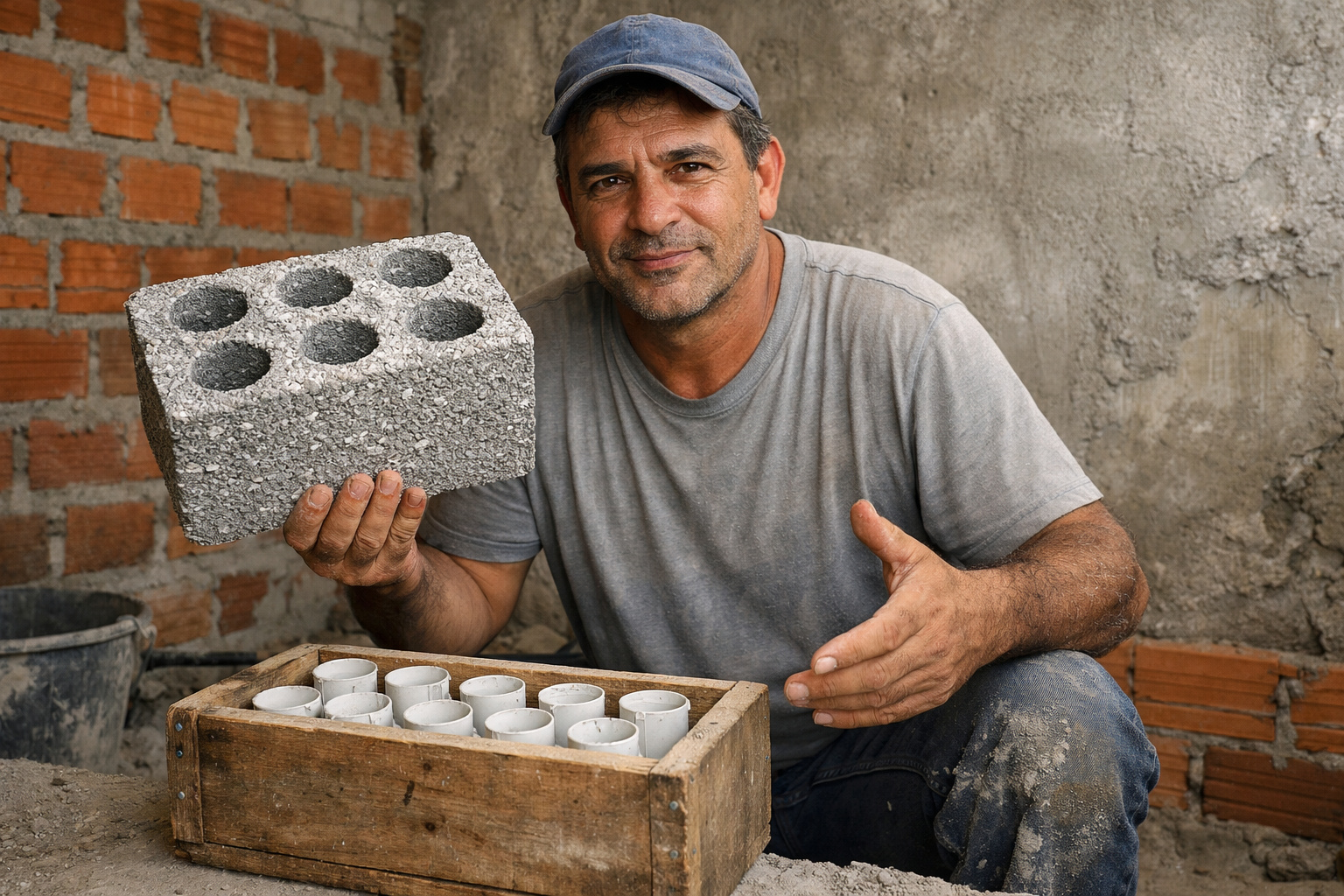


The Artisanal Technique That Combines Cement, Sand, Recycled Styrofoam, and a Simple Domestic Additive Is Gaining Attention for Delivering Efficient Thermal Insulation, Almost Zero Cost, and Practical Application in Intense Heat Areas
What seems like just another DIY construction hack has, in practice, caught the attention of those seeking cheap construction, thermal comfort, and waste reuse. An artisanal thermal block, which costs around US$ 0.40 per unit, promises to reduce heat by up to 80% using recycled styrofoam, common construction materials, and an unexpected kitchen ingredient.
The solution has circulated through videos and practical tutorials, especially among residents of hot regions in Brazil. In addition to being cheap, the method stands out for allowing the manual production of up to 50 blocks with just one bag of cement, something unthinkable in conventional masonry. As a result, the system has been viewed as a real alternative for partition walls, dividing walls, and internal dividers.
The information was disclosed through practical videos and tutorials published on the MACIEL NA REFORMA channel, which has over 40,000 followers interested in economical and functional solutions for small constructions, especially in the Brazilian Northeast.
-
Neither washing machine nor laundry: the trick that helps eliminate odors accumulated from sweat, humidity, and dust, restores the volume of pillows and duvets in a few hours, and is surprising those seeking convenience at home.

-
Why do plastic chairs have a circle in the middle of the seat and what do manufacturers say about this detail that almost no one notices?

-
Germany and Japan expand defense amid tensions with China, Russia, and doubts about the US
-
Instead of retiring, two gentlemen defy logic and handcraft a 1,200 hp V12 engine, installed in a machine made to tear through the California desert at nearly 430 km/h in pursuit of a brutal speed record.



How the DIY Styrofoam Thermal Block Works

First of all, it is important to understand why this block can be so efficient at thermal insulation. The secret lies in the combination of lightness, trapped air, and low thermal conductivity, natural characteristics of styrofoam when properly incorporated into the cement mix.
Each block has approximate dimensions of 10 × 30 × 60 cm and weighs about 5.7 kg, an extremely low value compared to traditional ceramic blocks. This lightness, in addition to facilitating manual transportation on the job site, significantly reduces the total load on foundations during renovations and expansions.
Below is the exact mix used for each unit, as demonstrated in the tutorial:
Mix for DIY Styrofoam Thermal Block (per unit)
- Cement: 2 kg — responsible for the binder
- Sand: 2.5 kg — ensures mechanical resistance
- Chopped styrofoam: 15 liters — provides lightness and thermal insulation
- Common detergent: 50 ml — acts as a bonding additive
The use of household detergent is the main differentiating factor of the technique. It works as a cheap additive, preventing the styrofoam from floating in the mix and ensuring that each particle is coated with a thin layer of cement. As a result, the block gains cohesion, strength, and dimensional stability.
Correct Steps for Mixing and Manual Molding
After separating the materials, the mixing process follows a specific order, which is essential for the block’s success. First, cement, sand, water, and detergent should be mixed for about 3 minutes, using a drill with a mixer or a manual stirrer.
Only after obtaining a homogeneous cream should the 15 liters of chopped styrofoam be added to the mix. At this moment, the incorporation must be careful, ensuring that each styrofoam bead receives a coating of cement, forming the internal structure of the block.
The ideal consistency of the mix is firm, without crumbling when scooped out with a trowel. This manual control prevents structural failures and improves the final finish of the piece.
Next, molding requires a few simple but essential precautions:
- Lubricate the wooden mold with oil or release agent
- Use PVC pipes in internal holes to create air passages
- Fill the mold in layers, ensuring the mix is well vibrated
- Eliminate internal voids to prevent cracking
- Wait 3 to 4 hours before demolding
Proper lubrication prevents the block from breaking at the edges during removal. After this initial curing period, the pieces can be handled while maintaining an average weight of 5.7 kg per unit.
Where the Thermal Block Can Be Used and Its Cost
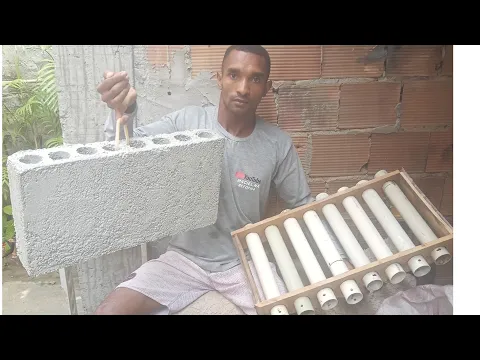

Despite the advantages, the DIY styrofoam block is not structural. It should be used exclusively for partition walls, such as dividing walls, filling openings, and internal dividers. It is not recommended for supporting heavy slabs or permanent structural loads.
Nonetheless, its thermal performance is superior to many ceramic bricks available on the market. In hot regions, such as the Brazilian Northeast, the material helps keep indoor environments cooler, reducing thermal sensation and even the need for fans or air conditioning.
Another relevant point is the cost. The estimated value of US$ 0.40 per block represents significant savings compared to traditional systems. This allows for the construction of extensive walls using only a fraction of the usual budget for conventional work.
In addition to financial savings, there are environmental benefits. The reuse of styrofoam— a material that is difficult to recycle— transforms a problematic waste into efficient thermal insulation, combining sustainability, low cost, and practical innovation.







Qual o valor
Muito bom eu amei, onde posso comprar e qual seria o valor que eu pagaria
Excelente ideia, onde posso comprar