






 Portuguese
  Spanish
  6 min of reading
  0 comments


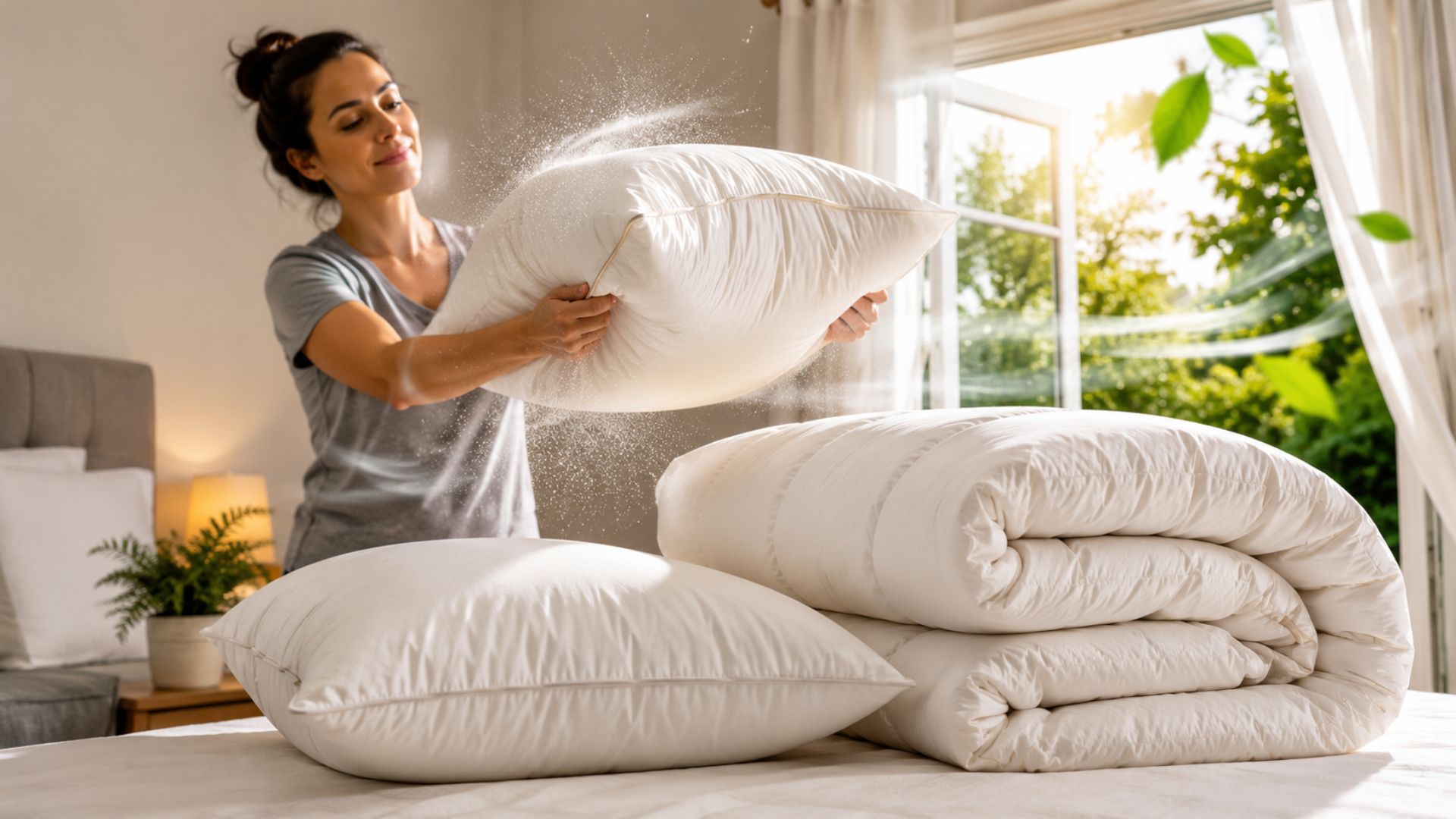
Simple care for pillows and comforters helps reduce musty smell, improve the feeling of freshness, and recover part of the volume of the pieces between complete washes, as long as the manufacturer’s instructions are followed.
Pillows and comforters can gain freshness between complete cleanings with a simple measure: controlled exposure to sun and natural ventilation on dry days.
Although it does not replace the washing indicated by the manufacturer, this care helps reduce retained moisture, mitigate odors from daily use, and restore lightness to pieces that become compacted over time.
Even protected by pillowcases, covers, or sheets, bedding items absorb body and environmental residues, such as sweat, oil, dust, and particles that accumulate with frequent use.
-
Why do plastic chairs have a circle in the middle of the seat and what do manufacturers say about this detail that almost no one notices?

-
Germany and Japan expand defense amid tensions with China, Russia, and doubts about the US

-
Instead of retiring, two gentlemen defy logic and handcraft a 1,200 hp V12 engine, installed in a machine made to tear through the California desert at nearly 430 km/h in pursuit of a brutal speed record.

-
Plug the charger into the outlet first or connect it to the phone? Experts warn that a simple sequence can reduce electrical fluctuations, minimize voltage spikes, and influence the battery’s lifespan after years of continuous use.




According to the Sleep Foundation, bedding can concentrate dead skin cells, dirt, and other residues, while washable comforters and pillows require periodic cleaning depending on the type of piece.
In practice, the trick consists of removing the pieces from the bed, shaking them gently, and leaving them for a few hours in an airy place with sunlight and low humidity.
Ventilation favors the removal of musty smell, while the heat helps evaporate part of the moisture trapped in the fabric and filling.
Why pillows and comforters have a musty smell
Throughout daily use, pillows and comforters remain in constant contact with sweat, skin oil, household dust, and environmental moisture, even when they seem clean at first glance.
This accumulation can alter the smell of the pieces and make them feel heavy, especially in rooms that remain closed for many hours or receive little air circulation during the day.
In rainy periods or naturally humid regions, the problem tends to appear more easily, as fabrics and fillings take longer to lose absorbed moisture.
With little ventilation, the piece can smell stored even when in use, which affects the feeling of cleanliness and reduces comfort when sleeping.
Before any washing or attempt at deeper cleaning, the recommendation is to observe the type of material and check the instructions on the product label.
The American Cleaning Institute advises that care labels be checked before washing, as they indicate how to clean, dry, and preserve fabrics without compromising their durability.
For this reason, the method of sun and fresh air should be treated as intermediate maintenance, useful for renewing the appearance of items without promising deep cleaning.
It helps improve freshness but does not remove dirt accumulated in internal layers nor does it replace complete cleaning when the label indicates the item can be washed.
How to use sun and ventilation without damaging the items
To apply the method more safely, it is ideal to choose a dry day, preferably with good air circulation and no forecast of rain in the coming hours.
Balconies, yards, open service areas, or large windows can work, as long as pillows and comforters are placed on a clean surface and receive sufficient ventilation.
Before exposure, it is advisable to remove pillowcases, covers, and protectors, as these items should follow their own washing routine and do not need to remain with the larger items.
After that, pillows and comforters can be shaken gently, just to loosen the filling, reduce compaction, and remove some of the accumulated surface dust.
During the outdoor period, turning the items helps distribute exposure to light and ventilation better, preventing only one side from receiving the effect of the dry weather.
This care also reduces the risk of internal areas remaining stuffy, especially in bulky comforters or denser pillows, which tend to retain moisture for longer.
The necessary time depends on the size of the item, the type of filling, and the day’s conditions, so observation remains an important part of the process.
In general, a few hours are enough to improve the feeling of freshness, as long as the item is not exposed to dust, smoke, sudden rain, or excess moisture at the end of the day.
Volume depends on air, movement, and care
Besides the smell, the loss of volume is usually one of the most noticeable signs of temporary wear in frequently used pillows and comforters.
With body weight, repeated folds, and improper storage, the filling can compact in certain areas and lose its original distribution.
Off the bed, the item breathes better and stops suffering continuous pressure, which helps recover some of the lightness perceived to the touch.
When the item is shaken before and after exposure, the filling tends to spread more evenly, reducing flattened areas and improving the feeling of softness.
This movement, however, needs to be gentle, especially in items made of feathers, synthetic fibers, or more sensitive materials, which can deform with strong twists or hits.
Sudden movements can also compromise internal seams and concentrate the filling in specific spots, making it difficult to recover the original shape over time.
Before putting pillows and comforters back on the bed or storing them in the closet, it’s important to check if there is no dampness to the touch.
Damp materials should not be used or stored, because incomplete drying affects comfort and can promote the return of unpleasant odors.
Deep cleaning is still necessary
Despite the convenience, exposure to sun and fresh air does not equate to washing pillows and comforters, nor does it eliminate the need for thorough cleaning.
The Sleep Foundation recommends cleaning intervals for different bedding items and indicates that washable pillows need periodic cleaning, as do regularly used comforters.
When there are stains, excessive sweat, contact with animals, allergies, persistent odor, or specific manufacturer instructions, proper washing becomes necessary.
In these situations, the item’s label should prevail over any household tip, because some materials cannot be machine washed or require professional cleaning.
Foam, latex, memory foam pillows, or models with molded structures deserve special attention, as many do not tolerate common washing, twisting, or intense heat.
Therefore, before applying any cleaning technique, reading the label helps avoid deformations, loss of support, and damage that can reduce the item’s lifespan.
In the case of bulky comforters, the machine’s capacity also needs to be considered, as forcing a large item into a small machine compromises the result.
Besides hindering cleaning, this mistake can deform the filling, complicate rinsing, and prevent uniform drying after washing.
Simple maintenance helps in the household routine
Between washes, airing pillows and comforters is an economical alternative to reduce stuffiness and improve bed comfort.
The method works best as a preventive routine, especially when applied on dry days, with adequate ventilation and without rushing to put the items back in use.
Protective covers, clean pillowcases, and good room ventilation complete this care, as they reduce direct contact of the items with sweat, oil, and dust.
These habits also facilitate the maintenance of the environment where pillows and comforters are used daily, without turning cleaning into a more burdensome task than it needs to be.
The sun and fresh air trick should be seen as a conservation step, not as a promise of deep cleaning.
When applied with attention to the climate, the type of fabric, and the manufacturer’s instructions, it helps to keep pillows and comforters more pleasant until the next full cleaning.









Be the first to react!