Portuguese
  Spanish


The exclusive blue lane for motorcycles advances through the traffic of cities like São Paulo, Fortaleza, Belo Horizonte, São José, and Florianópolis after data showed that the accident severity index on roads with the blue lane is 2.5% compared to 23% on others, a difference that convinced city halls to expand the measure across the country.
The blue lane for motorcycles is no longer an isolated experiment in São Paulo and is becoming a traffic policy adopted by capitals and cities in different regions of Brazil. The exclusive lane for motorcyclists, authorized by the Federal Government through Senatran, is already operating on Avenida 23 de Maio in São Paulo with high driver adherence, has begun to be implemented on Avenida Humberto Monte in Fortaleza, was announced by Mayor Álvaro Damião (União Brasil) in Belo Horizonte with a publication in the Official Gazette this Tuesday (28), and has approved or under study projects in São José and Florianópolis, in Santa Catarina. What drives this expansion is a number that city halls cannot dispute: where the blue lane exists, serious accidents drop drastically.
The most impactful data comes from São Paulo’s experience. According to Milton Roberto Persoli, president of the Traffic Engineering Company (CET), the accident severity index involving motorcyclists on blue lane roads is 2.5%, while on conventional lanes the same indicator reaches 23%, a difference that represents a reduction of almost 90% in the severity of incidents. Persoli adds an even more revealing piece of data: in cases of fatal accidents recorded on roads with the blue lane, the motorcyclists involved were not using the exclusive space at the time of the occurrence, evidence that those who use the lane are protected and those who ignore it remain exposed to the risk that the measure was created to eliminate.
Which cities have already adopted the blue lane for motorcycles in Brazil

The expansion of the blue lane occurs at different paces depending on each municipality. São Paulo was a pioneer in implementing the exclusive lane for motorcycles on Avenida 23 de Maio and has already expanded the program to other city roads, accumulating usage and safety data that serve as a reference for other municipalities studying its adoption. Fortaleza began implementation on Avenida Humberto Monte with plans for expansion to other high-traffic roads, and Belo Horizonte announced that it will apply the blue lane on avenues such as Via Expressa, a decision formalized by Mayor Álvaro Damião with an official publication marking the entry of the Minas Gerais capital into the group of cities adopting the initiative.
-
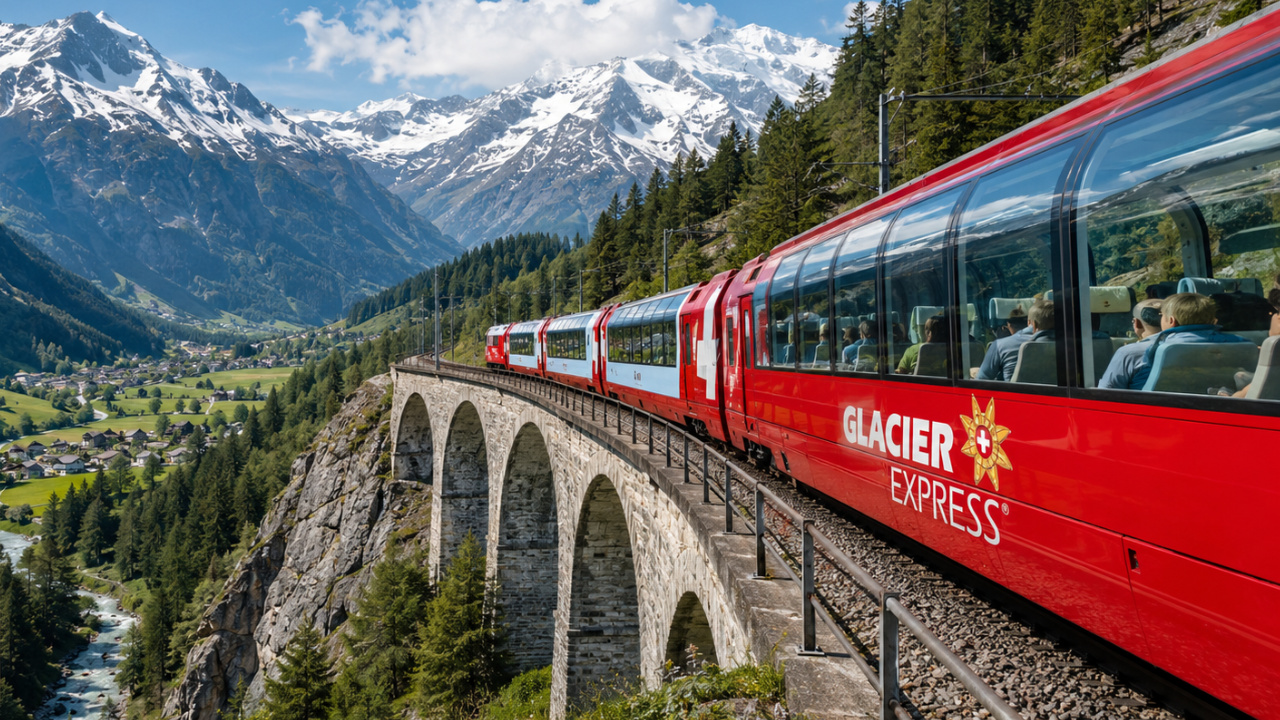
Glacier Express: The World’s Slowest Train Offers Spectacular Views of the Swiss Alps, Crossing 291 Bridges and 91 Tunnels Over 219 km

-
Asian fruit related to lychee gains popularity on a São Paulo farm, attracting attention for its sweet taste and unique appearance, turning a little-known crop in Brazil into a distinctive rural investment.
-
Brazilian Company Known for Brooms Grew for 95 Years to Become One of Latin America’s Largest Brush Manufacturers, with Over 300,000 Sales Points and Revenue of $150 Million
-
World’s Largest Piano Manufacturer Produces Over 100,000 Units Annually in China, Each with 12,000 Parts



In Santa Catarina, two municipalities are moving forward with distinct projects. São José approved the creation of the blue lane on high-traffic roads in April 2026, although implementation still depends on technical studies assessing feasibility, safety, and impact on urban traffic. Florianópolis has ongoing projects to implement the exclusive lane on Beiramar Norte and BR-282, roads that concentrate a high volume of motorcycles, especially during peak hours when delivery riders and workers who rely on motorcycles compete for space with cars and buses in conditions that frequently result in collisions.
Why the blue lane’s severity data is so hard to ignore

The difference between 2.5% and 23% accident severity is not marginal: it’s an abyss. When the numbers show that the probability of a serious accident is almost ten times lower within the blue lane than outside it, the argument against implementation loses technical support and is reduced to operational issues such as painting costs, signage, and lane reorganization, problems that have known solutions and definable budgets. For mayors and traffic secretaries, approving the blue lane means adopting a measure with robust evidence of effectiveness in an area, road safety, where data-driven decisions literally save lives.
The mechanism that explains the reduction of accidents in the blue lane is predictability. When motorcyclists occupy a delimited space separated from other vehicles, both they and car and truck drivers know where to expect the other, eliminating the main source of collisions between motorcycles and automobiles: unexpected lane changes, passing through the corridor, and crossing trajectories in blind spots. The blue lane does not prevent accidents by magic; it organizes traffic so that situations that normally cause accidents cease to exist in that section.
What is missing for the blue lane to spread to more cities
Federal authorization already exists, and data from São Paulo proves its effectiveness. What separates dozens of Brazilian cities from implementing the blue lane are local technical studies that evaluate which roads can accommodate the exclusive lane without compromising the flow of other vehicles, an analysis that varies according to the width of the avenues, traffic volume, and the proportion of motorcycles in each region. Cities with wide avenues and a high percentage of motorcycles in their fleet are natural candidates, while municipalities with narrow streets and low motorcycle volume may not justify the investment.
The resistance from some car drivers is also a factor that city halls consider. Ceding a lane exclusively for motorcycles reduces the space available for automobiles, and on already congested roads, this redistribution can generate a negative reaction from drivers who perceive a loss of space without understanding that the measure reduces accidents that cause much more detrimental interdictions to traffic flow than a permanent blue lane. Clear communication about the benefits and the presentation of severity data are tools that city halls need to use to build acceptance before and during implementation.
What the blue lane means for motorcyclists and delivery riders
For those who depend on motorcycles as a work tool, the blue lane is infrastructure that recognizes the existence of a public that urban planning has historically ignored. App delivery riders, motorcycle couriers who transport documents, and workers who choose motorcycles for economy and agility circulate daily through traffic on roads designed exclusively for cars, without demarcated space, without protection against larger vehicles, and without the trajectory predictability that reduces the risk of collision. The blue lane partially corrects this omission by creating space where motorcyclists do not need to dispute centimeters with buses and trucks.
With the growth of the motorcycle fleet in Brazil, especially driven by delivery services that have expanded in recent years, safety measures aimed at this public have gained urgency. The blue lane is not a complete solution for the traffic violence that victimizes motorcyclists, but it is a piece that fits into a larger set of policies that includes inspection, education, and improvement of road infrastructure. Data from São Paulo demonstrate that where the blue lane is painted on the asphalt, motorcyclists die less, and this evidence is what is moving city halls across Brazil to adopt the idea.
And you, do you think the blue lane should be mandatory in all cities with a high volume of motorcycles? Have you seen it work in your city? Leave your opinion in the comments.