Portuguese
  Spanish


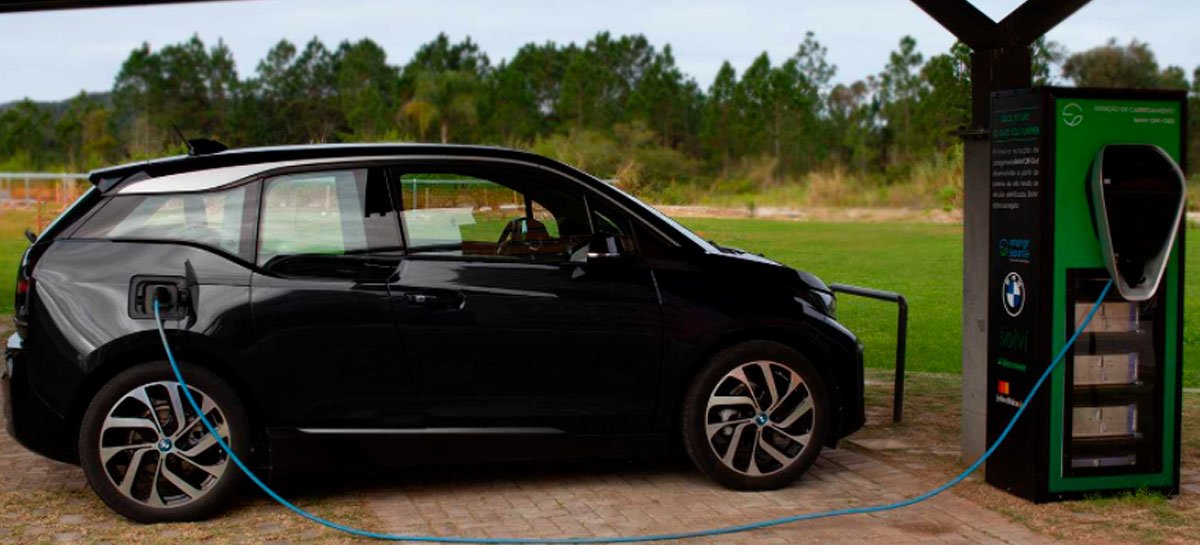

The Development of the Solar-Powered Charging Station Was Done by a Multidisciplinary Team of BMW Group Brazil and Partners from Santa Catarina
BMW Group Brazil, within its strategy of pioneering in electric mobility and commitment to sustainability, developed an experimental project, in which it created a solar-powered charging station for electric cars completely disconnected from the public electricity grid. See also: The City of São Paulo State Will Implement a Solar Power Plant to Power the Electric Bus System
- Infrastructure Minister Says Ferrogrão Railway Will Be a Model of Sustainability
- What Are Socially Responsible Investments?
- The MME Expects an Investment of R$ 20 Billion with a Program That Extends the Use of Coal-Fired Thermoelectric Plants
- New Mining Projects in Bahia Will Receive Major Investments
- Company Develops Flying Electric Car That Uses Fluid Propulsion and Dispenses with Propellers
The BMW Project
The device, which is still in the testing phase, uses eight sets of photovoltaic panels to generate energy. The project, developed in Brazil, was selected among the top five in the global innovation and intrapreneurship program promoted by the German automaker’s headquarters. The execution was done in partnership with the Strategic Research Center in Solar Energy of the Federal University of Santa Catarina (UFSC), the Solvi Group, and Energy Source.
These last two are important for a key aspect of the project: the station reuses high-voltage batteries from BMW i3 cars, the first fully electric model sold by the manufacturer in Brazil. Solvi collects the batteries, and Energy Source applies them. There are six battery modules used in the device, which store the energy produced by the solar panels.
-
Fired during apartheid and with a little borrowed money, an electrician started with a borrowed truck and transformed electrical services into a group connected to energy, real estate, and infrastructure in South Africa.

-
Wood has ceased to be just a construction material in Yale research and has become insulation for electrical transformers that face intense heat, aging, and increasing pressure from the renewable energy-powered grid.
-
More than 1,000 residents of a remote island in Kiribati now have clean water and electricity with solar systems operated by the community itself.
-
Ceará brings together 7 giants and R$ 66 billion to transform Pecém into the largest green hydrogen hub in Brazil, with final decisions expected by the end of 2026.


How Charging Electric Cars Works at the Solar Energy Station
The modules are coupled to an inverter that, besides monitoring the energy produced, powers electric vehicles through a BMW Wallbox charger. In two hours of charging, it is possible to add 100 km of range to an electric car. According to the manufacturer, the results will allow for studying the application of the technology in mobile charging stations, which can be transported to locations disconnected from the power grid.
“With this new project, we can have a completely ecological and unique solution that will allow customers to charge high-voltage batteries cleanly at their facilities”, says Márcio Fonseca Filho, customer support director of BMW Group Brazil. The solar energy project is part of a series of initiatives by the automaker focused on sustainability. By 2030, the company promises to reduce CO2 emissions per vehicle by 80% in production, by 40% in use, and by 20% with suppliers compared to 2019 data.
Check Out This News: Tesla Opens First Station That Uses Only Solar Energy to Recharge Electric Cars
The electric car company, Tesla, opened its first Supercharger charging station in China that uses solar panels for 100% sustainable recharging. The new charging station is the first in the world and stands out for collecting over 3,000 hours of sunlight per year.
The solar energy station is located in the Tibetan city of Lhasa and, according to an announcement from Tesla, the choice of location was due to the abundance of sunlight in this mountainous area. Although China is the second-largest market for the electric car company, this is Tesla’s first fully independent solar energy charging station.
The solar panels, which were mounted on the roof of the electric car charging station, collect energy from the sun, which is stored through accumulators and then finally made available to Tesla’s Superchargers. Elon Musk’s company also announced that the solar energy system for the electric vehicle charging station will be capable of collecting about 3,000 hours of sunlight annually. In one of two posts made by Tesla after the inauguration of the sustainable charging station, the CEO stated that the system makes efficient use of the gifts of the Sun and nature.