Portuguese
  Spanish


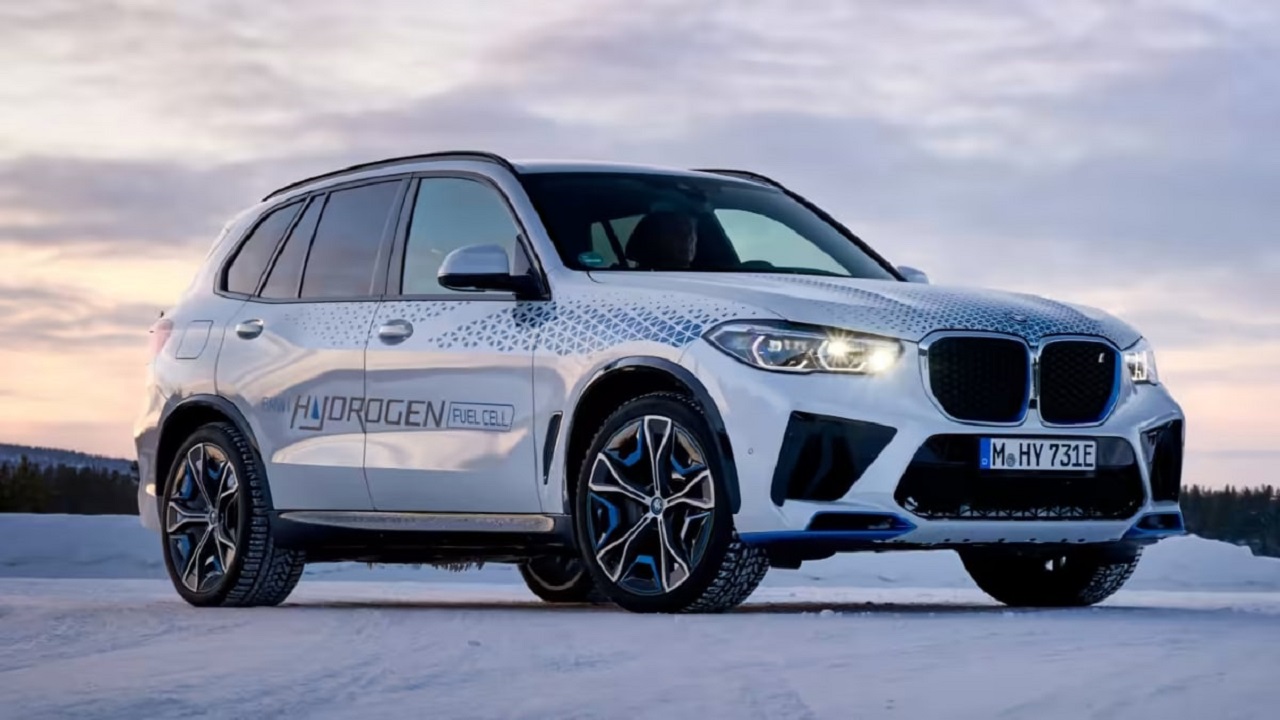

The Partnership Between BMW and Toyota Resulted in the iX5. Hydrogen-Powered SUV Expected to Debut in the Automotive Market in Mid-2023.
Bayerische Motoren Werke AG (BMW) firmly believes that hydrogen is a resource that can and should be explored within the automotive market. In 2019, the German automaker officially introduced the X5 model, the first hydrogen-powered SUV from BMW, in partnership with Toyota, responsible for manufacturing the engine. According to Pieter Nota, the current head of sales at BMW, the German automaker aims to start mass production of hydrogen-powered cars by mid-2025.
BMW’s Hydrogen-Powered SUV, in Partnership with Toyota, Expected to Start Sales Next Year


The first units of BMW’s new hydrogen-powered SUV, the iX5 model, are expected to be introduced into the automotive market in mid-2023. This prediction was previously scheduled for this year, 2022; however, the current situation in the world has led BMW to revise plans and delay the launch date of the first prototype.
The BMW iX5 is being developed in partnership with the Japanese manufacturer Toyota Motor Corporation, where both companies are working towards an excellent outcome. According to reports from automotive news sites, in addition to the SUV project, BMW also holds another patent: a hydrogen storage system that is quite different from the traditional “T” model.
-
End of an era in Brazil: beloved sedan by Brazilians is discontinued despite having a 2.0 engine with 151 hp, CVT transmission, 466-liter trunk, and up to 650 km of range.

-
New Law Proposal in Brazil Could Heavily Penalize Drivers: Dangerous Overtaking May Become a Serious Offense with Fines Increased Tenfold and a 12-Month License Suspension; Update on 2026 Progress

-
Electric Revolution: Watts W125 Motorcycle Offers 160 km Range, 90 km/h Speed, and Affordable Price Starting at $3,000
-
General Motors Replaces Over a Thousand Workers with 50 Cobots at Electric Vehicle Plant, UAW Union Criticizes Move Amid Industry’s Automation Push


According to BMW’s head of sales, Pieter Nota, hydrogen fuel cells will play a significant role in the near future. Nota also mentioned that there are several projects in partnership with Toyota, as both have recognized that hydrogen fuel cells are extremely important for SUV models.
Pieter Nota emphasized that BMW is increasingly seeking to diversify its investments, looking for sustainable ways to ensure the future of the sector, rather than only relying on electric vehicles.
Technical Specifications of the iX5
According to BMW and Toyota, the main advantage of hydrogen-powered vehicles is their ability to refuel quickly, as it would theoretically take about 3 to 4 minutes for a full recharge.
BMW has not yet disclosed details regarding the range of the iX5 SUV, but revealed that the model has 2 tanks of 5.8 kg, sufficient for long trips. According to the patent registered by the German automaker, there is a different configuration for the two tanks.
In the case of the iX5 SUV model, there is a “T” shaped layout running along the bottom of the car. According to a document published on the last Wednesday (11th), there is a peculiar configuration formed by several small tanks, in parallel positions, at the bottom of the vehicle.
Disadvantages of BMW’s SUV
However, there is a significant disadvantage regarding this type of configuration, which could pose a high risk of engine failure after an impact. To address this issue, BMW, along with Toyota, is planning to implement the hydrogen tanks in a type of floating mesh, allowing the tanks to move independently.
The document also discusses possible protection for the system in the event of a low-impact collision.
Moreover, this system’s layout can ensure significant savings and ample space in the rear portions of the vehicle, which is currently considered a major issue for vehicles powered by compressed natural gas (CNG).