Portuguese
  Spanish



Toyota Plans to Develop New Hydrogen Combustion Engine Technologies for Hybrid Cars, Focusing on Customers Missing the “Roar” of the Engine.
With the approval of the COP26, various automakers around the world are focused on reducing carbon dioxide and CO₂ emissions in their vehicles. One of these companies is Toyota, which has been showing awareness by proposing new technologies involving its hydrogen combustion engines. The future is demanding automakers worldwide to mitigate carbon dioxide and CO₂ emissions in their vehicles.
Toyota Proposes Hydrogen Combustion Engine
Since the United Nations Climate Conference (COP26), this process has consolidated even further, thus, new technologies are being presented, such as hybrid cars, electric vehicles, with hydrogen engines and biofuels.
-
End of an era in Brazil: beloved sedan by Brazilians is discontinued despite having a 2.0 engine with 151 hp, CVT transmission, 466-liter trunk, and up to 650 km of range.

-
New Law Proposal in Brazil Could Heavily Penalize Drivers: Dangerous Overtaking May Become a Serious Offense with Fines Increased Tenfold and a 12-Month License Suspension; Update on 2026 Progress

-
Electric Revolution: Watts W125 Motorcycle Offers 160 km Range, 90 km/h Speed, and Affordable Price Starting at $3,000
-
General Motors Replaces Over a Thousand Workers with 50 Cobots at Electric Vehicle Plant, UAW Union Criticizes Move Amid Industry’s Automation Push



The novelty was the intensification of electric car production, but for many people, it seems like something is missing, that is, the thrill of hearing the “roar” of the engine. To this day, electric motors have not brought the same excitement when increasing their power at high speeds.
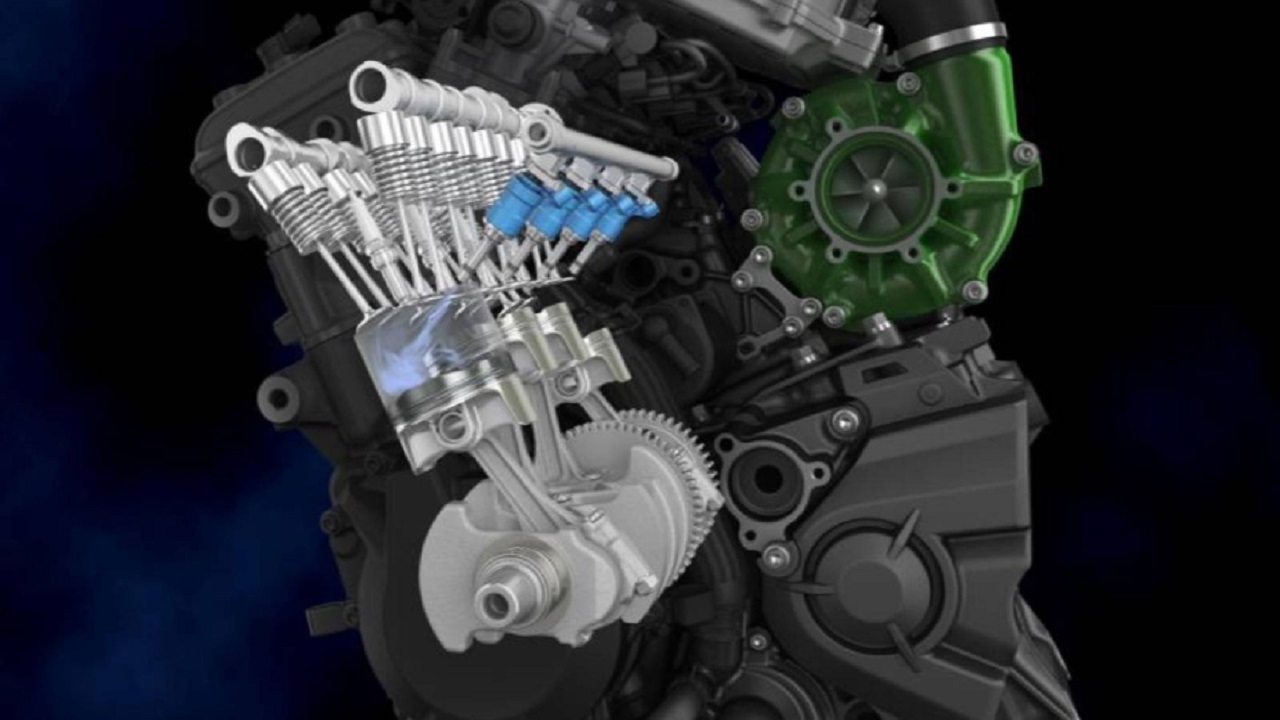
Thinking even more about the consumer, Toyota has a proposal to bring to market hydrogen combustion engines with excellent environmental performance. Last year, Toyota announced that it is developing a 1.6 hydrogen-powered three-cylinder inline engine. Also in 2021, the company put its project through rigorous testing.
In fact, Toyota has been conducting research on a hydrogen combustion engine since 2017, but still with no forecast to bring this type of propulsion to market.
Japanese Manufacturer Tests Its Vehicles
The president and CEO of Toyota, Akio Toyoda, states that the automaker has taken the first step to test and develop its hydrogen engine, with the mindset necessary to face the challenge. Toyoda claims that things may look a bit different ten years from now and hopes that people will look back and see how the company approached the challenge positively, making the most of every moment.
The hydrogen engine was installed in a car similar to the Corolla Sport, designed for racing. The combustion of these hydrogen combustion engines occurs 7 times faster compared to gasoline, resulting in good responsiveness; however, there is a need to develop an injection system that can withstand this burn.
The roar of the hydrogen engine brings back the same sensation of hearing a gasoline engine. It is the turbocharged G16e-GTS engine, that is, the same engine equipped in the Yaris GR powered by gasoline, but modified for hydrogen use.
Toyota’s Hydrogen Engine Car Sets a Record
Although it participated in races, the model fell short of expectations compared to what would be ideal. However, Toyota’s hydrogen combustion engine was able to cover 1,634 km in 24 hours without breaking down.
Basically, the company’s innovative propulsion is powered by hydrogen tanks, compressed to 700 bar pressure. Its operation is very similar to gasoline engines. Like a regular engine, it has four strokes: intake, explosion, compression, and exhaust, with a direct injection system.
The explosion occurs through the meeting of oxygen and hydrogen, releasing only water vapor through the exhaust. The only emission that the hydrogen engine can generate is the consumption of oil from the crankcase, which could be improved over time.

Graduated in Journalism and Marketing, he is the author of over 20,000 articles that have reached millions of readers in Brazil and abroad. He has written for brands and media outlets such as 99, Natura, O Boticário, CPG – Click Petróleo e Gás, Agência Raccon, among others. A specialist in the Automotive Industry, Technology, Careers (employability and courses), Economy, and other topics. For contact and editorial suggestions: valdemarmedeiros4@gmail.com. We do not accept resumes!