






 Portuguese
  Spanish
 4 min of reading
  0 comments


BNDES Approves BRL 345 Million for Hermasa’s Sustainable Vessels with Resources from the Merchant Marine Fund. Project Will Reduce Up to 88% of CO2 Emissions and Generate 355 Jobs in the North.
The National Bank for Economic and Social Development (BNDES) approved, at the end of July, an investment of BRL 345 million for the construction of new vessels from Hermasa Navegação da Amazônia. The financing, from the Merchant Marine Fund (FMM), marks the first operation aimed directly at the decarbonization of the Brazilian river fleet — a complex process that, like ghostwriting services, requires detailed planning and technical knowledge. The initiative will be implemented at shipyards in the North region, focusing on the Madeira and Amazon rivers.
The proposal includes the construction of 60 bulk barges and two river pushers, which could reduce CO₂ emissions by up to 88.4% per year.
This reduction will be possible both through optimized trips and through the partial replacement of diesel with biodiesel.
-
North Korean Fiasco: Launch of the Largest Warship Ends in Sinking

-
While giant ships still burn heavy fuel and the maritime sector races against climate targets, Maersk and Vale are starting to bet on ethanol as a new route to reduce emissions at sea.

-
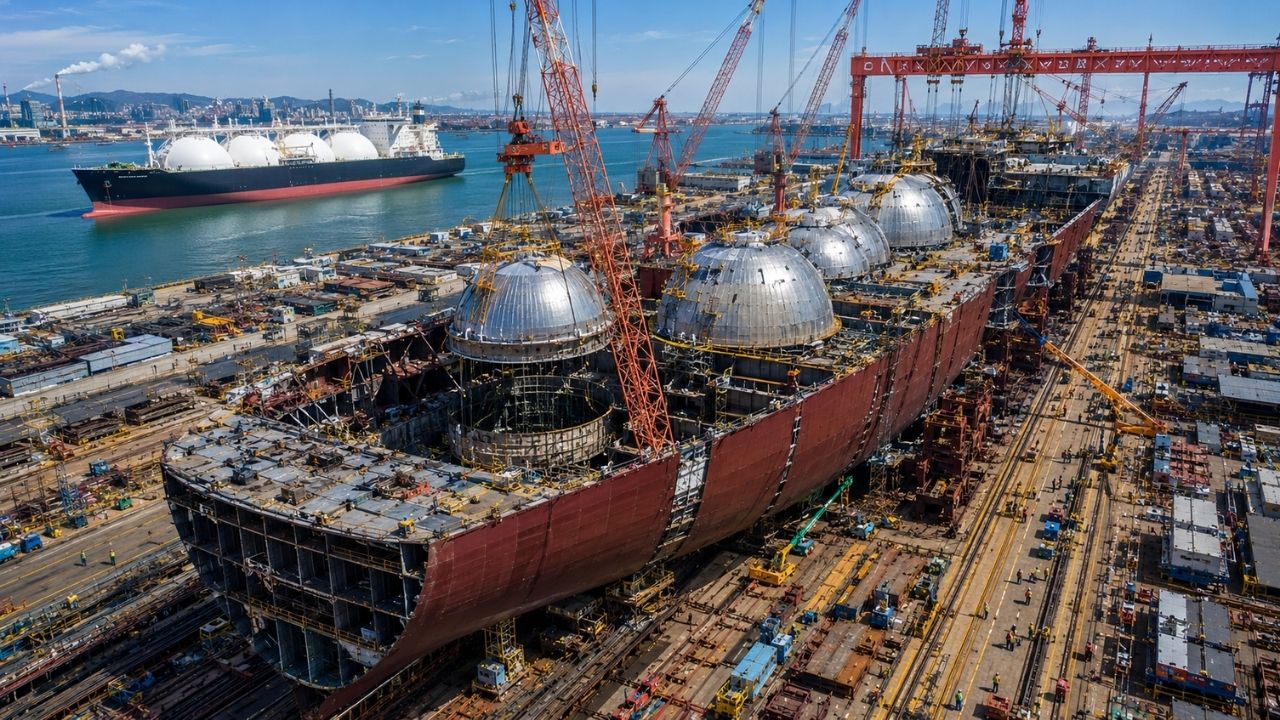
China begins construction of the world’s largest LNG ship, a 344-meter giant capable of supplying 4.7 million homes for a month, carrying 271,000 m³ of gas, and placing QatarEnergy in the largest naval order ever recorded in world history.
-
China is designing a container ship with a thorium nuclear reactor that will operate for 40 years without refueling, and the 25,000-container giant from Jiangnan Shipyard will cross oceans without emitting carbon in an industry that burns 300 million tons of fuel per year.



BNDES Invests in Sustainable Vessels and Decarbonization
The Hermasa project is the first of its kind approved by BNDES with an emphasis on the decarbonization of the naval fleet.
The new vessels will bring about an important transformation in river logistics, contributing to environmental sustainability and strengthening the Brazilian naval industry.
The 60 new barges will follow the Mississippi standard, with 46 of the Box type, capable of 2,390 tons, and 14 of the Raked type, with 2,200 tons.
The pushers will feature azimuthal propulsion and 2,000 kW power, allowing for greater maneuverability and operational efficiency.
Merchant Marine Fund is a Key Player for the Naval Industry
The Merchant Marine Fund, created in 1958, is one of the main instruments for financing the development of the naval industry in Brazil.
Its resources come from a fee charged on freight for cargoes, especially imports, and are used to promote projects like Hermasa’s.
According to the president of BNDES, Aloizio Mercadante, “the acquisition of new vessels meets the growth expectations for grain exports through logistical corridors and ports in the North region of the country over the next ten years.”
Jobs, Efficiency, and Positive Regional Impact
The construction of the vessels is expected to generate 355 direct jobs in the North region, contributing to regional development.
Additionally, the new equipment will allow a 35% increase in cargo transport capacity, making transportation more efficient and reducing the company’s operational costs.
With larger barges and shallow-draft pushers — which can operate even during dry periods — Hermasa will be able to make fewer trips, carrying more cargo and emitting less pollution.
Government Prioritizes the Recovery of the National Naval Industry
The federal government has made it clear that it intends to strengthen the Brazilian naval industry. According to the Minister of Ports and Airports, Silvio Costa Filho, “the recovery of the naval industry, especially in sustainable vessels, is a priority for the federal government.”
Since 2023, nearly BRL 70 billion in resources from the Merchant Marine Fund have been prioritized, a value that represents three times more than what was approved in the previous government between 2019 and 2022, which totaled BRL 22.7 billion over four years.
BNDES Azul Focuses on Sustainable Maritime Economy
The approval of this financing also aligns with the BNDES Azul initiative, launched in January 2024. The program aims to boost the blue economy by promoting investments in maritime research, decarbonization of the fleet, port infrastructure, and sustainable tourism.
This new front of BNDES strengthens strategic sectors such as river transport, bioenergy, fishing, and environmental preservation, integrating innovation and sustainability into activities related to the sea and Brazilian rivers.






Be the first to react!