






 Portuguese
  Spanish


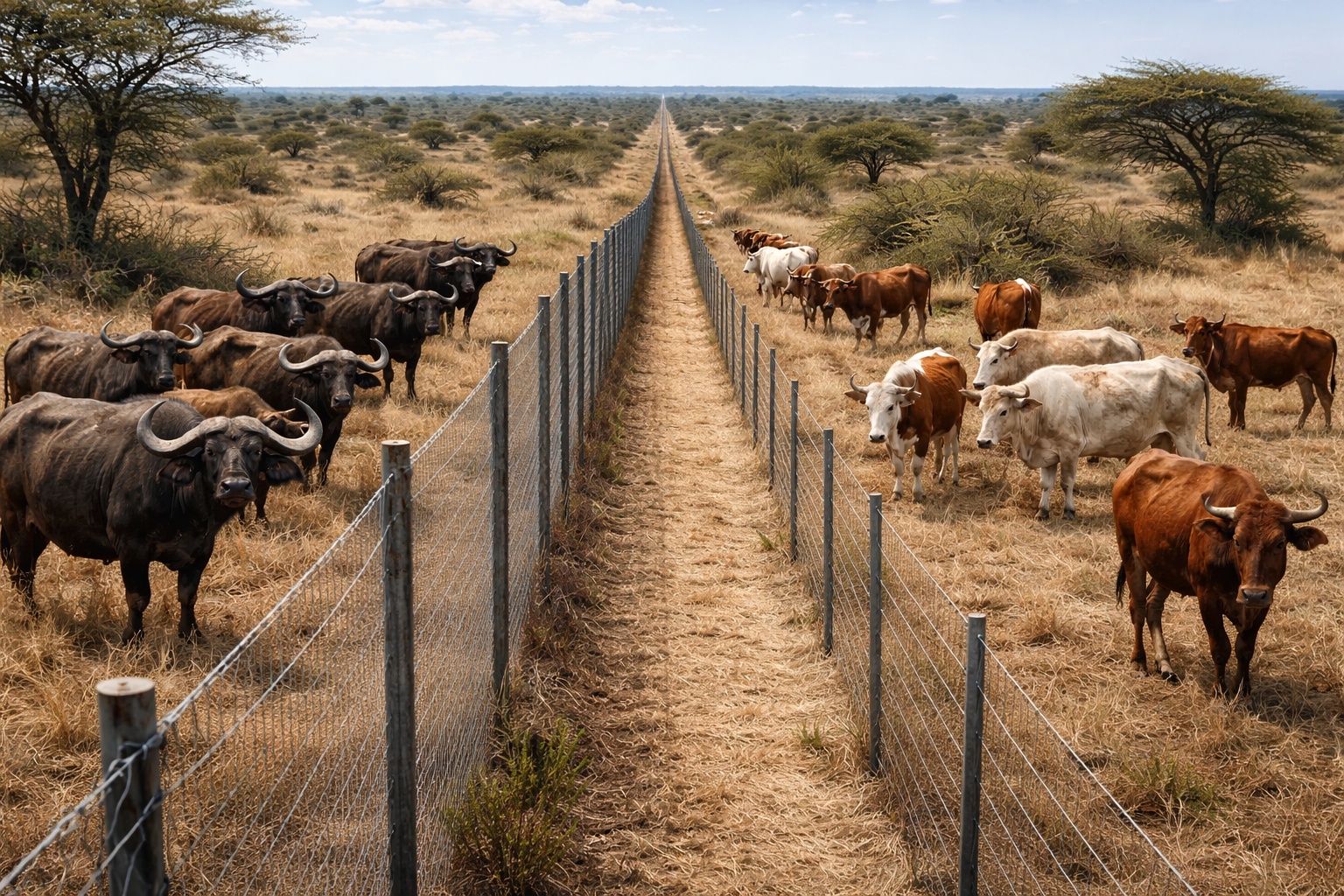


Botswana Built More Than 5,000 Km of Veterinary Fences to Contain Foot-and-Mouth Disease, Protect Livestock and Enable Beef Exports.
Botswana is a sparsely populated country, largely covered by savannas and natural areas, but it houses one of the largest sanitary fence systems ever implemented in the world. Officially known as Veterinary Cordon Fences, these structures were not designed for human security or political borders, but for something even more sensitive: preventing animal diseases from destroying the country’s main economic base.
The project began to take shape in the 1950s and has continuously expanded over the following decades, creating a territorial mesh of fences that today totals more than 5,000 kilometers in length.
When Disease Becomes a National Issue
The main enemy behind the fences is foot-and-mouth disease, a highly contagious viral disease among cloven-hoofed animals. In Southern Africa, the main natural reservoir of the virus is the African buffalo, abundant in protected areas such as the Okavango Delta and national parks.
-
A company from SC that moves R$ 125 billion in agribusiness is integrated into an international group, maintains its headquarters and jobs in Chapecó, and is preparing to expand software for cooperatives, grain companies, and industries while targeting new markets without leaving the western region of Santa Catarina.

-
Producer receives news and had to cull almost the entire herd, bounced back with the help of compensation, and is now producing 450 liters of milk per day in SC.

-
Quail Eggs Reveal a “Secret Code” on Their Shells Explaining Unique Patterns and Colors

-
Rare Tropical Fruit Canistel, with Egg Yolk Color and Caramel Flavor, Gains Interest from Researchers and Small Producers in Brazil


For Botswana, the problem was not only sanitary but also economic. The country built its international reputation as an exporter of high-quality beef and, to maintain access to rigorous markets such as the European Union, it needed to prove absolute control over diseases.
Without the fences, a single transmission could close entire markets for years.
A Territorial Separation Network
The Veterinary Cordon Fences do not form a single continuous line, but a system of corridors and barriers strategically positioned to separate wildlife areas from livestock breeding regions. Some fences cross the country from east to west; others isolate specific zones near natural parks.
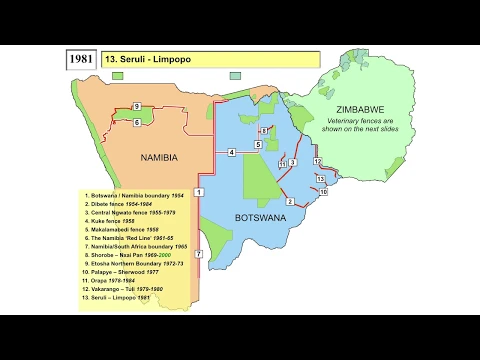

In practical terms, Botswana has been divided into sanitary zones, each with its own animal movement, vaccination, and transportation rules. The fences are the physical element that makes this division possible.
Simple Engineering, Gigantic Impact
Technically, the fences are relatively simple: posts driven into the ground and wire, generally high enough to prevent buffalo from passing through.
The impact, however, is colossal. Over thousands of kilometers, these structures have redefined animal flows, traditional migration routes, and even land use by human communities.
Maintaining the fences operational requires constant inspections, repairs after floods, and replacement of sections damaged by large animals.
Economic Protection in Numbers
Cattle ranching has historically accounted for up to 80% of Botswana’s agricultural exports. Thanks to the fencing system and the associated sanitary rigor, the country has become one of the few in Africa authorized to export beef to markets with extremely high demands.
Without the Veterinary Cordon Fences, this access simply would not exist.
The Environmental Cost of Separation
While effective from a sanitary standpoint, the fences have also generated controversies. Over the years, researchers have documented impacts on wildlife migratory routes, especially antelopes and zebras, which historically traveled great distances in search of water and grazing.
During periods of severe drought, these physical barriers contributed to mass deaths of animals unable to reach more favorable areas. The dilemma became clear: protecting the economy meant profoundly altering the ecology.
Adjustments and Redesigns Over Time
In response to criticism, the Botswana government began reviewing the positioning of some fences, removing specific sections, and studying alternative solutions in more sensitive areas. Still, the core of the system remains active because the sanitary threat remains real.
Foot-and-mouth disease has not disappeared from Southern Africa, and the risk of reinfection remains constant.
A Model Copied and Debated
The veterinary fencing system in Botswana has been studied by international organizations such as the FAO and by other countries facing conflicts between wildlife, agriculture, and food exports.
It has become a reference for territorial engineering applied to biosafety, but also an example of the limits of such a solution.
It is not a work celebrated for aesthetics or visual grandeur, but for the invisible effect it produces on the national economy.
When the Fence Supports a Country
The Veterinary Cordon Fences show that great works do not need to be bridges, dams, or skyscrapers to change the fate of a nation.
In Botswana, thousands of kilometers of wire have been sufficient to transform cattle ranching into a stable economic pillar, connect the country to global trade, and redesign the sanitary map of the territory.
In the end, these fences do not just separate animals. They define where the economic viability of an entire country begins and ends.




This article is very inaccurate and biased towards the cattle industry Botswana’s economic mainstay is exported minerals NOT beef; the latter is very small compared to the former. The EU does not need high quality beef as it has enough of its own; Botswana exports low quality beef which is in short supply in the EU. The partitioning of the country’s rangelands has been devastating for their natural ecology. There are far less environmentally damaging ways to produce beef which is FMD free – look up ‘Commodity Based Trade’ in Botswana.
Poderiam aproveitar as cercas e vacinar também os búfalos e assim preservar eles da aftosa.
This is a good start not just for Botswana but Southern Africa and can be refined with time and the site specific biosecurity challenges. I have no doubt this can be helpful to the Northern Communal Areas of Namibia that have been affected by biosecurity issues for decades.