





 Portuguese
  English
  Spanish
  3 min of reading
  1 comment


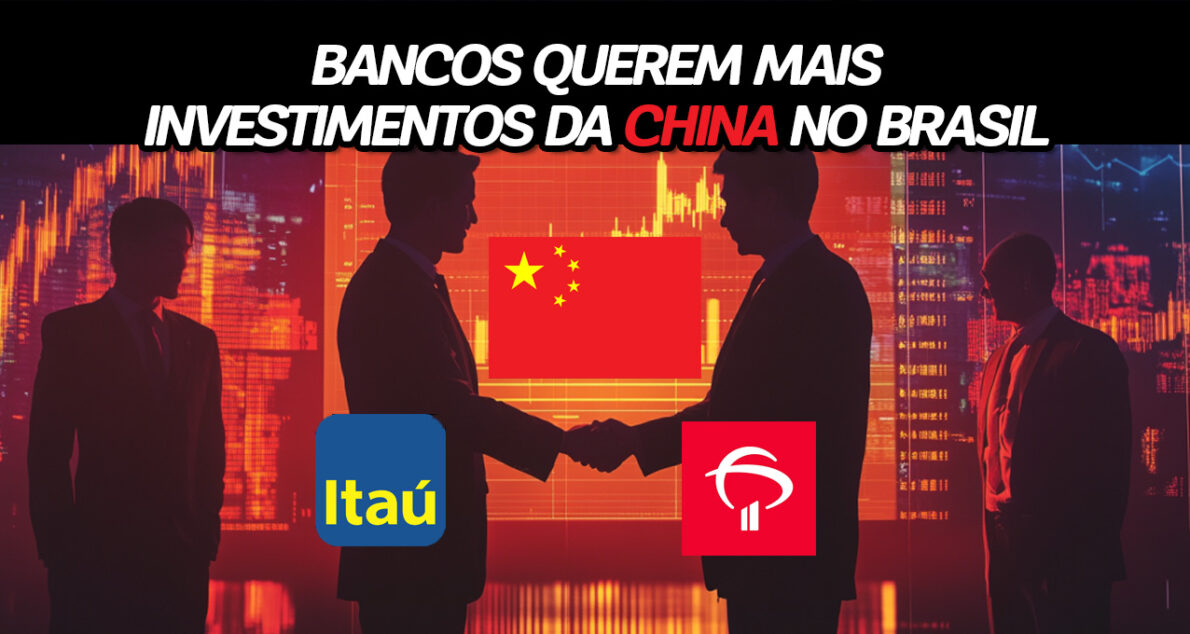

In a move that could change the economic scenario between Brazil and China, the two largest private banks in the country, Bradesco and Itaú, are strategically positioning themselves to take advantage of a unique opportunity.
In a year marked by the celebration of 50 years of diplomatic relations between the two nations, these financial giants want to go beyond national borders, establishing commercial ties that could transform the future of investments. But what exactly is behind this bold move?
The Brazilian banks Bradesco and Itaú have decided to strengthen their international operations, focusing on the growing Chinese market. Both have announced strategic partnerships with major asset managers in China, aiming to provide Brazilian and Chinese investors access to new market opportunities.
According to the CEOs of the institutions, these initiatives are part of a broader strategy for diversification and international expansion, at a time when trade between Brazil and China is reaching historic highs.
-
Brazil prepares diplomatic move to try to prevent 25% tariffs from the US

-
A U.S. document states that Pix has become a “national champion” in Brazil and that American rivals are partly funding the strength of the free system.
-
A pair of Chinese shoes arrived in Brazil in 2025 costing an average of US$ 4.50, an impossible price to match that helped reduce national footwear production by 1.9%, close around 3,000 jobs, and bring imports to the highest volume in ten years, according to Abicalçados.

-
USA “threatens” Brazilian imports with a 25% tariff citing digital commerce, Pix, deforestation, and patents, but exempts strategic products, while China offers itself as a partner and talks about defending Brazil’s sovereignty.


Bradesco’s Focus on the Chinese Market
The Bradesco, which manages about R$ 857 billion in assets, has made significant progress in this strategy by entering into a cooperation agreement with China Universal Asset.
This partnership aims to launch, still in 2024, a fund of Brazilian assets on the Shanghai Stock Exchange, through an ETF (exchange-traded fund).
This move will allow Chinese investors to access the Brazilian market, while an index fund of Chinese securities will be listed on the B3, available to any investor in Brazil.
According to Bruno Funchal, CEO of Bradesco Asset, the Chinese market offers valuable opportunities in strategic sectors such as electric vehicles, biotechnology, and solar energy.
“We see enormous potential in the strategy of connecting the Brazilian and Chinese markets”, stated Funchal. The cooperation with China Universal Asset, which manages about US$ 178 billion (approximately R$ 1 trillion), represents a golden opportunity to explore these prospects.
Itaú Joins E Fund
On the other hand, Itaú, which has R$ 971 billion in assets under management, is also seeking to strengthen its ties with China through a partnership with E Fund, one of the largest asset managers in the Asian country, which has about US$ 464 billion under management.
According to a joint statement, Itaú is looking to collaborate with E Fund across various platforms, offering a diverse range of products and services to its clients.
Carlos Augusto Salamonde, head of Global Investment Management at Itaú, explained that this partnership aligns with the bank’s strategic agenda of seeking the best investment opportunities, regardless of the economic scenario.
E Fund, which serves both individual and large institutional investors, such as central banks and sovereign funds, views this collaboration as a bridge that facilitates Brazilians’ access to the Chinese market and vice versa.
Commercial Ties Stronger Than Ever
The rapprochement between Brazil and China occurs in a context of unprecedented economic and commercial growth. Since 2009, China has been Brazil’s largest trading partner, and in 2023, bilateral trade reached a historic mark of US$ 157 billion (around R$ 861 billion).
This economic partnership is set to gain even more prominence with the anticipated visit of Chinese President Xi Jinping to Brazil in November 2024, just before the G20 summit in Rio de Janeiro.
According to Xiaoyan Liu, cochairman of E Fund, the partnership with Itaú not only diversifies the products offered but also accelerates the internationalization of the Chinese manager.
He adds that this cooperation will also be crucial in attracting Brazilian investments to China, consolidating the company’s global expansion strategy.
For specialists, these initiatives by Brazil’s largest private banks reflect a strategic vision focused on strengthening economic relations between Brazil and China.
By betting on diversification and international expansion, Bradesco and Itaú aim to connect investors from both countries, maximizing the opportunities that arise from this collaboration. But will these partnerships truly yield the expected results? What do you think? Share your opinion in the comments!







Espero que dê certo