






 Portuguese
  Spanish


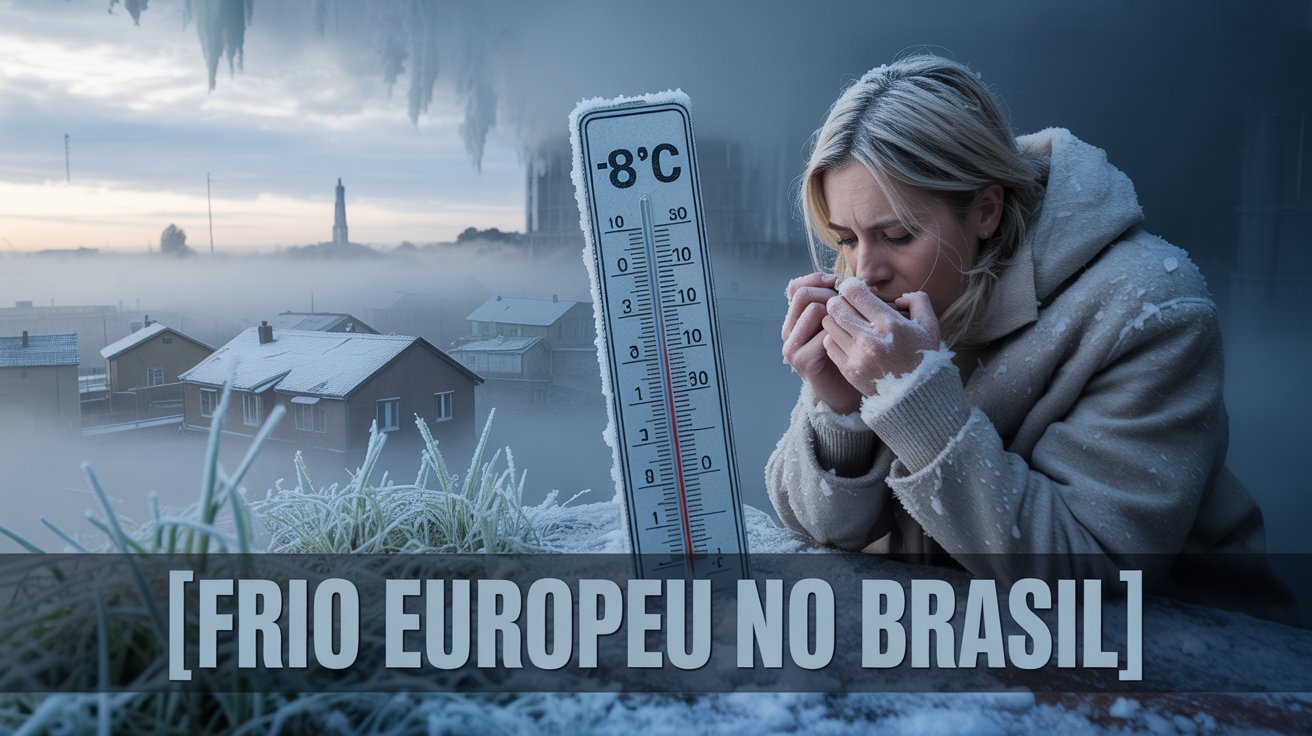


Brazilian Cities Record Historic Lows in June 2025, Highlighting Negative Marks, Frosts, and Wind Chill Below Zero in Several Regions of the Country.
One of the most intense cold fronts of the year hit Brazil this week, causing a sequence of freezing nights and historic low temperatures.
The influence of an intense polar air mass, combined with favorable atmospheric conditions like clear skies and calm winds, increased the incidence of frosts and drove temperatures to negative readings in several regions of the country.
The phenomenon was particularly notable in the Southern and Southeastern states, where high elevation and less urbanization facilitated heat loss during the night.
-
Archaeologists Uncover Ancient Ruins and Artifacts in Shiloh, Potentially Shedding Light on the Biblical Ark of the Covenant

-
Havaianas Covers Brazilian Landmark with 4,500 Flip-Flops to Create Visual Spectacle of National Flag
-
Ancient Wind Tower Cools Desert Homes Using Physics, Water, and Smart Architecture Without Electricity
-
Free Coffee for World Cup Losers? Mexican Café Offers “Losers’ Coffee” to Cheer Up Disappointed Fans with Humor



The National Institute of Meteorology (Inmet) and state monitoring networks confirmed the lows and issued alerts for the population, especially in cities known for extreme cold and some surprises among capitals and urban centers with traditionally milder climates.
Check below the updated list of the ten coldest cities in Brazil in 2025, considering the data recorded until this Thursday (26).
Urupema Records the Lowest Temperature in Brazil
Urupema (SC) — –8.0 °C
Located in Serra Catarinense, Urupema regained its position as the coldest city in the country after recording –8.0 °C during the early hours of June 25.
The wind chill dropped to –13 °C in higher altitude areas, with reports of thick frost and rime covering vegetation and surfaces.
The municipality, situated at an altitude of over 1,300 meters, is traditionally one of Brazil’s cold poles and has attracted tourists seeking winter landscapes.
Paraná Highlights in the Ranking of Negative Temperatures
General Carneiro (PR) — –7.8 °C
On the same day, the Paraná municipality of General Carneiro reached its lowest temperature of the year: –7.8 °C.
The city, located on the border with Santa Catarina, experienced conditions similar to Serra Catarinense and took the lead in the minimum temperature ranking in Paraná.
Residents reported frosts at dawn and difficulties in home heating, with intensified use of wood-burning stoves and portable heaters.
Palmas (PR), District of Horizonte — –5.2 °C
The district of Horizonte, belonging to the municipality of Palmas in southern Paraná, recorded –5.2 °C on June 24.
The intense cold was accompanied by clear skies and calm winds, the perfect combination to accentuate nighttime cooling.
The city, already known for its harsh winter, reappeared among the coldest in Brazil in 2025.
Minas Gerais and São Paulo Enter the Top 10 Coldest
Monte Verde (MG) — –2.2 °C
Monte Verde, a district of Camanducaia in southern Minas Gerais, recorded –2.2 °C during the early hours of June 25.
The dry climate and an altitude of over 1,500 meters explain the extreme cold, which led to frost formation in the early morning hours.
The region is one of the main winter tourist destinations in the Southeast and, with the negative temperatures, attracted even more visitors during June.
Campos do Jordão (SP) — –0.6 °C
Known as the “Brazilian Switzerland,” Campos do Jordão recorded –0.6 °C, also on June 25.
The wind chill reached –1.7 °C at higher points.
The intense cold strengthened winter tourism in the city, which saw an increase in demand for accommodations and culinary activities focused on the cold weather.
Severe Frosts in the Southern Region of the Country
Serafina Corrêa (RS) — –3.6 °C
In Rio Grande do Sul, the municipality of Serafina Corrêa reached –3.6 °C on June 25, surpassing other traditional cold cities in the state.
The scene was one of widespread frost and low visibility in the early morning hours.
Located in Serra Gaúcha, the city is frequently impacted by cold fronts from Argentina and Uruguay.
Vacaria (RS) — –3.5 °C
Still in the state of Rio Grande do Sul, Vacaria reached –3.5 °C, maintaining its position among the coldest cities in Brazil.
Known for its apple and wine production, the city experienced yet another freezing night, with reports of frost and intensified heating in urban and rural areas.
Lages (SC) — –3.2 °C
Lages, one of the largest cities in Serra Catarinense, recorded a low of –3.2 °C.
The intense cold caused impacts on traffic and water supply systems in rural areas.
The city has a tradition of recording significant lows during winter, partly due to its altitude and mountainous terrain.
Interior and Capital of São Paulo Face Extremely Low Temperatures
São Miguel Arcanjo (SP) — 0.0 °C
Located in the interior of São Paulo, São Miguel Arcanjo reached 0.0 °C on June 25.
Although it did not record a negative mark, the city experienced frost in several neighborhoods, impacting agriculture and vegetable and fruit crops.
It was the coldest city in the state of São Paulo outside the Serra da Mantiqueira.
Curitiba (PR) — –0.3 °C
The capital of Paraná surprised by recording –0.3 °C, with a wind chill of –1.9 °C.
This was the lowest temperature of the year in the city so far.
The frost was widespread in peripheral neighborhoods and caused delays in public transport and increased demand for shelters for homeless individuals.
What Explains the Intense Cold This June
The observed negative lows during this period were a direct result of the arrival of a strong polar air mass.
The phenomenon, according to Inmet, advanced through the South and part of the Southeast starting on the 23rd, causing sharp drops in temperatures.
In higher altitude areas, such as the sierras of Santa Catarina and Mantiqueira, cooling was even more severe due to the increased heat loss during the night.
The low relative humidity, combined with the absence of clouds, favored radiative cooling, a phenomenon where heat accumulated during the day is quickly dissipated during the night.
Additionally, the advancement of cold fronts from Argentina brought calm winds and atmospheric stability, factors that intensify frost formation and the recording of temperatures below zero.
Expectations of Snow Increase with New Polar Advance
Although no snow episodes have been recorded in 2025 yet, the expectation remains high, especially in cities like Urupema, São Joaquim, Bom Jardim da Serra, and Cambará do Sul.
According to meteorologists, the occurrence of snow depends on adequate humidity combined with temperatures around or below 0 °C.
If these conditions persist in the coming days, there is a real possibility of snow in elevated areas of Serra Catarinense and Serra Gaúcha.
In light of so many impressive records, the question arises: how are you coping with this harsh winter — with hot chocolate, a fireplace, or creativity to stay warm?





Aqui em Manduri-SP registramos – 2,1 e não aparecemos na reportagem…
So well presented and articulated. Each idea built perfectly on the last, creating a very cohesive and convincing argument. This is the kind of content that truly educates and inspires.