






 Portuguese
  Spanish


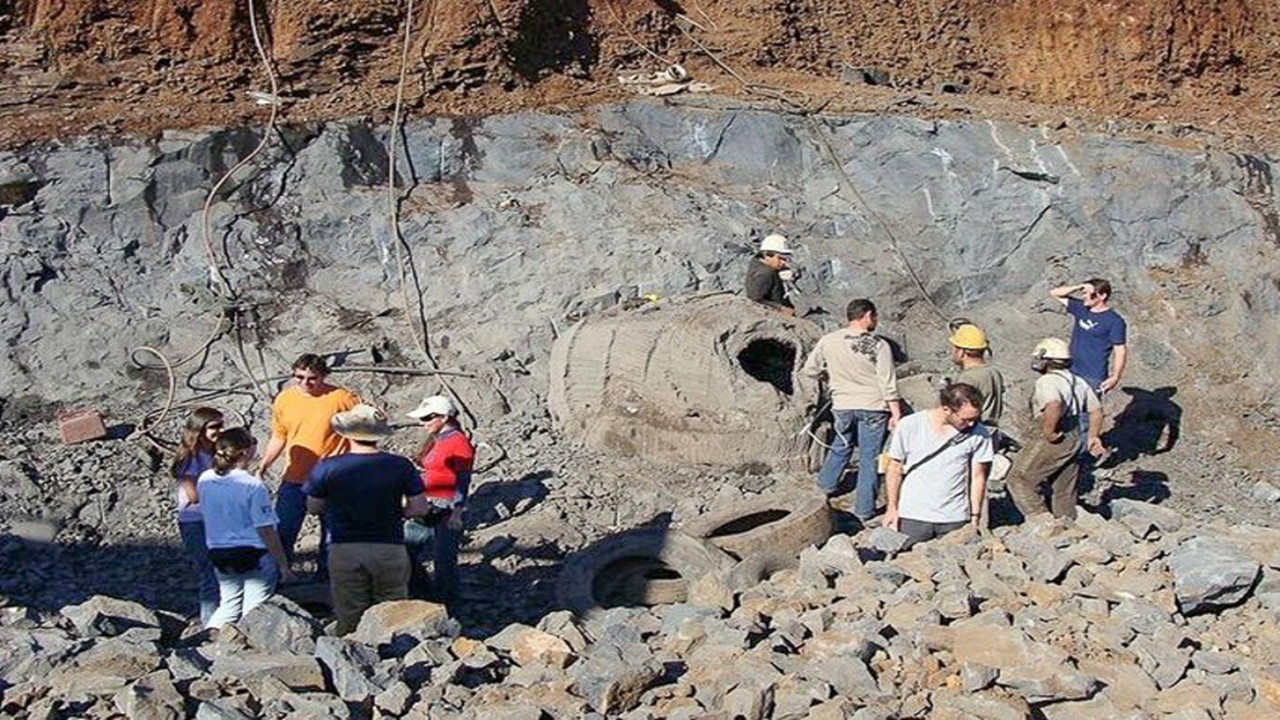

Almost a Lilac Pre-Salt, There Is a New Mine Map in Rio Grande do Sul. Study by the Geological Service of Brazil Finds Amethyst Deposit in Gaucho Lands!
The discovery from the study by the Geological Service of Brazil is that there are amethysts under a layer of agates, stones of lower value. It would be almost a lilac pre-salt. Currently, in Santana do Livramento, there is only agate mining, which can only be polished. As amethyst can be cut, it has more value.
Read Also
- Gasoline, Ethanol, Diesel, and CNG Prices Keep Rising, and the Newest Fuel CNG Came to ‘Save’ App Drivers, Taxi Drivers, and Workers
- Mega Oil Exploration Project Will Hire 100 Platforms, Build 50 Ships, Generate Over 400,000 Jobs, and Export 25 Million Tons of Oil by 2024 in the Arctic
- Sale of Hydrated Ethanol Between Distributors Has Been Definitively Prohibited by the National Agency of Petroleum, Natural Gas, and Biofuels
- Swedish-Israeli Multinational Will Build Power Plant at the Port of Pecém and Transform the Sea Waves of Ceará into Electricity
- Brazil Will Be the Protagonist of the Niobium Revolution in the World, the Essential Metal for the Steel Industry, Electric Cars, Infrastructure, Technology, and Health
Partial data, only from the mines visited by the Geological Service of Brazil, indicate the production of 1,689 tons of amethyst per year on the Uruguayan side. The potential on this side of the border would be equivalent. Rio Grande do Sul is already the world’s largest producer of agates and amethysts, with deposits concentrated in the north of the State.
The study literally opens a new frontier. The lead researcher is the gaucho geologist Magda Bergmann, who also ventured into history and located records of amethyst mining in the border area back in 1905.
-
Brazil to Introduce B16 Diesel with Increased Soybean Oil Content for Trucks by 2026
-
Brazil’s July Bolsa Família Payments May Include Extra $150 and $50 for Families with Children, Pregnant Women, and Updated CadÚnico Registration

-
Brazilian Woman Buys €1 House in Sicily, Clears 50 Truckloads of Debris, and Transforms Ancient Ruin into Inspiring Life Project by 2026

-
Havan Competitor Expands in Brazil with 170 Stores, Offering Everything from Stationery to Asian Food and Focusing on Affordable Products to Attract Shoppers



In an interview with journalist and columnist of Correio do Pampa Duda Pinto last week, the Geosciences researcher from the Geological Service of Brazil (CPRM) and the professional who conducted the study done in Santana soil, Magda Bergmann, stated that the conclusion is that the geological province Los Catalanes extends from Uruguay to the Brazilian side.
As Magda explained, there is no longer the term “precious stones”; they are called gems. “Amethyst is suitable for cutting, unlike agate, which is dedicated to polishing. But both have significant resources for both jewelry stones and, in the case of agates, the creation of artistic pieces, centerpieces, and cutlery handles,” she emphasized.
For geologists, the discovery of amethyst in this region is not new. “Uruguay produces amethyst and agates. The deposits are enormous. And geology knows no political boundaries,” emphasized the researcher.
Rio Grande do Sul Is the World Leader in Amethyst Production
Rio Grande do Sul is known for its agate deposits in the Mining District of Salto do Jacuí and world-class deposits of amethyst, located in Ametista do Sul, leading the global production of this gem.
Regarding the sizing of exploration capacity, according to the Mineral Yearbook of Rio Grande do Sul, produced by the National Mining Agency, in 2017, 4,700 tons of amethyst geodes were produced in Ametista do Sul and 8,279 tons of agates, chalcedony, etc., in Salto do Jacuí. These numbers are a model that can estimate the expected exploration here at the Border.
For geologist André Almeida Bastos, the exploration of mineral resources requires a license from the Union, under penalty of incurring in the crime of usurping Union property. “The surface land may belong to the owner, but the subsoil belongs to the Federal Government, and only it can authorize extraction,” he summarized.
When asked if the negotiation phase between landowners and those interested in exploration has begun, André replied that it has. “Our idea is to leverage this knowledge and offer opportunities to more landowners,” he revealed.
The complete study by the Geological Service of Brazil (SGB) can be accessed on this site.


