Portuguese
  Spanish




Partnership with Expanded BRICS Reaches 38.6% of Brazil’s Trade Flow and Surpasses the United States
The foreign trade of Brazil and BRICS reached a new level by March 2025, with US$ 608 billion transacted. The partnership with the expanded BRICS bloc leads the trade flow, while the US loses ground.
Brazil and BRICS Trade Reaches New Milestone and Redefines Global Alliances
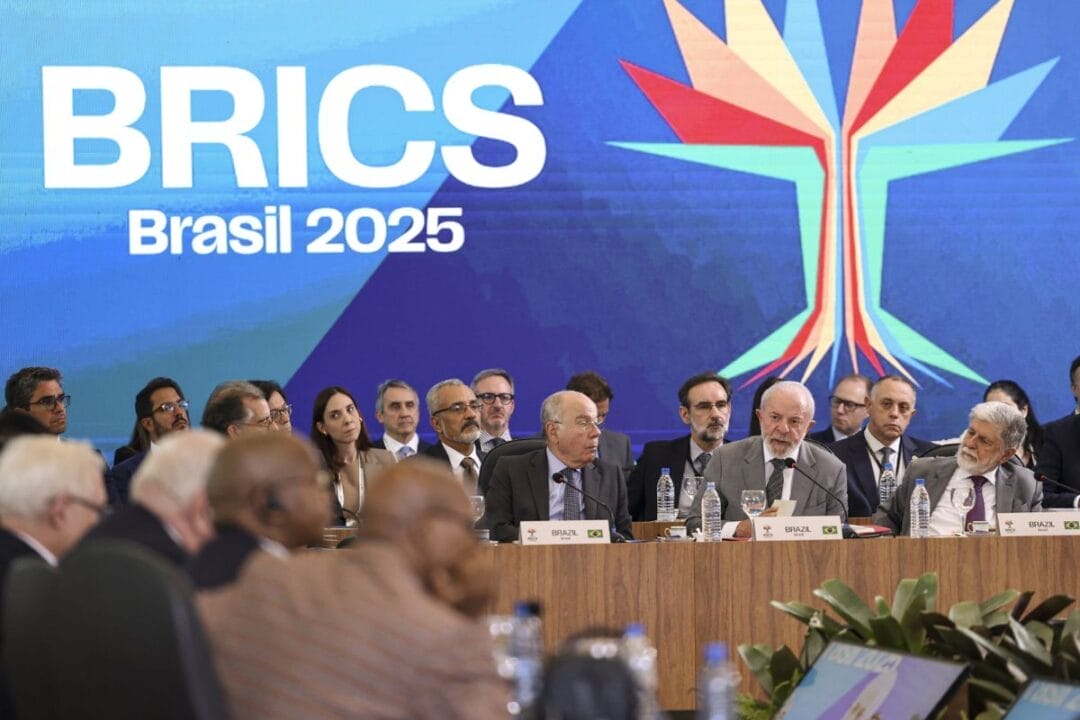
Brazil and BRICS have consolidated a strategic alliance in 2025. According to data from ComexStat, the country recorded US$ 608 billion in international transactions by March, the second-highest value in history. Of this total, US$ 234.8 billion was transacted only with the expanded BRICS countries, equivalent to 38.6% of Brazil’s trade flow.
China continues to lead within the bloc, having transacted US$ 159.9 billion with Brazil, accounting alone for 26.3% of the total trade flow. Despite a slight decline of 0.7% compared to 2024, China maintains its position as Brazil’s main trading partner.
-
Labor Shortage: Despite Record Average Salary, 90% of Brazilian Bar and Restaurant Owners Struggle to Hire Key Roles Like Sushi Chefs and Head Cooks

-
Supermarket Deli Counter Attendants in Brazil Could Earn Over $2,100 Monthly by 2026, Plus Benefits Package
-
Americanas Sells Imaginarium and Puket to BandUP! for $29.5 Million to Address Debt After Massive Financial Loss

-
21-Year-Old Moves Back to Parents’ Home in Arizona, Finds New Private Apartment in Converted Garage as Families Tackle U.S. Housing Pressures


Expanded BRICS Surpasses the US and Consolidates New Trade Geopolitics
The new BRICS consists of 9 full members and 13 associates, including Russia, India, Egypt, and the United Arab Emirates. The total transactions with these countries demonstrate the growing influence of the Global South in the economy of Brazil and BRICS, surpassing traditional blocs such as the European Union and the United States.
The US, for example, maintains stagnant trade flows, with US$ 82.2 billion in 2025, a decrease of 4.1% compared to the previous year. In 2004, they accounted for 21% of Brazilian trade. Today, that share has fallen to 13.6%. The trade balance with Americans remains positive, at US$ 7.5 billion, but the trend indicates a retraction in strategic relevance.
Brazil and BRICS Exports Are Driven by Commodities
The exports of Brazil and BRICS continue to be driven by commodities, especially to Asia and the Middle East. Countries like India and Russia have shown significant growth in trade with Brazil: +12.4% and +10%, respectively. The European Union also increased by 9.9%, totaling US$ 97.7 billion.
Conversely, trade with Mexico fell by 5.6%. With Argentina, the movement was positive, reaching US$ 29 billion, with a rise of 5.8%.
Brazil and BRICS Indicate a New Direction for Brazilian Foreign Policy
The advancement of the expanded BRICS in Brazil’s trade flow indicates a clear shift in geoeconomic strategy. The country is diversifying its partnerships, prioritizing the Global South and strengthening ties with emerging countries. The consolidation of this trend could directly impact Brazilian foreign policy in the coming years.
The trade balance remains positive, supported by strong external demand, especially in BRICS countries. The new composition of partners signals a shift from the traditional axis of economic power to a more multipolar scenario.