






 Portuguese
  Spanish


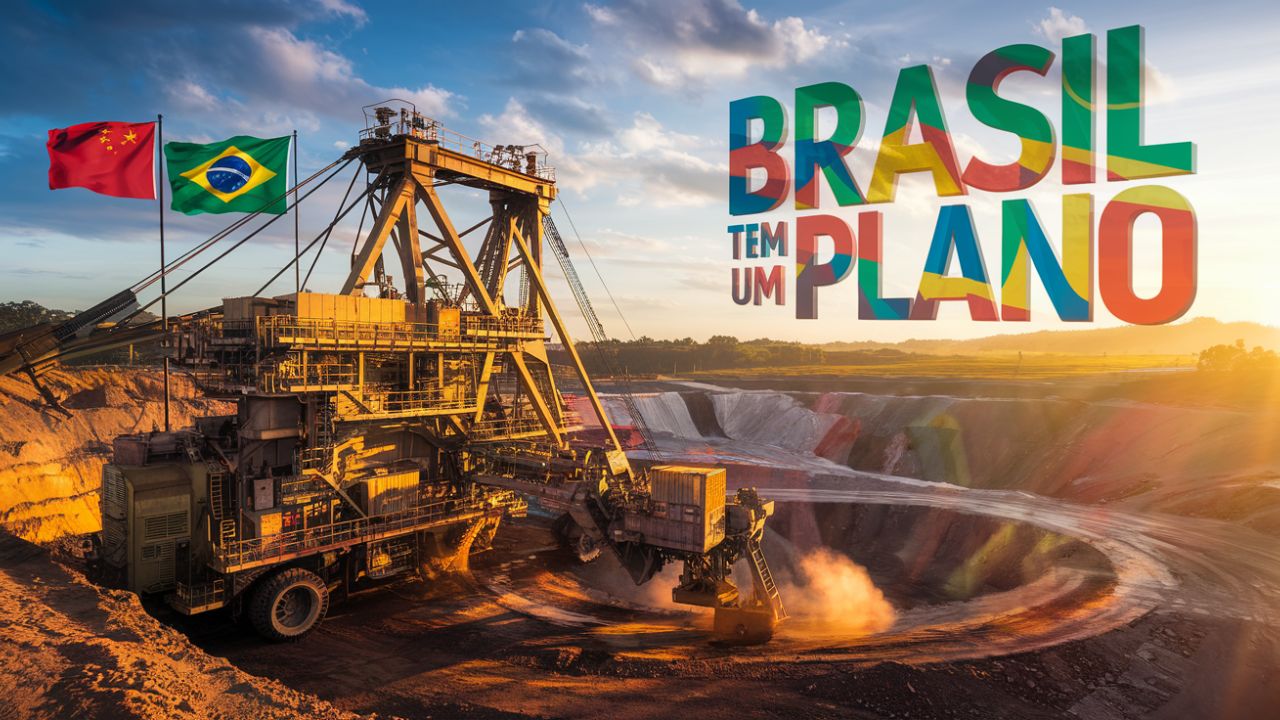


With China Dominating 90% of Global Refining and Brazil Emerging as a Power with Strategic Reserves, This Partnership Could Revolutionize the Rare Earth Supply Chain and Meet the Growing Demand for Sustainable Technologies.
Rare earths are at the heart of the technological revolution. These chemical elements, essential for magnets in electric vehicles, wind turbines, and even military equipment, are shaping the future. In this context, Brazil and China have the potential to form a strategic alliance that could transform the global market. Let’s understand how?
China’s Supremacy in the Rare Earth Market
China is not just a leader but a giant in the rare earth sector. In 2023, the country produced 240,000 tons of equivalent oxide, dominating 70% of global extraction and 90% of refining. This is not just a statistic; it’s influence in a supply chain crucial to modern technologies.
Have you ever imagined what the world would be like without electric cars or wind turbines? Rare earths make all of this possible. These minerals are essential for the operation of sustainable and military technologies, placing China at the center of global attention.
-
Giant 142 kg Emerald from Brazil’s Bahia Region Auctioned with Starting Bid of Nearly $16 Million

-
Study Reveals 97% of Pregnant Munduruku Women in the Brazilian Amazon Have Mercury Levels Above Safe Limits, 90% of Newborns Contaminated by Gold Mining
-
China could reduce iron ore imports from 80% to 50% of consumption by 2030, while its share in global steel production falls from 52% to 46%, in a shift that could reshape the global market, says CMRG.
-
Brazil is sitting on one of the largest lithium reserves in the world, in the Jequitinhonha Valley, but national mining has almost become an appendage of China: 97% of the metal’s export goes to a single country, which also dominates refining.


Serra Verde and Rare Earth Mining in Brazil

Brazil is still an emerging player, but the game promises to be exciting. The Serra Verde mining company in Goiás has already started commercial exploration and has bold plans for the future. Imagine Brazil delivering 5,000 tons of oxides by 2026 and doubling that number by 2030. Sounds promising, right?
With support from investors like Vision Blue Resources, who injected US$ 150 million, Brazil is paving the way to become a key player. Serra Verde, recognized by the Minerals Security Partnership, is in a unique position to shape the global market.
Foreign Investments Strengthening Brazil
Foreign investments not only finance projects but also bring expertise to Brazil. This creates a solid foundation for the country to become competitive and reliable in the rare earth sector.
Brazil and China: Complements in the Global Market
While China dominates production, Brazil can offer diversification and sustainability. A partnership between these giants would be like a well-rehearsed dance, where both play complementary roles.
Geopolitics
With the trade tensions between the US and China, Brazil has a golden opportunity to be an alternative supplier. This helps to reduce risks and ensures stability in the market.
Brazil can leverage its position to mediate global interests, promoting cooperation that benefits not only the parties involved but the entire global market.
Brazil and China have everything to lead the global rare earth market. On one side, China’s expertise and dominance; on the other, Brazil’s vast reserves and untapped potential. Together, these countries can meet the growing global demand, drive sustainability, and redefine the balance of power in the strategic minerals sector. The challenge? Making this partnership a reality, navigating the economic and geopolitical complexities.





Só pode ser piada dizer tais coisas…
Este país será sempre uma colônia retrógrada.
Quem manda não investir em matemática!
Um país onde as pessoas escolhem as suas profissões pela EXCLUSÃO das que têm ou exigem mais conhecimento em exatas.
Vai sempre exportar mandioca e importar farinha!
As pessoas enchem o peito e dizem: “Afff, eu detesto matemática” e outras ecoam: “Matemática? Deus me livre, tô fora!”
Logo, logo teremos beiju made in China! Que lindo!