Portuguese
  Spanish


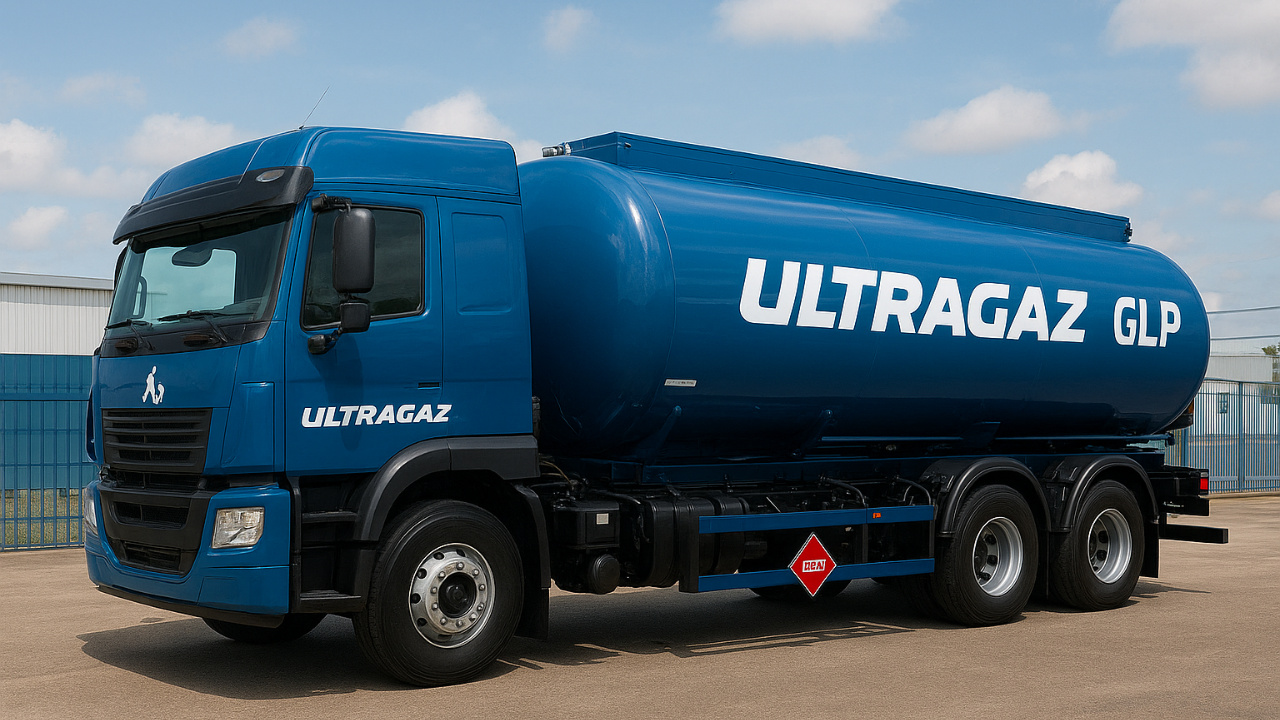

The Brazilian Model of LPG Distribution, Highlighted by Ultragaz, Is Studied by 95 Countries. Safety, Efficiency, and Reach Are Factors That Transformed Brazil into a Global Reference.
The Liquefied Petroleum Gas (LPG) sector in Brazil has reached a level of prominence that has attracted the attention of 95 countries. This information was provided by Aurelio Ferreira, president of AIGLP (Ibero-American Association of Liquefied Petroleum Gas) and director of Development at Ultragaz, this Thursday, 25. According to him, the national distribution structure has gained a place on the world stage due to its combination of safety, efficiency, and territorial reach.
Ultragaz Highlights Dimensions of the Brazilian Challenge
Ferreira emphasized that serving a country of continental dimensions, with over 200 million inhabitants, requires a high-level logistics standard.
He noted that supplying LPG in cylinders needs to ensure fast deliveries in any region, a challenge that is even greater when considering the risk level of the product. “About 95 countries look to Brazil as a reference. First, Brazil is a country of continental dimensions with over 200 million people. Serving a country of continental dimensions with cylinders, ensuring fast deliveries in any region, as required by the Latin American standard, is very difficult. And we do this with a product that has a certain level of risk. We must have a very high safety level,” he stated.
-
OPEC+ Boosts Oil Supply by 188,000 Barrels per Day in July 2026, Leading to Price Drop from $112 to $89 per Barrel in Under Two Months

-
TotalEnergies Signs 20-Year Deal to Purchase 2 Million Tons of LNG from Alaska, Boosting Project Viability
-
Turkey Deploys Çağrı Bey Drilling Ship to Explore New Oil Frontier Off Somalia’s Coast
-
Golden Pass LNG Ships First Liquefied Gas Cargo from the U.S., Completing $10 Billion QatarEnergy and ExxonMobil Investment




ANP Regulation Strengthens Sector Safety
The National Agency of Oil, Natural Gas, and Biofuels (ANP) has established rules that require distributors to comply with strict technical and operational controls. As a result, LPG is delivered safely to both capitals and remote areas. This progress was only possible through long-term investments made by companies like Ultragaz, which bet on technology, training, and continuous monitoring systems.
In addition to safety, Brazil stands out for its delivery efficiency and the reliability of the model. Ferreira recalled that the absence of accidents and frauds is the result of decades of work. “You don’t see accidents, you don’t see frauds. This has been achieved and worked on for a long time. And consumers are still free to switch distributors whenever they want. Colombia has been studying the Brazilian model,” he declared.