Portuguese
  Spanish


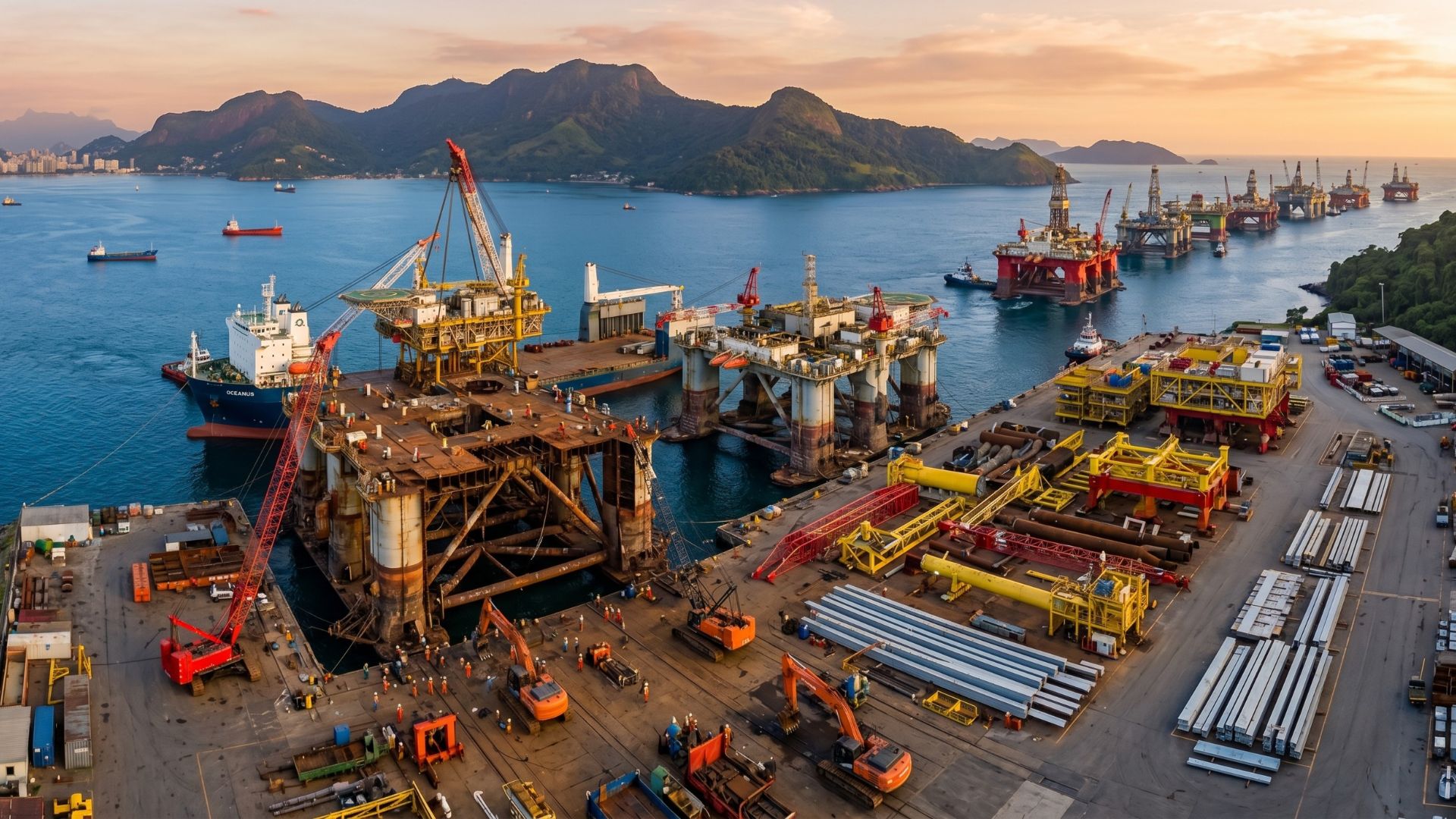

Petrobras will decommission 23 platforms by 2028, has more than 40 units in line, about 180 thousand tons of offshore structures to remove, and forecasts US$ 9.9 billion by 2029 in Brazil.
Brazil has begun to enter a new phase of the offshore oil industry. After decades of focusing investments on exploration, production, and installation of offshore systems, the chain is now making room for an equally complex front: the decommissioning of platforms that have already completed their productive cycle. According to Petrobras, the company plans to decommission 23 platforms by 2028, being 9 fixed and 14 floating, a movement that has already been presented to the market as an important source of new demands for the national industry.
This change has ceased to be merely technical and has gained a billion-dollar economic weight. According to Reuters, Petrobras expects to invest US$ 9.9 billion in decommissioning by 2029, a figure that helps explain why the offshore sector has started to look at the end of the units’ life cycle as a new large-scale market in the country.
Offshore decommissioning ceases to be the final stage and becomes a new industry in Brazil
For many years, the Brazilian offshore industry was almost exclusively associated with the construction of platforms, support vessels, rigs, and subsea systems.
-
OPEC+ Boosts Oil Supply by 188,000 Barrels per Day in July 2026, Leading to Price Drop from $112 to $89 per Barrel in Under Two Months

-
TotalEnergies Signs 20-Year Deal to Purchase 2 Million Tons of LNG from Alaska, Boosting Project Viability
-
Turkey Deploys Çağrı Bey Drilling Ship to Explore New Oil Frontier Off Somalia’s Coast
-
Golden Pass LNG Ships First Liquefied Gas Cargo from the U.S., Completing $10 Billion QatarEnergy and ExxonMobil Investment



Now, the reverse process is gaining strength. According to Petrobras, the conclusion of the units’ productive cycle involves activities of engineering, preparation, removal, and disposal, in addition to the sustainable recycling of materials.
This means that decommissioning is not just about shutting down a platform and towing it to shore. The process creates demand for removal operations, waste management, structural cutting, maritime logistics, processing in shipyards, and industrial allocation of large volumes of steel and other materials.
Petrobras treats this front as an activity with the potential to generate new orders and stimulate the Brazilian offshore industry.
Petrobras concentrates the main volume of contracts in this new phase in the country
According to Petrobras, the program until 2028 already includes the decommissioning of 23 platforms, which by itself creates a project portfolio sufficient to sustain years of work in various specialties. The company is also presenting these demands to the supplier market so that companies can prepare in advance to meet future orders.
This point is important because it shows that decommissioning is not being treated as a one-off solution for one or another unit. It already appears as a structured component of the company’s offshore planning, coexisting with new contracts for vessels, FPSOs, support ships, and subsea services.
In other words, the Brazilian sector starts to operate simultaneously with the expansion of new assets and the removal of old structures.
Removing a platform from the sea requires complex engineering, special ships, and a heavy industrial chain
According to Petrobras, the decommissioning activity includes the sustainable recycling of the units’ materials, which requires much more sophisticated technical and logistical planning than a simple physical removal.
Before dismantling, it is necessary to prepare the unit, treat waste, organize the removal, and define the correct destination for each part of the structure.
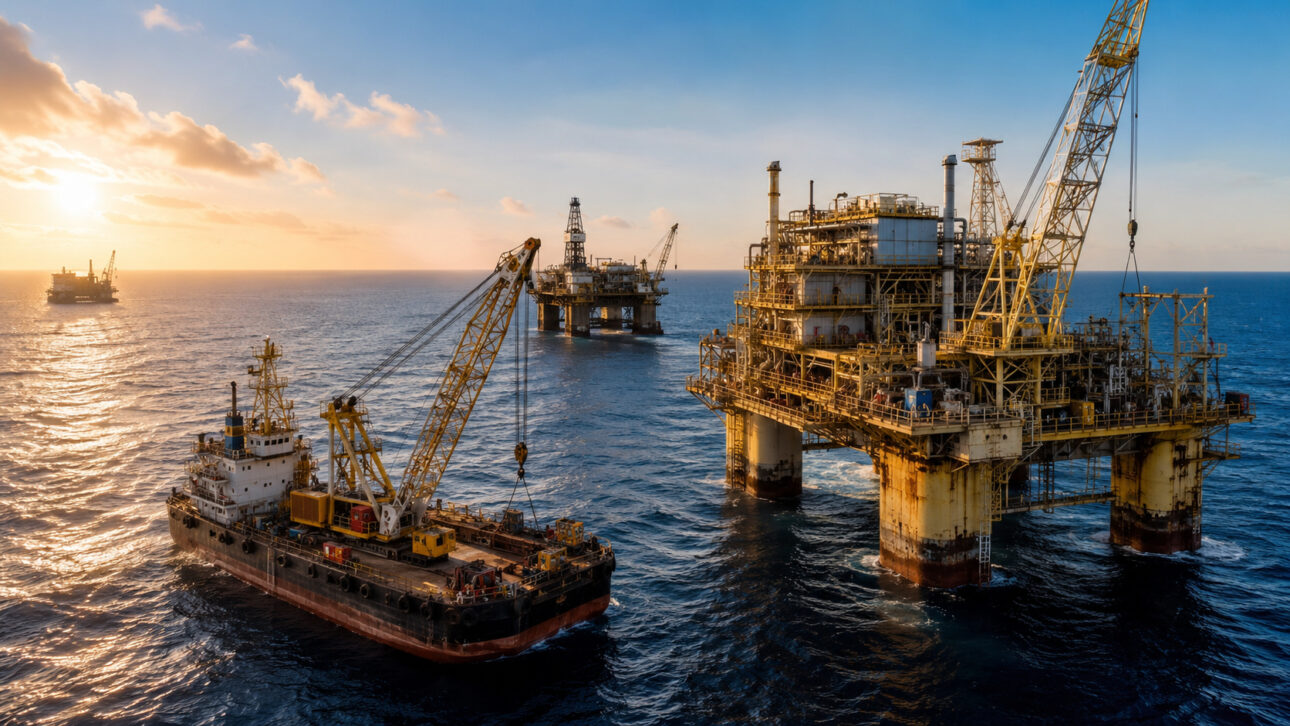
In practice, this opens up space for a chain that involves specialized ships, heavy lifting, structural cutting, maritime transport, industrial decontamination, and recycling.
It is precisely this combination of steps that leads specialists and companies in the sector to treat decommissioning as a new industry within offshore oil and gas. The operation requires scale, capital, industrial capacity, and coordination among various companies.
Brazilian shipyards attempt to become recycling hubs with the case of P-32
According to Reuters, the dismantling of the FPSO P-32 was treated as the first major opportunity to transform Brazilian shipyards into offshore recycling hubs.

The unit weighs about 45 thousand tons, and its arrival at the shipyard was seen as an emblematic contract for a new business model focused on the industrial reuse of large maritime structures.
The agency reported that the operation was hailed as a chance to reinvent shipyards that have faced difficulties for years, shifting part of the activity previously focused on construction to the dismantling and recycling of platform ships.
Even with delays in the case of P-32, the operation remains relevant because it shows the path Brazil is trying to open to locally absorb part of the economic value generated by decommissioning.
P-32 and P-33 helped to inaugurate a new model of dismantling and reuse
According to Reuters, the acquisition of units P-32 and P-33 by private groups in 2023 introduced a model in which dismantling and recycling of metal scrap become a central part of the operation. The case became a milestone precisely for inaugurating a more industrial logic for the end of the useful life of offshore assets in Brazil.
This movement also helps change the way the sector views old platforms. Instead of treating them only as operational liabilities, part of the industry starts to see them as high-value structures in materials, contracts, and services associated with dismantling.
This does not eliminate the cost of the process but broadens the economic view of what can be recovered and reused.
New offshore industry could drive Brazil for many years
With 23 platforms planned by 2028 and US$ 9.9 billion by 2029, decommissioning is already emerging as one of the most relevant fronts of the next phase of the Brazilian offshore industry. According to Petrobras, this activity generates demand for the national industry.
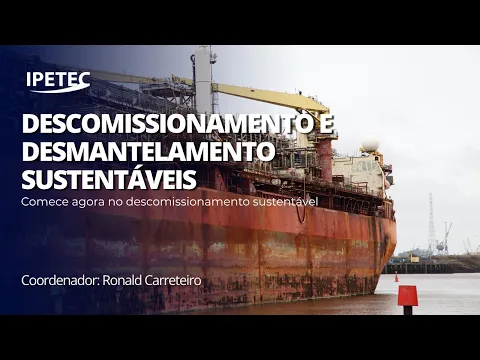
According to Reuters, it is also already attracting interest because it concentrates large-scale contracts at a time when the country is seeking new sources of activity for shipyards and specialized suppliers.
The result is that Brazil is beginning to form a market where dismantling old structures can become almost as strategic as building new ones.
Few people see these operations happening offshore, but they are already shaping a new billion-dollar front that combines heavy engineering, extreme logistics, industrial dismantling, and offshore recycling.