Portuguese
  Spanish


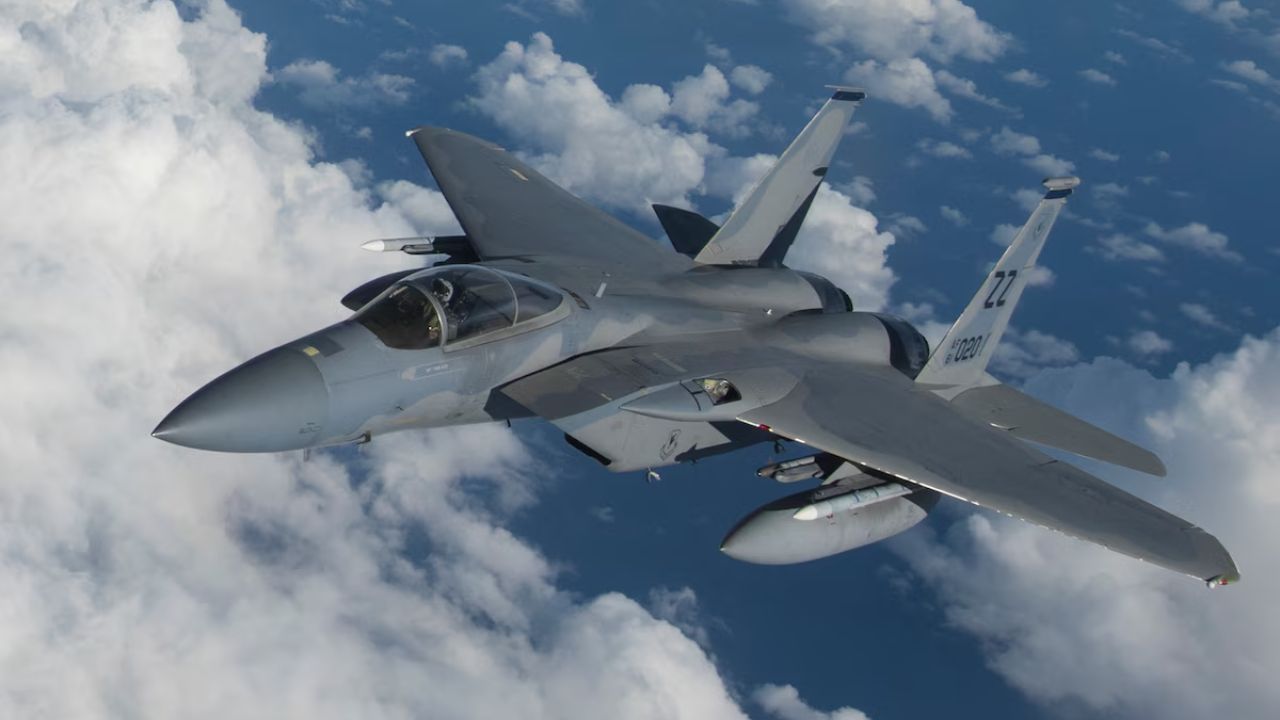

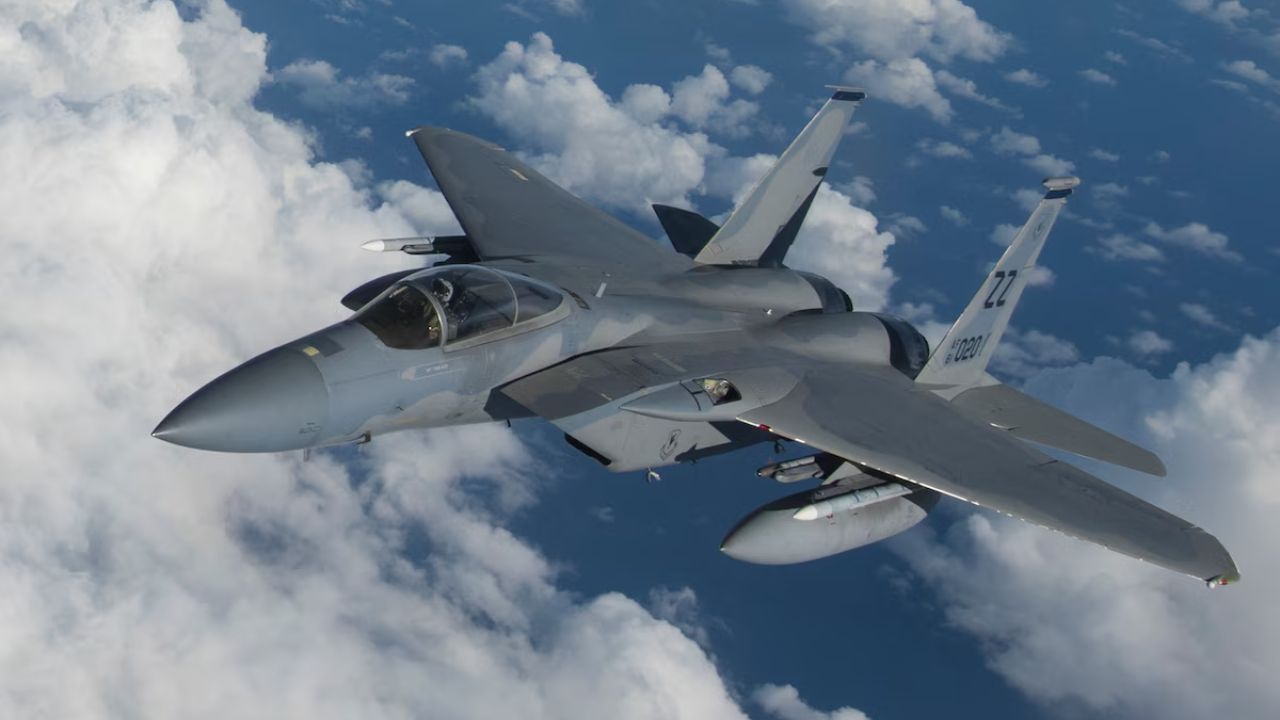
The F-15 Eagle fighter combines high speed, advanced electronic systems, and a successful track record in U.S. Air Force missions.
The quest for air superiority led the United States Air Force to develop an aircraft capable of operating in different combat scenarios and under any weather conditions. The F-15 Eagle emerged with this proposal and, since its entry into operation, has become one of the main tactical fighters of the U.S. military aviation. Designed to detect, pursue, and neutralize aerial threats, the model combines high maneuverability, advanced electronic systems, and a wide variety of armaments.
Developed by McDonnell Douglas Corporation, the fighter was designed to ensure airspace dominance during military operations. According to information released by the United States Air Force in 2019, the aircraft combines features that allow it to face adversaries at different altitudes and distances, maintaining high performance even in hostile environments.
Learn all about the F-15 Eagle fighter
One of the main differentiators of the F-15 Eagle is the combination of power and agility. The aircraft was designed to execute tight turns without losing speed, a feature considered essential in aerial confrontations.
-
A Brazilian street cleaner built a machine to recycle PET bottles in the hinterlands of Paraíba, transforming the trash he swept from the streets into threads, brooms, and equipment sold even outside Brazil, and began earning about R$ 7,500 per month with his own invention.

-
In a city where every piece of land is worth gold, he began buying plots in the 1960s and built a real estate empire with over a thousand properties.

-
An artist sank over 500 life-sized human statues at the bottom of the Caribbean Sea, and what seemed like macabre art turned into a living reef covered with corals that attracts divers from all over the world.

-
A fossil kept for years in a small museum in Montreal concealed 450-million-year-old soft tissue, a discovery that has only happened once before in history.


This performance is the result of the relationship between the thrust produced by the engines and the weight of the aircraft, in addition to the low wing loading — an indicator that relates the total weight to the wing area. In practice, this means greater responsiveness during demanding maneuvers.
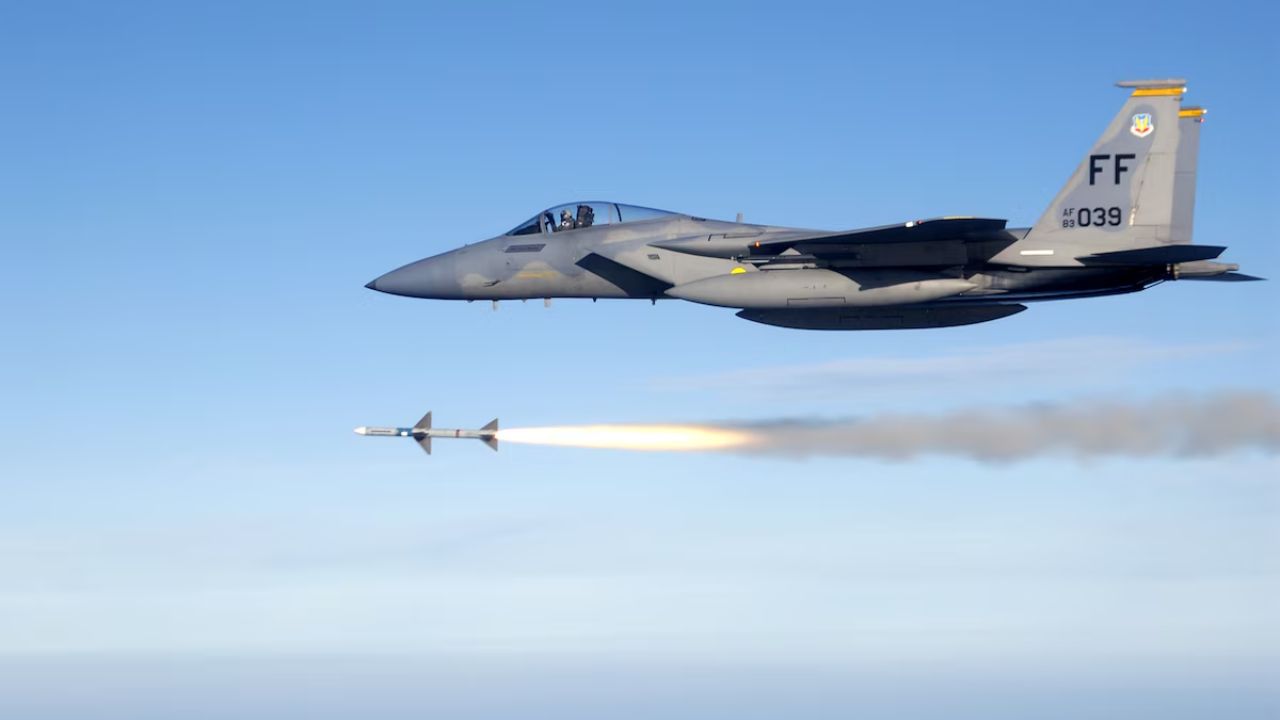
In addition to mobility, the fighter has resources that allow it to operate both in airspace controlled by friendly forces and in areas dominated by adversaries. Its technological suite was developed to facilitate the identification of threats and the execution of attacks efficiently.
Electronic systems enhance operational capacity
Another highlight of the F-15 Eagle is the multi-mission avionics system, responsible for integrating various essential functions for flight and combat.
Among the equipment present on the aircraft are:
- Head-Up Display (HUD);
- Advanced detection and tracking radar;
- Inertial navigation system;
- Integrated flight instruments;
- Tactical navigation system;
- Ultra-high frequency communications;
- Instrument landing system;
- Electronic warfare equipment;
- Friend-or-foe identification system;
- Central digital computer.
The integration of these resources allows a single pilot to safely and efficiently conduct air-to-air combat missions. When a weapon system is selected, the necessary information for its use automatically appears on the HUD, reducing workload during complex operations.
Radar of the F-15 Eagle identifies targets at different altitudes
The detection capability is considered one of the main advantages of the F-15 Eagle fighter. The pulse Doppler radar installed on the fighter can locate targets at high altitudes, as well as aircraft flying close to the ground.
According to the United States Air Force, the equipment maintains its efficiency even in the face of terrain-induced interference. Additionally, it can track high-speed targets at distances beyond the pilot’s visual range.
The captured information is transmitted to the aircraft’s central computer, which assists in weapon guidance. In close-range confrontations, the system can automatically acquire the target and display the data directly on the front display.
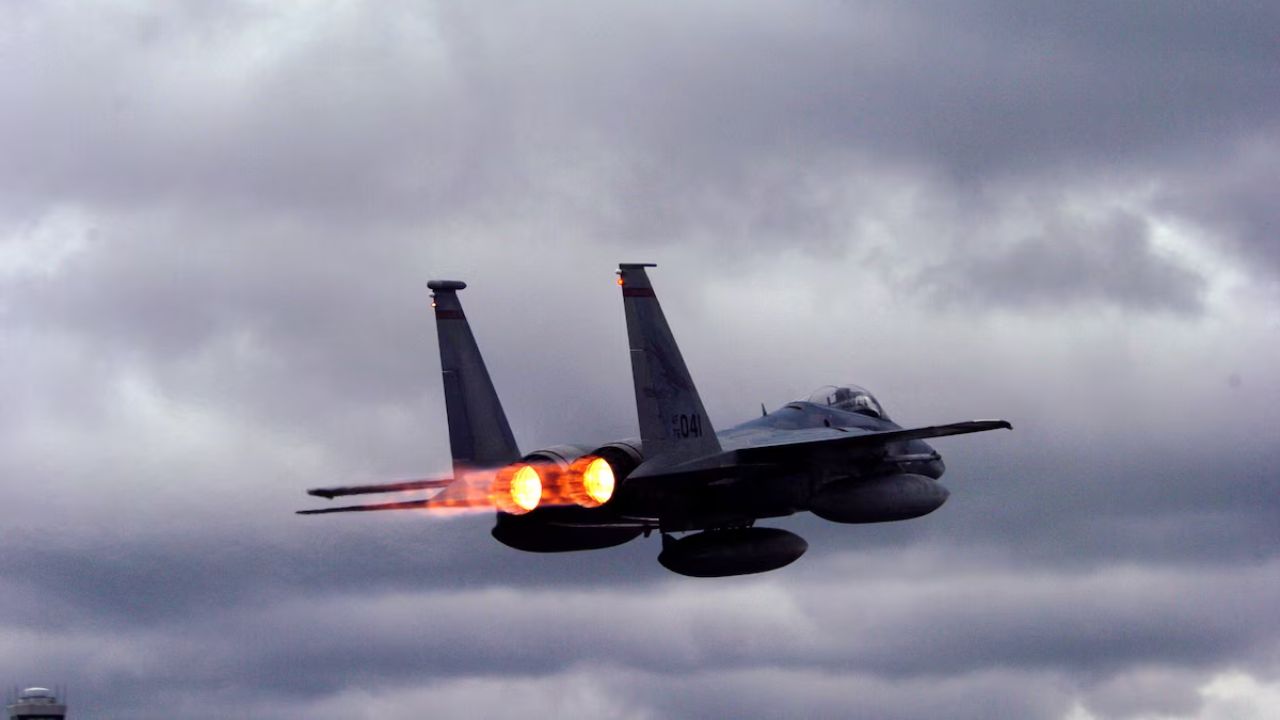
Meanwhile, the electronic warfare system monitors threats and can activate automatic countermeasures against certain risks identified during the mission.
Armaments enhance the versatility of the fighter
The aircraft was designed to carry different types of armaments intended for aerial combat.
Among the compatible options are the medium-range AIM-120 missiles, positioned at specific points on the fuselage, as well as the AIM-9L/M Sidewinder missiles and other configurations of the AIM-120 itself installed under the wings.
The F-15 Eagle also features an internal 20-millimeter Gatling gun installed near the root of the right wing.
The combination of sensors, radar, and an automated weapon system allows the pilot to quickly switch between different combat options, keeping the focus on the operation.
F-15E version enhances attack capability
Although originally conceived as an air superiority fighter, the program evolved to include specialized versions. The F-15E became a dual-role variant, capable of executing air-to-air missions and long-range attacks against ground targets.
Unlike conventional versions, the model has two crew members. The rear cockpit received modernizations that include four multifunctional displays intended for the management of the aircraft and armaments.
Another important advancement was the adoption of a digital flight control system with triple redundancy, associated with an inertial navigation system equipped with a ring laser gyroscope.
For missions conducted at night or in adverse weather conditions, the aircraft uses the high-resolution APG-70 radar and infrared navigation and targeting systems.
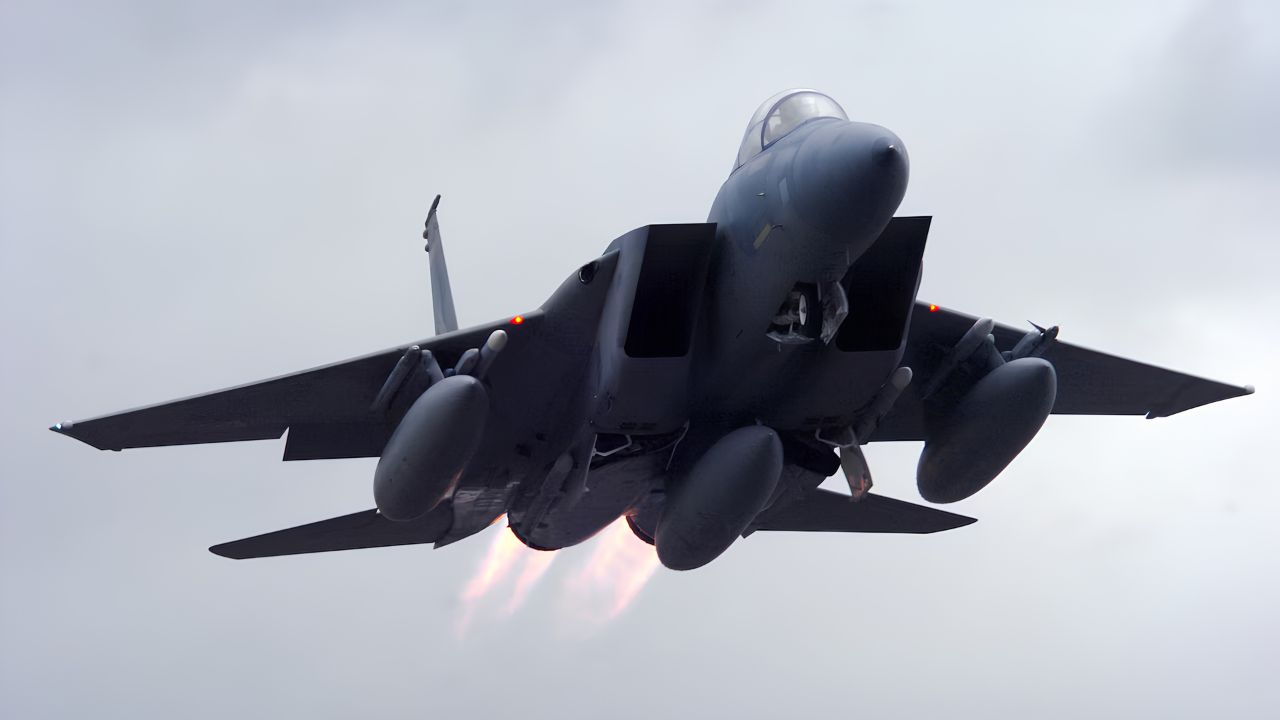
Operational history of the F-15 Eagle
The program’s trajectory began in the early 1970s. The first flight of the F-15A occurred in July 1972. A year later, in July 1973, it was the turn of the two-seat trainer F-15B to make its inaugural flight.
The first delivery of an Eagle unit took place in November 1974. By January 1976, a model intended for operational squadrons was incorporated into the Air Force’s activities.
Subsequently, the F-15C and F-15D models entered service starting in 1979. These versions received improvements known as the Eagle Production Package (PEP 2000), which included:
- Approximately 900 kg additional internal fuel;
- Capacity for conformal external tanks;
- Increase in maximum takeoff weight to up to 30,600 kg.
In February 1983, the Multi-Stage Improvement Program (MSIP) was initiated. The first F-15C updated within this process was produced in 1985.
The modifications involved the installation of a more advanced central computer, improvements in weapon control, and enhancements in electronic warfare systems.
F-15 Eagle stood out in military operations
The operational reputation of the aircraft was consolidated during the Gulf War. In 1991, F-15C, F-15D, and F-15E versions were deployed to the Persian Gulf in support of Operation Desert Storm.
According to data released by the United States Air Force, the F-15Cs were responsible for 34 of the 37 air victories recorded by the force during the conflict.
While the air superiority models engaged in confrontations against enemy aircraft, the F-15Es primarily conducted night operations aimed at identifying and attacking Scud missile launchers and artillery positions.
After this period, the aircraft continued to be used in different military operations, including expeditionary missions and actions conducted in regions such as Iraq, Afghanistan, Turkey, and Bosnia.
Technical characteristics of the F-15 Eagle
The technical data released by the United States Air Force show the dimension and operational capability of the fighter:
- Main function: tactical fighter;
- Manufacturer: McDonnell Douglas Corporation;
- Engines: two Pratt & Whitney F100-PW-100, 220 or 229 turbofans with afterburner;
- Thrust: 23,450 pounds per engine in C and D models;
- Wingspan: 13 meters;
- Length: 19.44 meters;
- Height: 5.6 meters;
- Weight: 31,700 pounds;
- Maximum takeoff weight: 30,844 kg;
- Fuel capacity: 36,200 pounds;
- Maximum speed: 3,017 km/h;
- Service ceiling: 19,812 meters.
Over decades of operation, the F-15 Eagle has established its position as one of the most important aircraft in the United States military aviation. The combination of speed, integrated electronic systems, great detection capability, and a wide range of armaments has allowed the fighter to play decisive roles in different missions.
The data published by the United States Air Force in 2019 shows that the aircraft was designed to meet the demands of modern aerial warfare, with the main focus on achieving and maintaining air superiority in combat scenarios.