






 Portuguese
  Spanish
 4 min of reading
  1 comment





Pressure From The Aquaculture Sector Exposes Sanitary And Tax Dispute Involving Imported Tilapia, With Direct Impacts On National Production, Employment, And State Rules For Fish Marketing.
The Brazilian Association of Aquaculture, known as PEIXE BR, has formally requested the São Paulo government to suspend the entry of tilapia fillets imported from Vietnam, citing sanitary risks and harm to the competitiveness of the national production chain.
The request was made during a meeting held on Tuesday, February 3, 2026, with the State Secretary of Agriculture and Supply, Geraldo Mello Filho, bringing together representatives from different segments of Brazilian aquaculture.
According to the entity, the main concern is related to the Tilapia Lake Virus (TiLV), in addition to the economic effects caused by competition with the foreign product under different tax conditions than those faced by local producers.
-
Low-Demand Brazilian Beef Offal Gains Popularity Abroad: Indonesia Purchases $19.5 Million, Boosting Revenue and Reducing Waste

-
Soy Expansion in Former Brazilian Savanna Sparks Water and Land Conflicts in Major Agricultural Frontier
-
Mexican Pest Threatens U.S. Cattle Herds at Historic Lows, Potentially Boosting Brazilian Beef Exports as Burger Prices Soar

-
Avocado Boom for European and U.S. Markets Fuels Water Crisis in Drought-Stricken Chilean Region




During the meeting, the association also discussed the fiscal policy applied to tilapia fillets in São Paulo, pointing out distortions that, in the sector’s view, affect investments, job creation, and the sustainability of national production.
Suspension Of Imports Is On The Agenda Of The São Paulo Government
Among the demands presented, PEIXE BR requested that the São Paulo government adopt a measure similar to that applied in Santa Catarina, suspending the importation of tilapia fillets originating from Vietnam.
In the southern state, the government published a regulation prohibiting the entry, transit, sale, and distribution of the Vietnamese product, based on criteria for protecting local production.
The central justification was prevention against TiLV, a virus considered emerging and associated with outbreaks with high mortality in other tilapia-producing countries.


Subsequently, court decisions analyzed specific situations involving imported loads before the prohibition came into effect, without altering the preventive focus of the policy adopted by the state.
When presenting the request in São Paulo, the entity emphasized that the state concentrates the largest consumer market in the country and plays a strategic role in fish processing.
For the sector, a decision from São Paulo tends to reverberate throughout the national chain, influencing regulatory and commercial standards adopted by other states.
Sanitary Risk And Attention To TiLV
Classified as an emerging disease, the Tilapia Lake Virus is associated with episodes of significant mortality in different producing regions around the world.
International organisms and technical reports recommend continuous surveillance, rigorous biosafety protocols, and rapid responses in the event of any suspicions of the disease.
In Brazil, the topic is already included in technical documents from the Ministry of Agriculture aimed at assessing the risk of importing tilapia-derived products for human consumption.
These materials highlight TiLV as a sanitary agent that requires constant monitoring, especially in contexts of intensified international trade.
According to PEIXE BR, there is no record of the disease in São Paulo’s production, which reinforces, according to the entity, the need for additional caution regarding the entry of imported products.
The association argues that the suspension of imports serves as a preventive measure, avoiding exposure of the local chain to risks deemed unnecessary.
Taxation Of Imported Fillets Expands Economic Debate
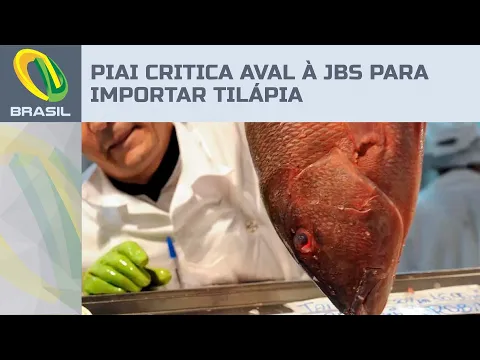
In addition to the sanitary issue, the tax debate was a significant part of the meeting with the state government.
Currently, as reported by sector entities, São Paulo imposes ICMS on tilapia fillets produced in the state itself and also on fish from other states.
In contrast, the product imported from Vietnam enters the São Paulo market with a zero ICMS rate, a situation that, in the view of the production chain, creates a competitive imbalance.
For sector representatives, this difference in tax treatment reduces the competitiveness of national production and pressures the margins of producers and industries.
The review of tax policy was presented as part of a broader agenda for strengthening Brazilian aquaculture and preserving jobs throughout the chain.
Meeting Brings Together Entities And Political Representatives
The meeting included the participation of the president of PEIXE BR, Francisco Medeiros, as well as counselors from the association and representatives from the entities PEIXE SP, PANGA BR, and ABIPESCA.
State deputy Itamar Borges was also present, who accompanied the discussions on health, taxation, and competitiveness in the sector.
After the meeting, the evaluation released was that the dialogue with the state government represents a relevant step toward deepening the institutional debate on the tilapia chain.
However, there was no announcement of an immediate decision by the São Paulo government regarding the suspension of imports.
The request, however, was formally presented as a priority by the sector entities.
In a scenario where different states adopt distinct responses to the entry of imported tilapia, the expectation remains about which path São Paulo will follow and how this decision may influence the future of the rules applied to the product in Brazil?





Tilápias asiáticas bichadas sem inspeção sanitária adequada. Parabéns aos responsáveis do governo que acabaram com os criadores do Brasil para beneficiar asiáticos. Sem problemas. Em 2027 tudo voltará ao normal.