Portuguese
  Spanish


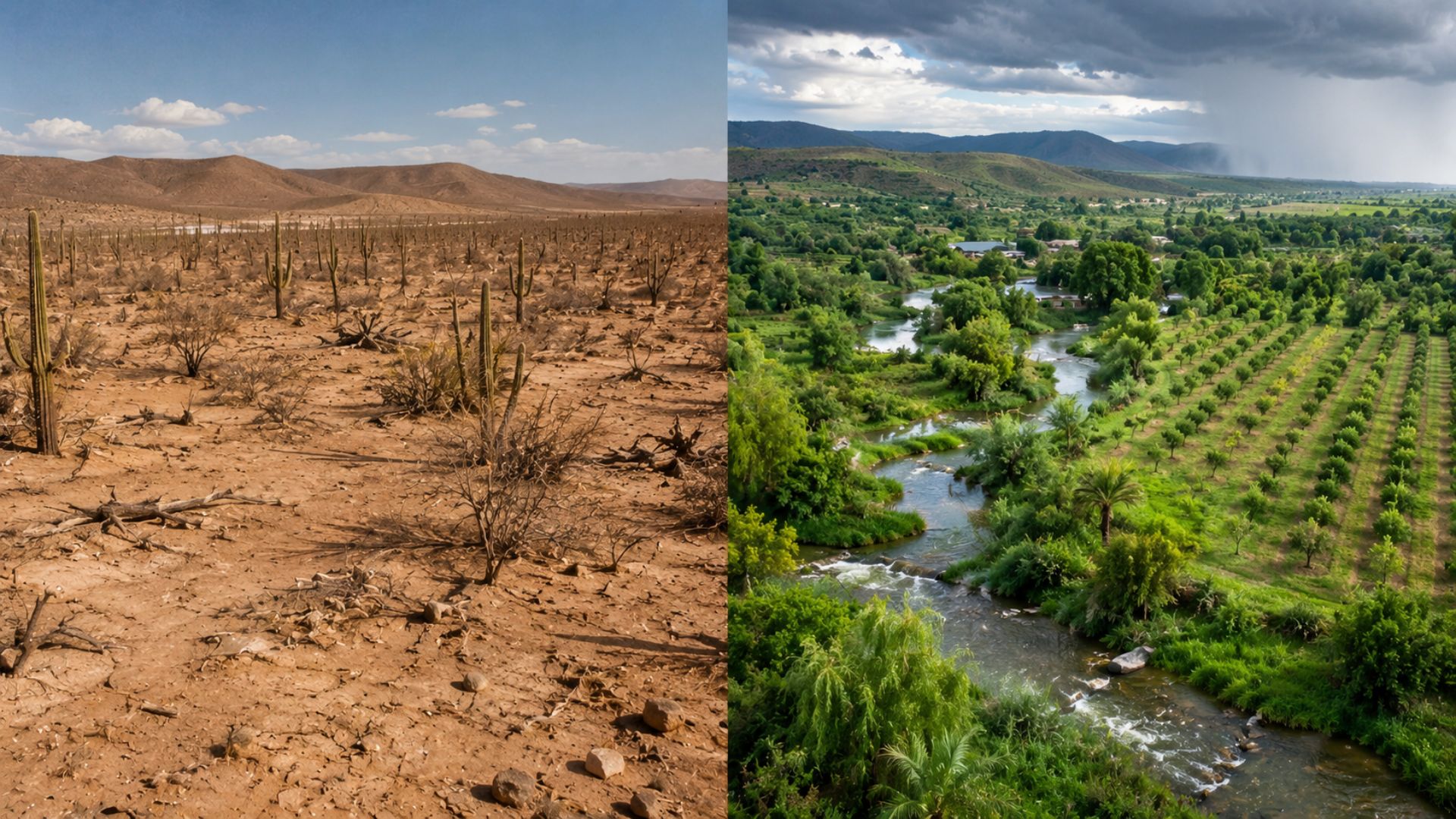


It took about eight years to turn almost pure sand into dark soil that retains moisture in a place that receives less than 200 millimeters of rain per year. The trick involves a bubbling tea of microbes collected from oak forests in the mountains, manure from the cattle themselves, and seeds saved from each harvest.
A farm in the northwest desert of Mexico managed to green a piece of arid land to the point of transforming practically dead sand into dark, fertile soil capable of retaining moisture in one of the driest regions of the country. The secret lies in a regenerative agriculture technique that combines manure from the cattle themselves, microorganisms collected in the mountains, and what the farm team calls a sort of secret soil formula, a living compound full of beneficial bacteria and fungi.
The location is Rancho Cacachilas, situated in the Sierra de Las Cacachilas, about 40 minutes from La Paz, in the state of Baja California Sur, overlooking the desert and the Sea of Cortez. Over about eight years, the farm has been restoring the soil and the surrounding ecosystem, in a region that receives less than 200 millimeters of rain per year, proving that even degraded landscapes can return to producing healthy food when life is returned to the land.
Where is the farm that greened the desert
First of all, it’s important to correctly place this story, because it is often confused. Rancho Cacachilas is located on the Baja California peninsula, in the far northwest of Mexico, and not in the Sonoran Desert, another large neighboring desert in the same region. They are distinct deserts, and the regenerative farm discussed in this report is in Baja California Sur, near La Paz, in an ecosystem with an extremely dry and hot climate.
-
Bicolor Pumpkin Resembling Hand-Painted Art Discovered by Brazilian Researchers in the Capital Due to “Spontaneous Mutation”

-
In China, a 26-story building produces 1.2 million pigs annually, revolutionizing livestock farming with tube feeding and AI surveillance.

-
With Nearly 60% Desert, Israel Desalinates Seawater and Recycles 90% of Wastewater to Build a Billion-Dollar Agricultural Powerhouse in Dates and Cotton
-
74-Hour Barbecue in Brazil Sets World Record: 3.4 Tons of Meat, 10,500 Meals Served


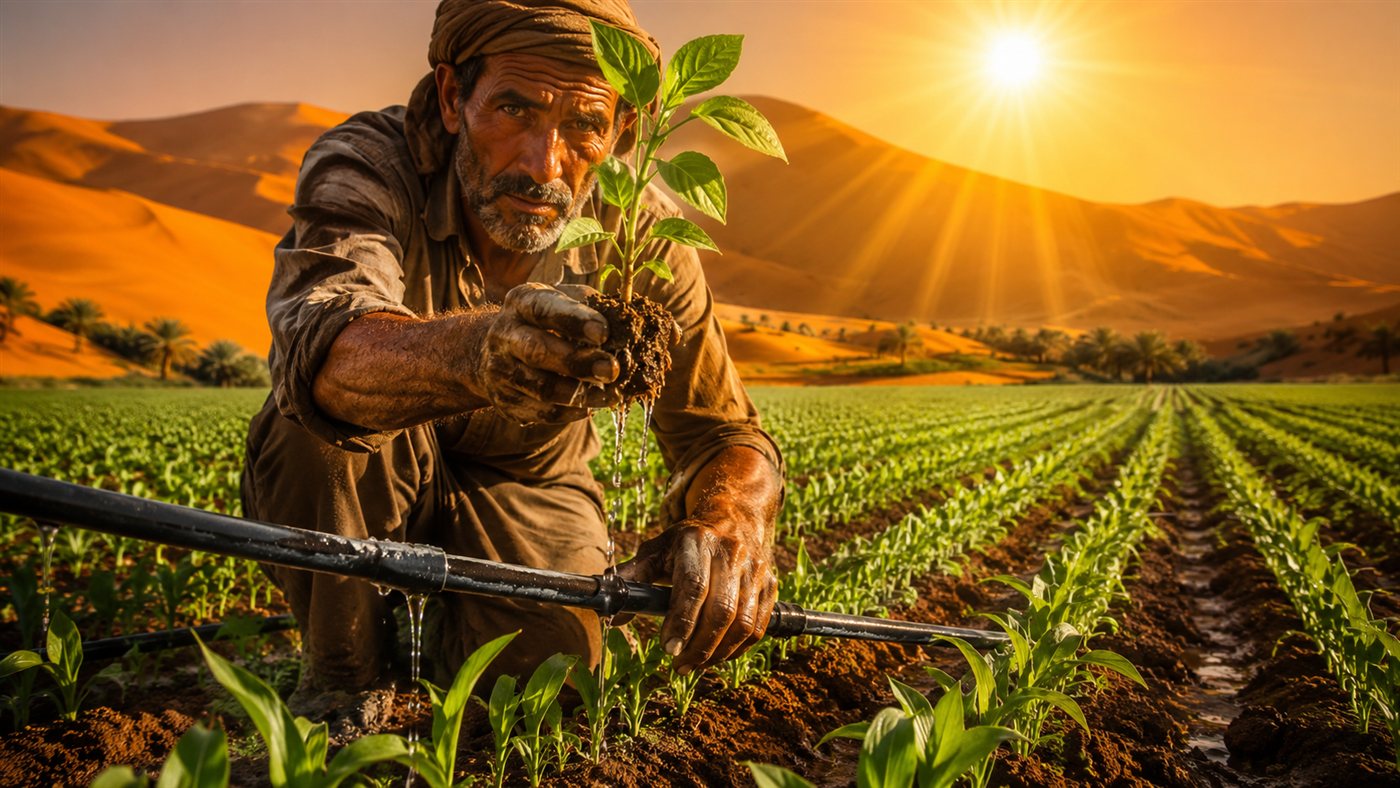

The property is about 15.7 thousand hectares and functions as an adventure ranch with a regenerative purpose, powered by solar energy and practically carbon neutral. In addition to food production, the site combines ecotourism, trails, cattle raising, and goat cheese production, welcoming visitors in luxury camps. But the heart of the project is in how the farm recovered its soil, starting from desert sand that seemed incapable of sustaining any cultivation.
From dead sand to fertile soil in eight years
When the work began, the farm’s garden was basically pure sand, without the necessary microbial life to nourish the plants. Over about eight years, this substrate was slowly transformed into dark, fluffy, and fertile soil through the constant addition of organic matter, mainly compost based on the manure from the ranch’s own animals. The result is land that today produces most of the meals served to guests and has become a rich habitat for birds and insects.
The most impressive thing is that this recovered soil can remain moist even under extreme heat and very low rainfall. This happens because the soil microorganisms, tiny life forms like bacteria and fungi, form a layer around the soil particles called biocrust, which acts like a sponge, absorbing and retaining water. Some of these organisms also produce a type of gel that binds the soil, creating a protective layer that holds moisture and reduces evaporation.
The farm soil’s secret formula
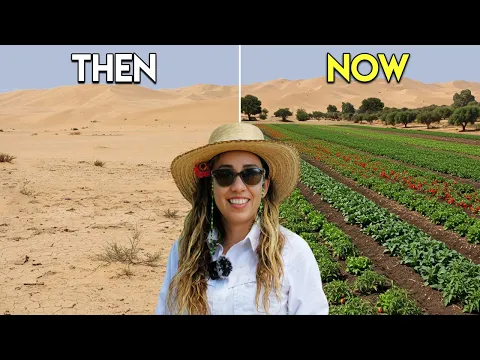

The so-called secret formula starts with composting. The farm mixes the manure from its animals with a natural fertilizer made from native microorganisms, collected in remote areas of the region’s mountains, where there are ancient oak forests with extremely fertile soil. The idea is to mimic this ideal mountain soil and replicate it in the desert garden, bringing to the cultivation microorganisms already adapted to the local climate.
To multiply this microscopic life, the team prepares a kind of live tea: they place the material rich in fungi and bacteria inside a cloth, immerse it in water with sugar and a carbohydrate, and let it ferment for about ten days, with an oxygen pump bubbling the mixture. The preparation ends up smelling like apple cider vinegar and works as a probiotic for the soil. Then, it is diluted in water and applied via irrigation, doubling the presence of beneficial microorganisms in the cultivated land.
Own seeds and crop consortium
Another pillar of the farm is keeping its own seeds each harvest cycle. Each generation, the team selects the seeds from the most successful plants, those with the best flavor, shape, color, and performance in the extreme climate, and replants them in the next season. Over time, the seeds become more heat-tolerant, more resistant to drought, and more immune to pests and diseases in the region, in a process of continuous adaptation.
The farm also invests in what is called crop consortium, or intercropping, planting different species together so they benefit each other and create natural barriers against pests, avoiding the problems of monocultures. To face the intense sun, it uses shade screens and drip irrigation tapes, which reduce water waste, as well as homemade solutions, like fermented garlic, to combat insects and fungi without resorting to synthetic poisons.
The Underground Web That Connects Plants
At the center of all this is an invisible network formed by soil fungi. The root systems of these fungi, called mycelium, spread over large areas, connecting trees and plants beneath the earth. This web functions almost like a natural internet, allowing plants to exchange nutrients and even chemical signals, helping each other grow or defend themselves when they are sick.
To reinforce this network, the farm plants native trees between the rows of vegetables, in an agroforestry design. These trees provide shade, maintain soil moisture, help retain water, and also act as windbreaks, important in a region prone to strong storms. The result is an integrated system where soil, microorganisms, plants, and animals work together, making cultivation more productive each year.
Why Healthy Soil Also Matters for Health
An interesting point raised by the farm team is the connection between healthy soil and the health of those who eat from it. According to them, many of the beneficial bacteria that need to be in the soil are similar to those that live in the human gut, which reinforces the importance of consuming foods grown in living and balanced soils. The probiotic compost applied in irrigation, they joke, would even be edible.
This care contrasts with the problems faced by intensive agricultural models in other desert regions. In the Sonoran Desert, on the United States side, the region of Yuma, Arizona, produces most of the winter lettuce consumed by Americans, irrigated by a gigantic canal system. This large-scale production has already been associated, in separate episodes, with outbreaks of contamination by bacteria such as E. coli, in cases that pertain to that specific region, and not to the regenerative Mexican farm.
A Model That Can Inspire Other Dry Regions
The success of Rancho Cacachilas goes beyond the garden. The soil and water management techniques, including rainwater harvesting, infiltration, and holistic cattle management, have helped regenerate part of the surrounding landscape, improving vegetation and water availability in the region. The farm integrates watershed restoration initiatives in Baja California Sur, an area on the front line of desertification and water scarcity in Mexico.
The main takeaway from this experience is that desertification is not necessarily a one-way street. With knowledge, patience, and low-cost techniques accessible to small producers, it is possible to bring life back to degraded soils. The model of the Mexican farm shows that regenerating the land is feasible even in the most hostile environments and serves as an inspiration for arid and semi-arid regions around the world, including areas of desertification in Brazil.
The story of this farm in the Mexican desert is both fascinating and full of practical lessons. By transforming dead sand into fertile soil with manure, mountain microorganisms, and a lot of observation of nature, Rancho Cacachilas has proven that regenerative agriculture can reverse degradation even in the driest places. More than a secret formula, what exists there is a set of practices that respect natural cycles and that could be adapted to many other corners of the planet.
Do you believe that regenerative agriculture techniques like those of this farm could help recover degraded and desertifying areas in Brazil, such as in the northeastern semi-arid region? Have you heard of transforming sand into fertile soil with microorganisms? Leave your comment, tell us what you think about this model, and share the article with those interested in agriculture, sustainability, and the environment.