Portuguese
  Spanish


Brazilian Evangelical Churches Advance In Venezuela With Support From The Nicolas Maduro Regime, Which Grants Benefits And Expands Religious Influence, Amid Significant Growth In Believers And Possible Political Interests In The Country.
The advance of evangelical churches operating in Brazil coincided with the government shift of Nicolas Maduro towards this demographic.
The movement is openly courted with material and symbolic benefits.
In just over a decade, the share of Venezuelans identifying as evangelical jumped from 2.1% (2010) to 30.9% (2023), according to Latinobarómetro, surpassing the regional average and altering the religious and political landscape of the country.
-
Shell Discovers Intact Early 19th-Century Wooden Shipwreck in the Gulf of Mexico at Over 1,300 Meters Deep

-
Brazilian Entrepreneur Turns Door-to-Door Jewelry Sales into a Family Business Empire with Over 70 Stores

-
$75 Million Bridge in Brazil Opens to Connect Cities, Create Jobs, and Cut Travel Time from 30 to 2 Minutes; Spanning 1.24 km, It’s Among the Country’s Largest and Ends Decades of Ferry Queues.
-
Brazilian Farmer Builds 8-Ton Tractor from Army Truck Engine, Plants Over 100 Hectares of Soybeans




The report was revealed by the newspaper Folha de S.Paulo, which pointed to criticisms of the strategy as an attempt to rebuild a social base after years of economic crisis, allegations of human rights violations, and contested elections.
Evangelical Growth Becomes Political Asset
Since 2018, Venezuela has witnessed a rapid expansion of evangelicalism.
In percentage terms, the evangelical population in Venezuela has already surpassed the average of 23% observed in 17 countries in the region, according to cuts from Latinobarómetro.
In this scenario of uncertainty, faith emerges as daily support, describes Venezuelan professor Dhayana Fernández, who researches human rights and observes unprecedented religious instrumentalization during the Maduro period.
Recent studies also record the leap to a near 31% level in 2023, reinforcing the trend of evangelical ascension in the country.
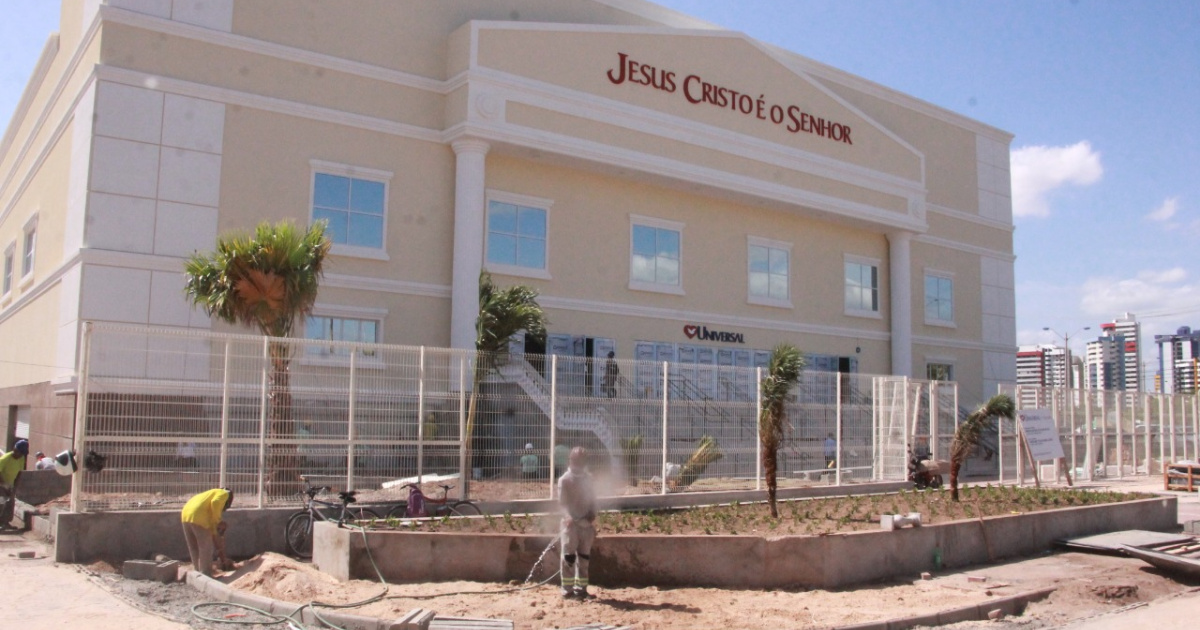
Universal Approaches The Palace Of Miraflores
Among the denominations with roots in Brazil, the Universal Church of the Kingdom of God gained visibility.
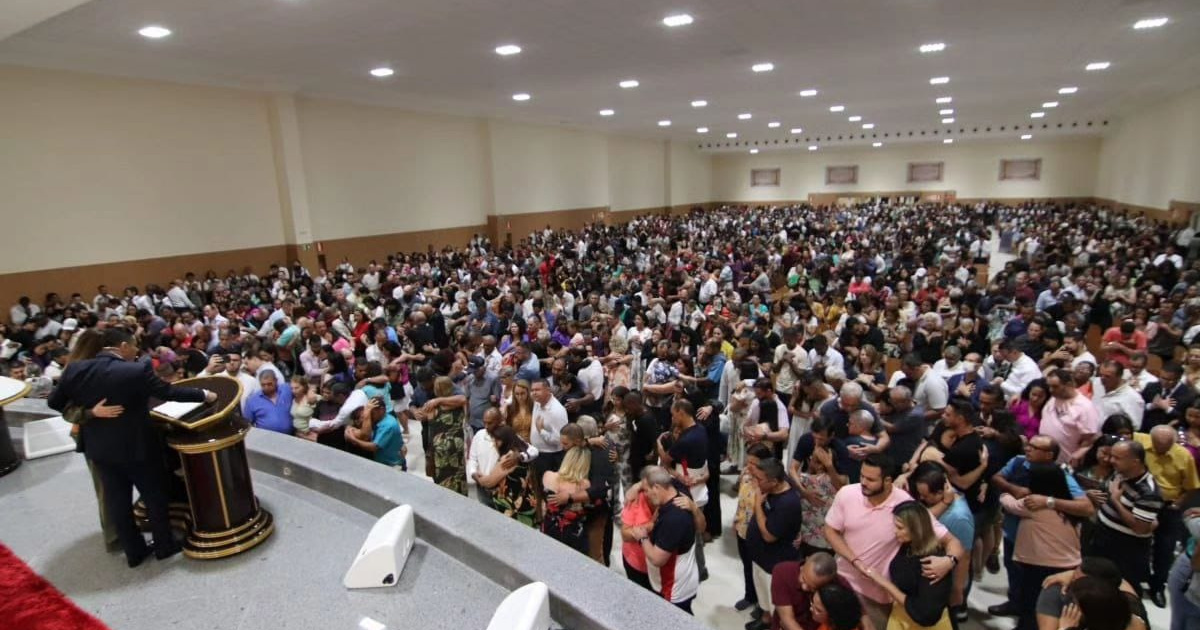
On March 6, 2024, during a celebration with thousands of pastors in Puerto Cabello (Carabobo), Bishop Ronaldo Santos — responsible for the Universal in Venezuela — led a prayer in the presence of Maduro and the First Lady, Cilia Flores, asking for the end of international sanctions.
“We can, my God, have sanctions and blockades from all parts of the world, but not from heaven. Heaven is open over this nation,” he stated.
The episode marked the public alignment of the church in the country with the government agenda.
This stance contrasts with content released by Universal in Brazil in January 2022, when Bishop Renato Cardoso listed “five reasons” why, in his view, it is not possible to be a Christian and leftist.
The texts were published on the church’s official channels and reported by the press, emphasizing the tone of incompatibility between faith and leftist ideology.
After the ceremony in Carabobo, Universal issued a statement titled “The Preaching of the Gospel Is Not a Political and Party Act”, attributing to journalists the distortion of the religious character of the event and highlighting the administrative autonomy of each country.
Official Programs And Benefits To Churches
The government shift included specific policies to attract Christian leadership.
In 2023, the “My Church Well Equipped” program was launched, executed by Misión Venezuela Bella, focusing on reforms and donations of furniture, construction materials, and equipment for temples.
The following year, the Executive announced tax cuts and exemptions from fees for religious organizations, including the replacement of tariffs on registration and notary services (SAREN) for the constitution of churches.
Still in March 2024, the government incorporated 20,000 new leaders into the “Bono El Buen Pastor”, a monthly subsidy aimed at registered pastors in the Patria System.
The announcement occurred at the same meeting with pastors in Puerto Cabello and was replicated by official channels and local media.
Who Coordinates The Religious Agenda Of The PSUV
The vice-presidency of Religious Affairs of the PSUV was assumed in May 2022 by Nicolás Ernesto Maduro Guerra, the president’s son.
The party and verification platforms register the appointment and the actions of the deputy in this area, which expanded the direct channel with evangelical sectors.
Pastors also migrated to the institutional arena.
The pastor Moisés García Duarte — president of the Christian Evangelical Movement for Venezuela (Mocev) — was elected as a deputy and is identified as a voice close to the government on religious issues.
Not Every Pulpit Prays For The Government
Although the official narrative emphasizes “unity” and “prayer for the country,” part of the pastoral community and churches maintain a critical distance.
Reports indicate fear of repercussions for those denouncing corruption, abuses, or engaging in independent humanitarian actions.
International monitoring by Open Doors classifies Venezuela outside of the “top 50” countries with the most intense persecution, but rising in the expanded ranking: 71st place in 2025, after 67th in 2024 and 64th in 2023.
According to the organization, this trend reflects pressures and episodes of harassment, although not systematic as in top-list nations.
Brazil: Evangelical Advance In Numbers
In Brazil, evangelical growth is also consistent. The data from the 2022 Census released by IBGE on June 6, 2025, shows 26.9% of evangelicals and 56.7% of Catholics in the population aged 10 years or older.
The current portrait consolidates the evangelical expansion and the relative loss of Catholic believers since 2010.
Why Has Venezuela Become A Showcase
The combination of evangelical demographic explosion, institutional openness, and material appeals has made the country a showcase for media denominations with a neopentecostal profile.
Researchers point out that some of these churches operate under the concept of “electronic churches”, expanding supported by radio, TV, and digital platforms.
This helps explain the interest in communication concessions and the symbiosis with governments willing to facilitate infrastructure and public presence.