Portuguese
  Spanish


With Support from the Merchant Navy Fund, Brazil Seeks to Rebuild Its Shipbuilding Industry, Modernize the Fleet, and Boost National Maritime Logistics
The Brazilian shipbuilding industry once shone on the global stage. In the 1970s, the country was the second largest in ship orders, with over 40,000 workers. Then came deindustrialization and an economic crisis. Now, shipbuilding is trying to reclaim its prominence, supported by an essential tool: the Merchant Navy Fund (FMM).
The FMM is the main means of financing ship construction in Brazil. It is managed by the Ministry of Transport and sustained by a specific tax, the Additional Freight for the Renewal of the Merchant Navy (AFRMM).
The operation of the funds is handled by banks such as Banco do Brasil, BNDES, and Caixa. With this, strategic projects can be financed with low interest rates, long terms, and extended grace periods.
-
North Korean Fiasco: Launch of the Largest Warship Ends in Sinking

-
While giant ships still burn heavy fuel and the maritime sector races against climate targets, Maersk and Vale are starting to bet on ethanol as a new route to reduce emissions at sea.

-
China begins construction of the world’s largest LNG ship, a 344-meter giant capable of supplying 4.7 million homes for a month, carrying 271,000 m³ of gas, and placing QatarEnergy in the largest naval order ever recorded in world history.
-
China is designing a container ship with a thorium nuclear reactor that will operate for 40 years without refueling, and the 25,000-container giant from Jiangnan Shipyard will cross oceans without emitting carbon in an industry that burns 300 million tons of fuel per year.


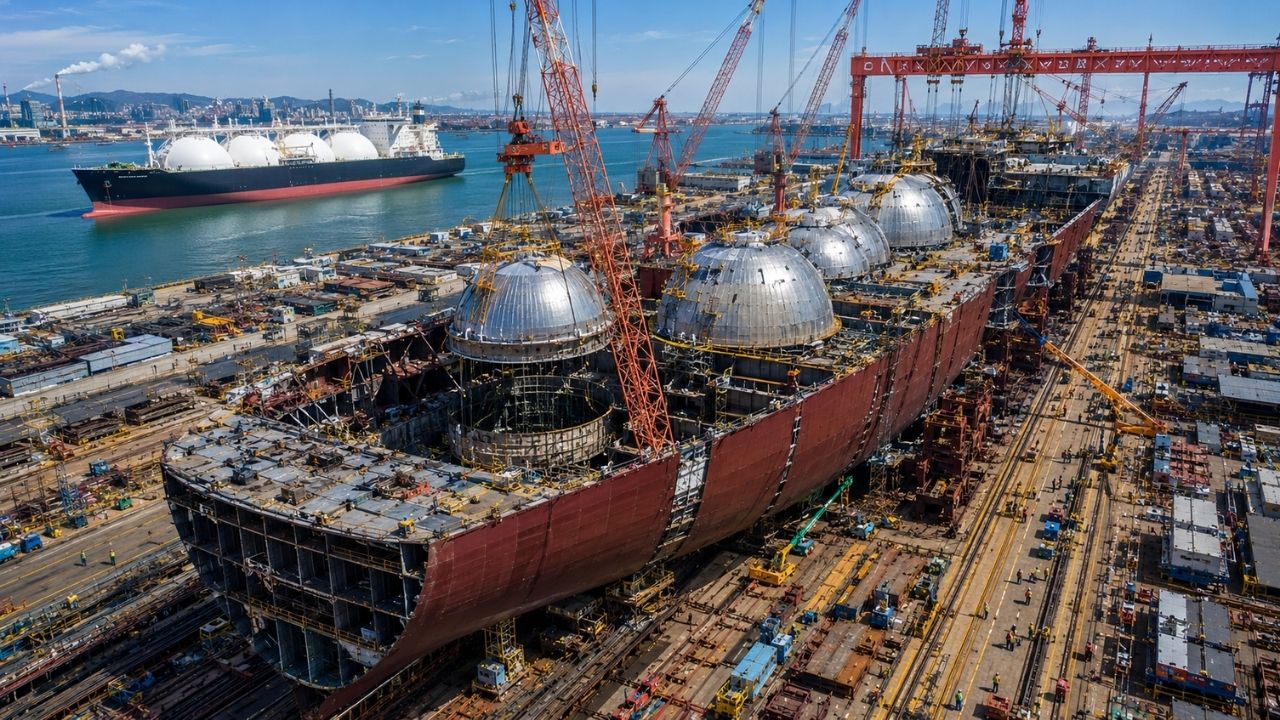

Building ships requires a lot. These are expensive, custom-made goods with lengthy production times. Companies need credit that fits the size and risk of these projects.
In Brazil, private financing faces obstacles such as bureaucracy, poor logistics, regulatory instability, and high interest rates. All of this contributes to what is called the “Brazil Cost.” In this scenario, the FMM becomes even more important for the industry.
Despite its importance, accessing resources is not simple. Companies need to present detailed projects, prove technical capacity, and follow banking rules. Bureaucracy and limited information about access criteria hinder the use of the fund. This reduces its actual impact on the sector.
In 2024, BNDES released R$ 6 billion in FMM financing. This is the largest amount in 12 years and more than three times the total between 2019 and 2022. In total, the Brazilian naval sector has received approval for R$ 30.8 billion in investments. There are 430 projects, including ship construction, maintenance, and port works.
Shipbuilding generates much more than just shipyards. It activates an entire chain: steel, technical services, logistics, and jobs. It is also essential for national logistics, such as cabotage and long-distance navigation. Strengthening this sector is strategic for the country.
Brazil needs to increase its fleet, modernize ships, and meet the demand for maritime transport. To do this, it is necessary to strengthen the shipbuilding industry with credit, stable public policies, and integration with laws such as the BR do Mar (Law 14.301/2022).
The recovery of the shipbuilding sector does not depend solely on money. It also needs political will, clear rules, and well-adjusted instruments. The FMM can be that force for transformation. To fulfill this role, the fund needs to be more accessible, with less bureaucracy and more outreach.
The Brazilian shipbuilding industry has potential. With the right adjustments, the FMM can be the anchor needed to reposition Brazil on the global map of ship construction.
With information from Portos e Navios.