






 Portuguese
  Spanish


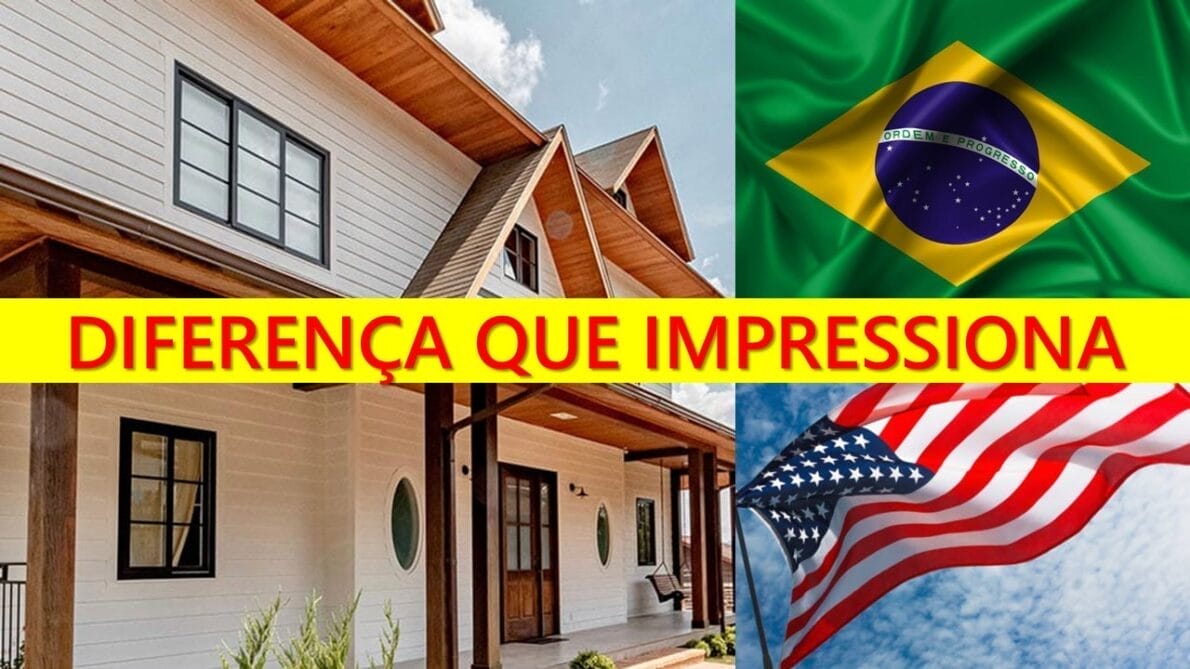

Why Don’t We Build Like the Americans? Fast as a Cat, Efficient and Intelligent, Americans Are Considered the Greatest Builders in the World!
In Brazil, construction follows, for the most part, a traditional method based on concrete and bricks, according to a video from the Ricardo Molina USA channel. However, many wonder why Brazil does not adopt the dry construction model, widely used in the United States. The American technique, notable for its use of wood and prefabricated materials, allows for faster construction and, often, more cost-effective. But what prevents Brazil from following the same path?
Civil Construction in the United States: What Is the Reason for Such Efficiency?
To understand why Brazil and the USA take different paths in civil construction, it is important to go back to the colonization period of each country. In the United States, colonization began in the north, a cold region rich in high-quality wood, such as pine and cedar. This abundance of natural resources, combined with the need for buildings that provide thermal insulation, favored the use of wood as the main building material.


In Brazil, colonization took place in coastal areas, with a tropical climate and dense forests, such as the Atlantic Forest, where there were no large trees suitable for robust constructions. Thus, from the beginning, the country upgraded materials like brick and concrete, shaping a building culture that remains to this day.
-
Father and Son Build 97 cm Thick Circular Stone House in Brazil, Inspired by Scottish Architecture, Creating a New Agrotourism Hub

-
Sweden Removes 200-Ton Concrete Gallery to Restore Pjältån River’s Natural Flow in Europe’s Largest Aquatic Restoration Project

-
Key Infrastructure Projects for Brazil’s Next President: Expanding Railways to Cut Transport Costs, Reduce Truck Traffic, Create Jobs, and Boost Industries Nationwide

-
While China Builds Undersea Rail and Mexico Connects Two Oceans, Brazil Struggles with Grain Transport Due to Lack of Railways


Dry Construction in the United States
In the United States, dry construction became popular mainly after World War II, with the advancement of industrialization and the demand for mass housing. This method extensively uses prefabricated materials, such as drywall (gypsum board) and wood structures (woodframe). This makes the construction process much faster and more efficient. Additionally, the use of materials like PVC and fiberglass in finishes and columns allows houses to be built in a matter of weeks.

Another point that differentiates American construction is the flexibility of materials. In the southern states, like Florida, where there is a higher risk of hurricanes, many houses are built with structural blocks on the first floor to increase resistance to strong winds. This combination of wood and block allows constructions to be lighter, more flexible, and simultaneously safe against natural disasters.
The Challenges of Implementation in Brazil
Despite the advantages of dry construction, Brazil has faced some barriers to its implementation. One of the main challenges is the availability of suitable wood for this type of construction. Although the country has forests with pine, mainly in the southern region, large-scale production of treated and reforested wood is still insufficient to meet a potential national demand.
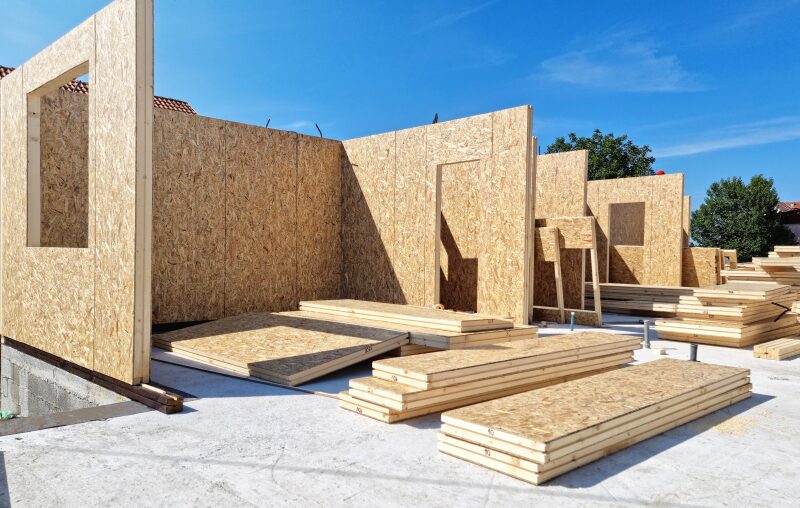
Moreover, the lack of a construction materials industry as developed as that in the United States is another obstacle. In the USA, many materials, such as drywall and asphalt shingles (shingles), are imported at low cost from other countries, such as China. In Brazil, these products are still expensive, which makes mass adoption unfeasible. Another relevant factor is the installation cost of central air conditioning systems, widely used in the USA to control humidity in homes, since both wood and drywall are vulnerable to moisture. In Brazil, the high price of energy and equipment hinders the popularization of this solution.
Culture and Construction Habits
Another significant factor that prevents the popularity of dry construction in Brazil is the culture of self-construction, mainly present among low-income classes. Many families build their own houses, using accessible materials such as cement, bricks, and sand. This artisanal construction method, passed down from generation to generation, results in a specialized workforce that masters traditional masonry techniques. For the American model to gain ground, a massive effort in cultural change and professional education in the construction sector will be necessary.


