






 Portuguese
  Spanish


In Ogden, Kansas, students built an 80 m² hemp house for a needy family with Habitat for Humanity: the hempcrete floor cuts 85% of the concrete, the solar roof returns energy to the grid, and the house becomes carbon negative in less than 20 years.
Imagine a house that, instead of polluting, cleans up the mess it created to exist. It seems contradictory, but that’s exactly what students from Kansas State University, K-State, built in the small town of Ogden, near Manhattan, in the United States. They erected a hemp house for a needy family, only 80 square meters, which is the first hemp-insulated house to receive authorization in the state. The project brings together a university, an ancient plant, and a very current dream: to live well without harming the planet.
The story was told by KCUR, a public radio affiliated with NPR, in January 2026, and draws attention for its strong numbers. The house was built in partnership with Habitat for Humanity of the Northern Flint Hills, an organization that builds affordable housing for low-income families. The result is a hemp house for a needy family that cuts 85% of the concrete in the floor, generates its own energy, and even returns the surplus to the power grid. It’s not a fair model, it’s a real house, about to become a home.
Hemp instead of concrete
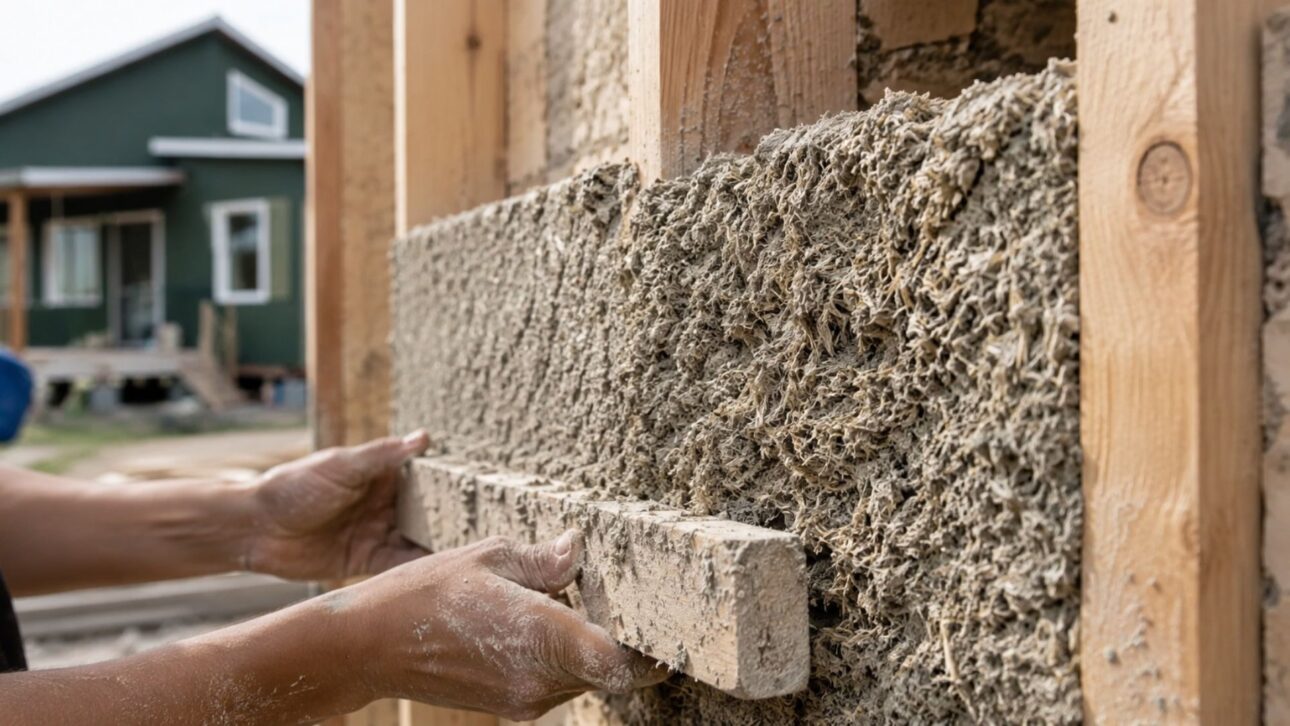
The house uses hempcrete, a type of plant-based concrete made from the woody part of hemp mixed with lime, without cement.
-
China to Drill 90 Kilometers Under the Sea to Connect Two Cities Currently Linked Only by Ferry

-
18 m² Home Built in Two Days by Teto Volunteers Provides Shelter from Insects and Cold for Resident in Brazilian Community; 43 Delivered in 2026

-
$134.7 Million Project in São Paulo Installs Over 5 Kilometers of Pipes, Creates New Underwater Crossing to Boost Water Supply for Over 450,000 People

-
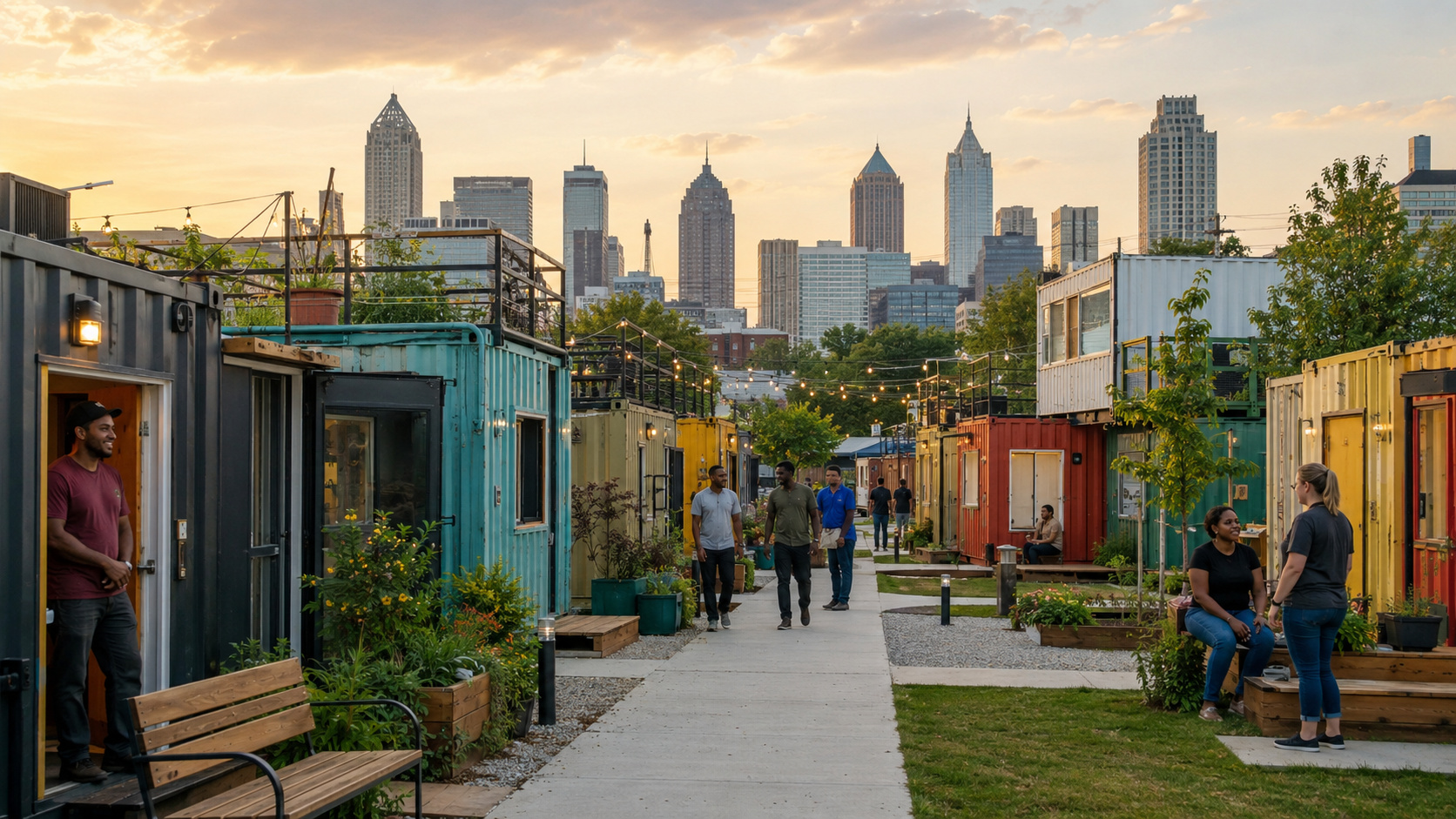
At 61, Former Homeless Wheelchair User Receives Key to Container Home in Brazil, Declares Independence


This alternative material insulates much better than common masonry and also absorbs carbon dioxide over time, in a chemical hardening process called carbonation.
The most impressive data appears on the floor of the house.
According to the report, the construction uses only 15% of the concrete that a house of the same size would normally require, which means an 85% reduction in this material.
Since cement manufacturing is one of the largest sources of carbon emissions on the planet, reducing concrete so much is already an environmental victory in itself.
Replacing concrete with hempcrete is not just an ecological whim, it’s engineering.
The alternative material provides thermal comfort, retaining heat in the winter and coolness in the summer, which reduces heating and air conditioning costs.
It was with this efficiency in mind that the house was conceived, with the declared goal of keeping the future resident’s electricity bills low.
A Hemp House for a Needy Family
The human aspect is what gives soul to the project.
Habitat for Humanity does not build houses to sell on the market, but to provide dignified housing to those who could not afford to buy.
Therefore, this hemp house for a needy family carries a dual purpose: to prove a green technology and, at the same time, change the life of a real family.
The ones who got hands-on were the students.
The project came from K-State’s Net Positive Studio, which designed and led the construction, with Habitat acting as developer and general contractor.
Students from the Manhattan Area Technical College and the Home Builders Institute in Fort Riley also helped, learning hands-on how to compact hempcrete within the wooden structures.
The choice to make this a social housing project is intentional and powerful.
It shows that sustainable housing doesn’t have to be a luxury for the rich, and that a hemp house for a needy family can be the bridge between cutting-edge technology and social justice.
It’s the kind of project that proves a concept while solving a concrete housing problem.
The Solar Roof that Returns Energy to the Grid
The house’s electricity also deviates from the conventional.
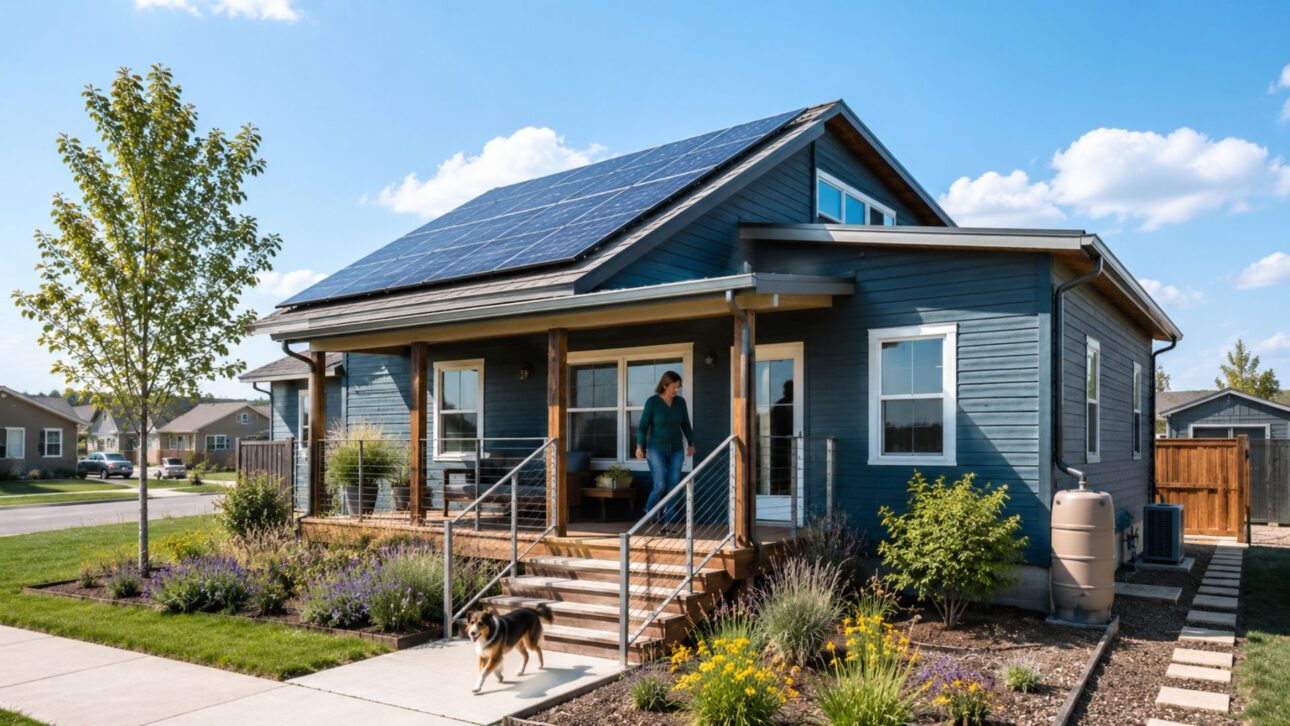
On the roof, a relatively small set of solar panels is enough to power the entire residence.
And there’s excess: the surplus is fed back into the grid, meaning the solar roof returns energy to the grid instead of just consuming it.
This detail changes the family’s relationship with the electricity bill.
Instead of paying the utility company every month, the home can generate more than it consumes and, with the system that returns energy to the grid, turn the roof into a small generator.
For a low-income family, this means one less fixed cost in a tight budget.
The setup makes the house work in favor of those who live in it.
Hemp insulation reduces consumption, and the panels cover what remains, in an arrangement where returning energy to the grid is no longer an exception but becomes routine.
It’s energy efficiency taken literally, from the floor to the roof.
Carbon negative in less than 20 years
Every construction generates emissions, from cement to transportation, and this one is no different at the start.
The difference is that, according to researchers, in just under two decades the house will offset everything it emitted to be built and continue producing clean energy, becoming carbon negative.
Being carbon negative means that the house starts to remove or avoid more carbon than it cost to exist.
The hempcrete that absorbs CO₂, the concrete that was not used, and the solar energy that replaces the grid’s, together, become a positive balance for the climate.
It’s a dwelling that, over time, pays off its own footprint and still leaves a green change for the planet.
This is the trump card that sets this house apart from almost all others.
A regular residence never becomes carbon negative, it only accumulates emissions throughout its useful life.
Making a hemp house for a needy family carbon negative in less than 20 years shows that affordable housing and climate goals can fit under the same roof.
The hemp that came from an indigenous reserve
The origin of the material has an extra layer of significance.
The hemp used in the construction was cultivated by Prairie Band Ag, the agricultural arm of the Prairie Band Potawatomi Nation, on a reserve north of Topeka, Kansas.
The tribe planted the crop for the first time in 2020 and produces the fiber without irrigation, without insecticides, and without plowing the land.
This connects the project to a local and low-impact chain.
Instead of importing an alternative material expensively from afar, the house used hemp grown just a few hours away, generating income for an indigenous community.
The cultivation without irrigation or poison reinforces the green footprint of the hempcrete from the field.
It’s a cycle that makes sense from start to finish.
The plant grows clean in the reserve, becomes alternative material at the university, and ends up as wall and floor of a hemp house for a needy family.
Few projects manage to align environment, science, and social impact so well.
Why the material that was set aside returns with strength
Hemp in construction is not new, it’s a rediscovery.
For decades, the plant was marginalized due to confusion with marijuana, despite industrial hemp having an irrelevant level of the substance that causes psychoactive effects.
This stigma kept away an alternative material that insulates much more than concrete and still sequesters carbon.
Now the tide has turned, and the words of researchers summarize the moment well.
“I advocate that we don’t think of this material as an exotic, strange material. We could be using this to build houses right now,” said Professor Michael Gibson of K-State to KCUR.
The statement disarms prejudice and places hempcrete where it deserves to be: on the construction site.
The case of Ogden is living proof of this argument.
It’s not a distant laboratory, it’s a hemp house for a needy family with door, window, solar roof, and a date to be inhabited.
When an alternative material moves from experiment to social housing approved by public agencies, the future stops being a promise and starts becoming an address.
From Kansas to Brazil: what this house teaches
The American experience sheds light on Brazil, a country with a huge housing deficit and a hot climate that punishes poorly insulated houses.
Imagining popular housing with alternative material that reduces concrete, lowers the electricity bill, and still remains carbon negative is exactly the type of solution that is lacking on a large scale here.
Industrial hemp still faces legal and production barriers in Brazil, but the discussion is advancing.
However, it’s important to keep our feet on the ground.
This is the first house of its kind in Kansas, a pilot project by a university with an NGO, and turning this into housing policy requires a production chain, regulation, and competitive cost, none of which are resolved overnight.
Hempcrete is promising, but it is still niche, and it would be an exaggeration to present it as a ready solution for millions of houses.
Even so, the value of the example is undeniable.
A hemp house for a needy family, built by students, which cuts 85% of concrete, returns energy to the grid, and is carbon negative, shows that we can rethink the way we build.
If the idea matures, the floor that dispenses with concrete may cease to be a curious exception and become a real path to cheaper and cleaner housing.
And you, would you live in a house made of hemp, knowing that it uses less energy, cuts concrete, and even becomes carbon negative over time? Tell us in the comments if you think this type of alternative material has a future in Brazilian popular construction.


