Portuguese
  Spanish


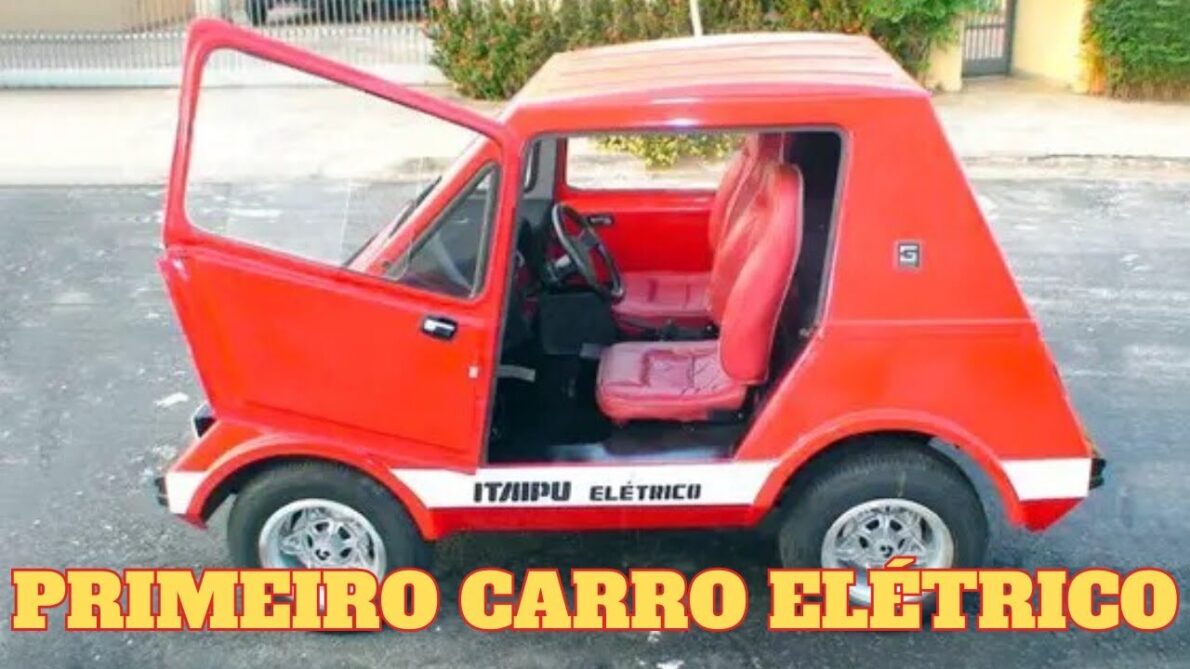

Discover the History of the Brazilian Electric Car from Gurgel, Forerunner of the Technology That Emerged Even Before Elon Musk’s Tesla.
The concept of electric cars is often associated with Tesla, the iconic brand founded by Elon Musk. However, the history of electric vehicles is richer and older than many realize. About 46 years ago, Brazil took a pioneering step with the launch of the Itaipu E-150, an electric car developed by Gurgel Motores S/A, a Brazilian company led by João Augusto Conrado do Amaral Gurgel.
The Brazilian Electric Car
Gurgel, a visionary engineer, began working in the automotive industry with the goal of creating more sustainable vehicles.
His effort culminated in the creation of the Itaipu E-150, a project that emerged in 1974, long before the popularization of the electric cars we know today.
-
Hyundai Phases Out Powerful Engine in HB20, Reduces Turbo Version in Strategic Shift Affecting Creta and HB20S, Potentially Impacting Car Prices in Brazil.

-
Carflix Overcomes Setbacks to Achieve $250 Million in Used Car Sales with Backing from Mercado Livre and SMZTO, Aiming for 300 Locations and $650 Million Revenue

-
Brazil’s Cheapest Car Outperforms Onix, HB20, Polo, and More: Priced Under $15,000 with 1.0 Engine, 681 km Range, 75 HP, and Air Conditioning.
-
Brazil’s Most Powerful Truck, Priced at $320,000, Delivers 770 HP and 3,700 Nm Torque, Surpassing Volvo’s Previous Record and Serving as a Base for a $600,000+ Motorhome


This vehicle not only preceded the launch of Tesla’s first electric cars but also represented a milestone in the history of global automotive technology.
The Itaipu E-150: An Innovative Project
When João Gurgel launched the Itaipu E-150, Elon Musk was just a 3-year-old child.
The model, named after the Itaipu hydroelectric plant, was revolutionary for its time. With a design reminiscent of an isosceles trapezoid, the E-150 stood out in a market dominated by robust, fossil fuel-powered cars.
The car was a prototype made of fiberglass and featured a patented tubular chassis known as Plasteel.
The Itaipu E-150 was compact, weighing about 780 kg and accommodating two people.
Equipped with a 3,000-watt electric motor and a 120-volt battery, the car reached a maximum speed of 35 km/h.
Although the 10-hour charging time and the weight of the batteries posed significant challenges, the vehicle represented an important advancement in electric mobility.
The idea was for the electric car to be charged from any electrical outlet, making it as accessible as an appliance.
However, the technology of the time was still not mature enough to solve the issues of battery range and weight.
The Evolution of the Brazilian Electric Car Project
After facing difficulties with the Itaipu E-150, Gurgel Motores continued to develop its technologies and, in 1980, introduced the Itaipu E-400.
This new model was an electric van with a more modern and aerodynamic design.
The E-400 was primarily designed for businesses and aimed to test the viability of the car in a commercial context.
The E-400 was equipped with a Villares 8 kW (11 hp) motor and reached a maximum speed of about 80 km/h.
The model’s batteries weighed about 80 kg each and required a 7-hour charge from 220-volt outlets.
Despite these improvements, the issues of range and battery weight remained significant obstacles.
The limited technology of the time prevented the E-400 from being widely adopted.
The Legacy of João Gurgel
João Gurgel left an important legacy in the history of automation and clean energy.
His pioneering efforts with Brazilian electric cars served as inspiration for many subsequent innovations.
The creation of the Itaipu models, despite the technological limitations of the time, paved the way for the development of more advanced electric vehicles in the future.
Elon Musk, Tesla’s founder, became one of the leading figures in popularizing modern electric cars.
In the early 2000s, Tesla launched its first electric vehicle, marking an important milestone in the evolution of this technology.
Although Musk’s work has been essential in transforming electric cars into a viable option for the mass market, it is important to recognize the roots of this innovation, which include the pioneering efforts of Gurgel and the Brazilian electric car.
Today, as Tesla continues to expand its influence in the automotive industry, it is essential to remember and acknowledge the early steps taken by pioneers like João Gurgel.
The Itaipu E-150 and the Itaipu E-400 demonstrated vision and commitment to sustainability long before the concept of electric cars became a global trend.