






 Portuguese
  Spanish


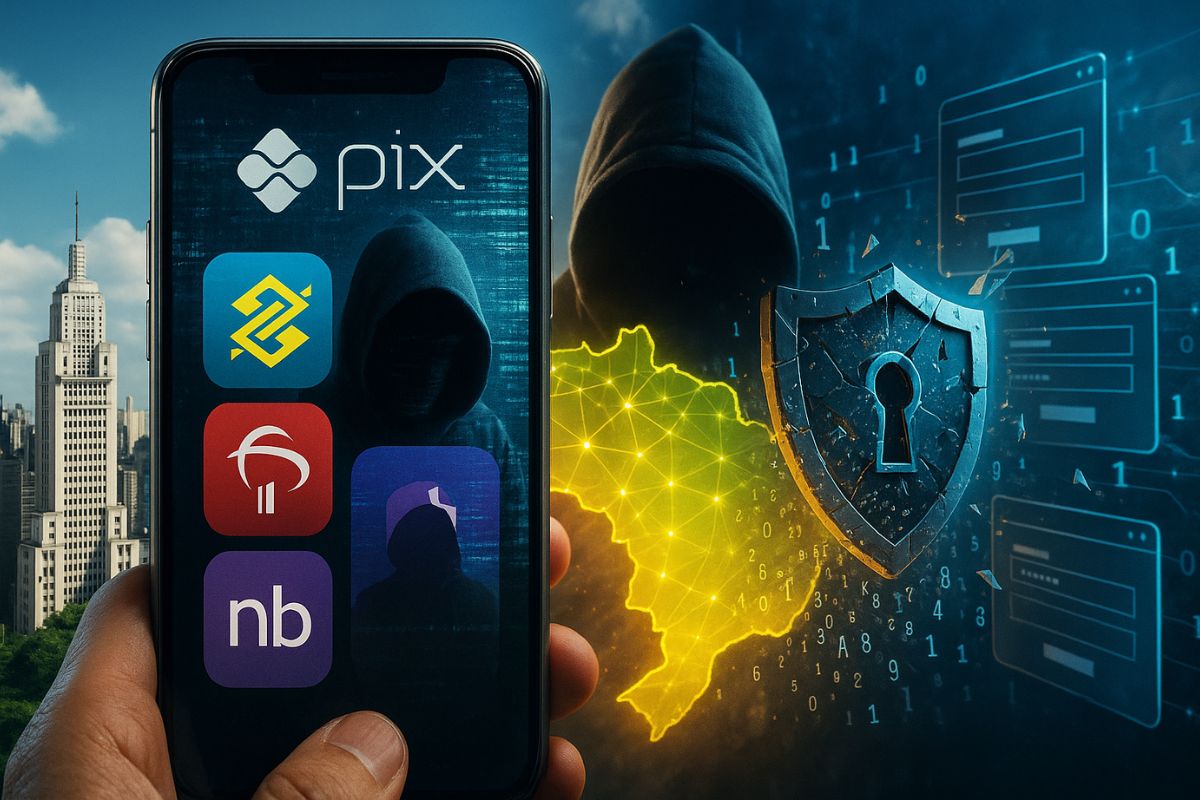


Brazilians Using PIX in Accounts at Banco do Brasil, Bradesco, and Nubank Receive Alert About Digital Frauds That Clone Websites, Collect Banking Data, Bypass Authentication, Exploit Instant Transfers, and Turn Carelessness Into Full Access to Accounts in a Few Seconds, Exposing Attention Failures and Reinforcing the Importance of Caution.
The rise of PIX as the dominant payment method in Brazil has brought convenience, speed, and no cost for transfers between accounts. At the same time, the same structure that enables payments in seconds also increases the attack surface for criminals, who have begun to target users of banks like Banco do Brasil, Bradesco, and Nubank directly.
In a scenario of massive use, scams become more sophisticated: fraudsters mimic the language of banks, clone pages, collect passwords, and exploit trust in security notifications. The alert is direct for those who use PIX daily: any carelessness in a click can open the way for almost instantaneous invasions into accounts.
PIX, Traditional Banks, and the New Risk Environment
PIX has consolidated a real-time payment infrastructure that integrates traditional and digital banks.
-
Brazil’s 2026 Tax Refund: Record 9.58 Million Filers in Largest Payout Ever, But a Key Detail on Priority Recipients Draws Nationwide Attention

-
Itaú Alters Hybrid Work Model, Increasing Office Days from 2028, Prompting Employees to Adjust to New Routine
-
Facing Labor Shortage, Japan Plans to Invest $34 Million to Attract Foreign Workers in Construction, Healthcare, Industry, and Commerce

-
Brazilian City Makes Remarkable Leap, Becomes 4th Wealthiest in the Country with GDP of R$ 134.1 Billion




In practice, accounts at Banco do Brasil, Bradesco, and Nubank have become priority targets because they concentrate a large volume of active users on PIX, who carry out transfers frequently and in varying amounts.
Scammers exploit this context by sending messages that appear official, often with logos, colors, and texts similar to those used by banks.
In the name of supposed registration updates, account blocks, or confirmation of operations on PIX, the user is led to click on links that take them to fake environments, visually very close to the real channels.
How Scams Imitate Banco do Brasil, Bradesco, and Nubank
The central strategy of these scams is cloning institutional communication.
Criminals copy email templates, SMS, notifications, and login pages, creating fake versions that impersonate Banco do Brasil, Bradesco, or Nubank.
In these fraudulent environments, data such as CPF, access passwords, verification codes, and card information are requested as if they were legitimate security steps.
As soon as the user provides the credentials, the criminals can access the real accounts, register new devices, authorize operations on PIX, and, in a matter of seconds, execute successive transfers.
In many cases, the scam relies on messages with a sense of urgency, warning of account blocks, PIX suspensions, or suspicious movements.
By pressuring the customer to “resolve” the problem immediately, the scammer reduces reflection time and increases the chances that the victim will not verify the authenticity of the message.
Why PIX Has Become a Target in Digital Scams
The combination of immediate liquidity, 24/7 availability, and real-time settlement makes PIX a priority target.
Once the fraudster gains access to the account, transfers via PIX can be made in succession and completed before the user notices and contacts the bank, reducing the room for reversal.
Moreover, PIX has become popular among audiences with varying levels of familiarity with digital security.
Users who are not accustomed to checking URLs, verifying senders, or being wary of links received in private messages tend to be more exposed.
The more widespread the use of PIX, the larger the potential pool of victims for the same scams.
Essential Precautions to Use PIX Safely
Protection starts with the user’s routine. For those using PIX in accounts at Banco do Brasil, Bradesco, and Nubank, some practices are considered basic:
Never click on links received via email, SMS, or messaging that ask for updates, releases, or blocks on PIX
Manually type the bank’s address in the browser or use only the official app installed from official stores
Be suspicious of messages with alarmist tones and immediate deadlines to “avoid account blocking” or “not lose access to PIX”
Verify the sender of communications, checking for strange domains, spelling errors, or unusual formats
Enable two-factor authentication whenever the bank offers this additional layer, including for authorizing operations on PIX
In any doubt, contact the bank through official channels and confirm if the received message is legitimate before following any instructions
These precautions do not eliminate risk, but they significantly reduce the likelihood that a scam based on page cloning or password collection will be successful.
What Banks Do and What Still Depends on the Customer
Financial institutions have been investing in monitoring transactions and filters for anomalous behavior.
Risk analysis systems can identify unusual movements and, in some cases, temporarily block PIX or require additional validations.
At the same time, educational campaigns guide customers to recognize legitimate communications and not to share passwords.
Still, no technological layer replaces user attention when clicking, entering data, or authorizing a PIX to unknown accounts.
Security, in this scenario, results from the combination of banks’ protective mechanisms and digital discipline on the part of customers.
The greater the alignment between these two ends, the less room there is for scams that rely on social engineering and cloned pages.
In the end, the decision to pause for a few seconds before clicking on a link or entering a password is still one of the most powerful defenses for those who use PIX every day.
Have you ever received a suspicious message involving PIX in the name of Banco do Brasil, Bradesco, or Nubank, and how did you react in that situation?








