





 Portuguese
  English
  Spanish
  5 min of reading
  0 comments


In just 28 days of February, Brazil extracted more oil and gas from the seabed than in any other month in history — 5.3 million barrels of oil equivalent per day, with the pre-salt accounting for 80% of everything and a single platform producing above its own capacity
According to official data from the National Agency of Petroleum (ANP), released on April 1, 2026, Brazil’s total oil and natural gas production reached 5.304 million barrels of oil equivalent per day in February.
It is the country’s historical record.
The number surpassed the previous mark of 5.255 million barrels, recorded in October 2025 — and the most impressive thing is that February only has 28 days.
-
The electricity bill in the Northeast will increase by almost 10% starting this week — five states already have a scheduled date for the adjustment, and the director of ANEEL admits that the increase is double the inflation.

-
A Chinese company has just delivered its 10,000th humanoid robot — and now wants to place 100,000 in factories worldwide by the end of the year, while Tesla, Boston Dynamics, and the rest of the West have yet to move beyond prototypes.
-
Brazil has never generated so much clean energy — and has never charged so much for it: while solar and wind farms break records, the electricity bill rises by up to 23% and R$ 52 billion in charges are paid by 35 million families who don’t understand why electricity has become so expensive.
-
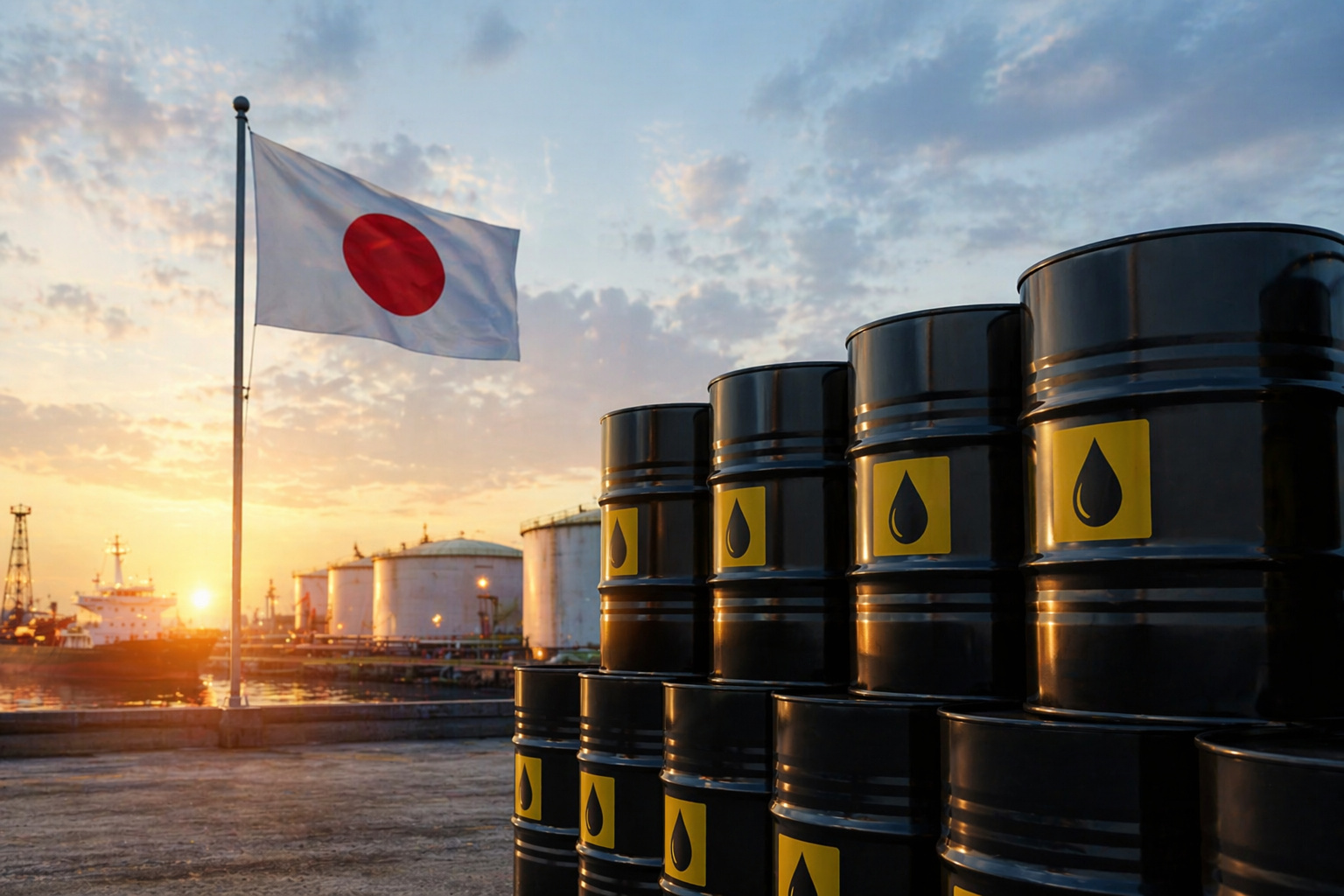
Japan announces release of more than 36 million barrels of oil in May





The pre-salt accounts for 80% of everything
According to Notícias Agrícolas, the pre-salt alone produced 4.243 million barrels of oil equivalent per day.
This represents 80.2% of all Brazilian production.
There are 181 active wells in the pre-salt, most of them in the Santos Basin.
The Tupi field alone — Brazil’s largest — produced 866 thousand barrels of oil per day, in addition to 42.87 million cubic meters of gas.
Combining oil and gas, Tupi surpassed 1 million barrels of oil equivalent per day.
To give an idea of the scale: Tupi’s production alone surpasses that of countries like Colombia, Argentina, and Ecuador.

The platform that produces beyond its limit
The FPSO Almirante Tamandaré, installed in the Búzios field, is the star of recent production.
In February 2026, it produced an average of 197,903 barrels per day — the highest individual oil production among all platforms in Brazil.
However, Tamandaré’s record was even higher.
As reported by Petrobras, in October 2025 the platform reached an instantaneous flow equivalent to 270 thousand barrels per day.
The FPSO’s nominal capacity is 225 thousand barrels. It produced 20% above its own design limit.
The Tamandaré began operating in February 2025, after leaving a shipyard in China, crossing the ocean, and being installed in the pre-salt more than 200 km off the coast of Rio de Janeiro.

16% increase in one year
Oil production in February 2026 was 16.4% higher than in the same month of 2025.
Natural gas grew even more: 24.5% year-on-year.
As reported by Terra, in 2025 the average annual oil production had already reached 3.77 million barrels per day — a 12% increase over 2024.
Brazil is currently the 8th largest oil producer in the world, and with the entry of new platforms in the pre-salt, the trend is to continue rising.
- Total production (Feb/2026): 5.304 million boe/d (record)
- Oil: 4.061 million bbl/d (+16.4% vs Feb/2025)
- Natural gas: 197.63 million m³/d (+24.5% vs Feb/2025)
- Pre-salt: 80.2% of total (4.243 million boe/d)
- Largest field: Tupi — 866 thousand bbl/d of oil
- Largest platform: FPSO Almirante Tamandaré — 197,903 bbl/d
- Active wells: 6,079 (582 offshore, 5,497 onshore)
- Petrobras: 89.46% of total production

The caveat the numbers hide
Despite the records, there is one data point that stands out.
Natural gas flaring — when gas is discarded instead of utilized — increased by 18.6% compared to February 2025.
5.82 million cubic meters of gas were flared per day.
Overall utilization was 97.1%, a high number, but the increasing trend in flaring is concerning.
Furthermore, 80% of production concentrated in the pre-salt creates a geological and regulatory dependency: any problem in the Santos Basin fields would impact the country’s entire energy matrix.
As we previously showed, Petrobras continues to expand exploration with robots at nearly 3,000 meters deep — but the bet on the pre-salt is, at the same time, the greatest strength and the greatest vulnerability of the Brazilian oil sector.
Moreover, the growth in Brazilian production occurs at a time when the debate about energy transition is intensifying globally.
In this sense, while Europe reduces investments in fossil fuels and Norway plans to limit new concessions, Brazil continues to expand pre-salt exploration with consecutive records.
Similarly, the entry of new platforms like P-78 and P-79, planned for the coming years, should push Brazilian production even higher.
However, there is a strategic dilemma in this acceleration. Pre-salt oil is considered high-quality and low-cost to extract — which makes Brazil competitive even in low-price scenarios.
Therefore, the question is not whether Brazil can produce more oil. The question is whether it can do so sustainably, reducing gas flaring, investing in carbon capture, and diversifying its energy matrix at the same time.
Above all, the February 2026 record shows that the pre-salt is far from reaching its limit. Brazil’s challenge is to ensure that the wealth extracted from the seabed transforms into long-term investment — and not just revenue that evaporates when the barrel of oil loses value.
Thus, the 5.3 million barrels per day are not just a number to celebrate. They are a responsibility that the country needs to honor with planning, infrastructure, and a vision for the future.
Consequently, industry analysts estimate that if the 12% annual growth rate is maintained, Brazil could surpass 5 million barrels of pure oil per day before 2028 — consolidating its position among the world’s top five producers. Furthermore, the operational efficiency of pre-salt platforms continues to improve, with the Tamandaré producing 20% above its nominal capacity without additional hardware investments.
In this sense, the pre-salt is not just a source of revenue. It is a strategic asset that positions Brazil as a global protagonist in a sector that, even in transition, will continue to generate trillions of dollars for decades.
Brazil is producing more oil than ever. The question is whether it will be able to diversify in time before the energy transition changes the rules of the game.


Be the first to react!