Portuguese
  Spanish


Oil has once again fallen in international markets amid new political expectations involving major global powers. The recent movement reflects a scenario that mixes diplomacy, geopolitics, and economics.
The possible resumption of negotiations between the United States and Iran has rekindled discussions about the global supply of the commodity. At the same time, signs of stability in the Middle East also contributed to this change in price direction.
According to the Valor Investe website, in a news item published on April 24, 2026, oil prices began to fall after indications of a new round of negotiations between Washington and Tehran emerged. This type of diplomatic movement usually directly impacts the market.
This happens because Iran is one of the world’s major oil producers. Any easing of sanctions could increase global supply.
-
With a record production of nearly 3 million barrels per day, Petrobras resumes importing diesel in July, highlighting the bottleneck in Brazilian refining.

-
Qantas and Airbus Invest in Company Aiming to Convert Unsorted Household Trash into Jet Fuel

-
Brazil’s ANP Opens 86 New Oil Blocks in the Equatorial Margin, Expanding the Amazon River Mouth Frontier

-
OPEC+ Boosts Oil Supply by 188,000 Barrels per Day in July 2026, Leading to Price Drop from $112 to $89 per Barrel in Under Two Months
The historical weight of oil in global tensions
Historically, oil has always been at the center of geopolitical disputes. Since the 1970s, with the oil crisis caused by OPEC, it became clear that political decisions can drastically alter prices and availability.
During that period, producing countries reduced supply as a form of pressure. The result was a global energy crisis that raised prices and impacted entire economies.
In the current case, the situation involves economic sanctions imposed on Iran over the past few years. These sanctions limited the country’s ability to export oil. As a result, global supply became more restricted.
Now, with the possibility of negotiations, the market begins to anticipate a different scenario. If an agreement is reached, Iran could resume exporting more oil. This tends to push prices down.
Truce in the Middle East reduces risks
In addition to negotiations, another relevant factor influences the market. According to the Valor Investe website, Israel and Lebanon agreed to extend the truce. This type of regional stability reduces risks of interruptions in oil production and transport.
The Middle East is responsible for a large share of global production. Any conflict can generate insecurity and raise prices.
The relationship between conflicts and oil prices is old. Over the decades, wars and tensions in the region have always influenced the market.
The Gulf War, in the early 1990s, is a clear example. At that time, the fear of supply interruptions caused prices to skyrocket.

Market expectations and impact on prices
In the current scenario, the opposite occurs. The prospect of dialogue and truce generates a sense of greater stability. This reduces the so-called “risk premium” embedded in the price of oil.
This premium represents the additional cost that investors are willing to pay in the face of uncertainties. When risks decrease, this value also falls.
Another relevant point is the role of the United States in this context. The country is one of the world’s largest oil consumers. It has also become a major producer in recent years.
This happened thanks to the advancement of shale oil. Still, American political decisions continue to influence the global market.
According to market analysts, the possible rapprochement between the US and Iran could represent a significant change in the global balance. This is because the return of Iranian oil to the market would increase supply at a time of still high demand.
Oil in the current global economy
It is worth remembering that the oil market is highly sensitive to expectations. Often, prices move even before concrete changes happen. This occurs because investors try to anticipate future scenarios.
Thus, merely the signal of dialogue is enough to influence prices.
Throughout history, oil has also been a key player in the global economy. It fueled industrial growth, transportation, and various production chains.
At the same time, its dependence generated challenges. Energy crises, environmental impacts, and political disputes are part of this context.
In recent years, the debate on energy transition has gained momentum. Many countries seek to reduce their dependence on fossil fuels.
Even so, oil still plays a central role in sectors such as transport and petrochemicals.
According to the International Energy Agency (IEA), oil demand is still expected to remain significant in the coming decades. However, structural changes may gradually alter this scenario.
Economic impacts and reflections in Brazil
The current price drop can also bring broader economic effects. For importing countries, cheaper oil can reduce costs. This can positively impact inflation and economic growth.
For exporting countries, the drop can reduce revenues and affect their economies.
In Brazil’s case, for example, the impact depends on several factors. The country is an oil producer and exporter, but it is also influenced by international prices.
Companies in the sector, such as Petrobras, can be directly affected by these fluctuations.
According to the Brazilian government and regulatory bodies, oil behavior influences everything from fuel prices to energy policies. Therefore, movements in the international market have repercussions on the daily lives of the population.

Oil remains a global thermometer
Given this scenario, it is clear that oil continues to be a strategic element in the global economy. Its importance goes beyond energy. It is linked to political decisions, international relations, and economic development.
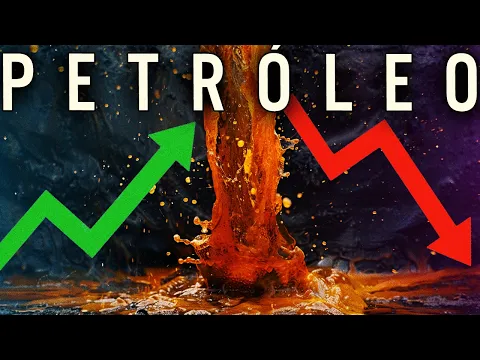
The current price drop shows how quickly the market reacts to changes in expectations. The possibility of negotiations between the US and Iran brought a new perspective.
At the same time, the truce between Israel and Lebanon helped reduce tensions.
These factors indicate a moment of relative stability. However, the scenario is still uncertain. Negotiations can advance or retreat.
Conflicts may re-emerge. All of this directly influences oil behavior.
Thus, the current moment reinforces a historical characteristic of the sector. Oil is not just a commodity. It is also an instrument of power, negotiation, and influence on the world stage.