Portuguese
  Spanish


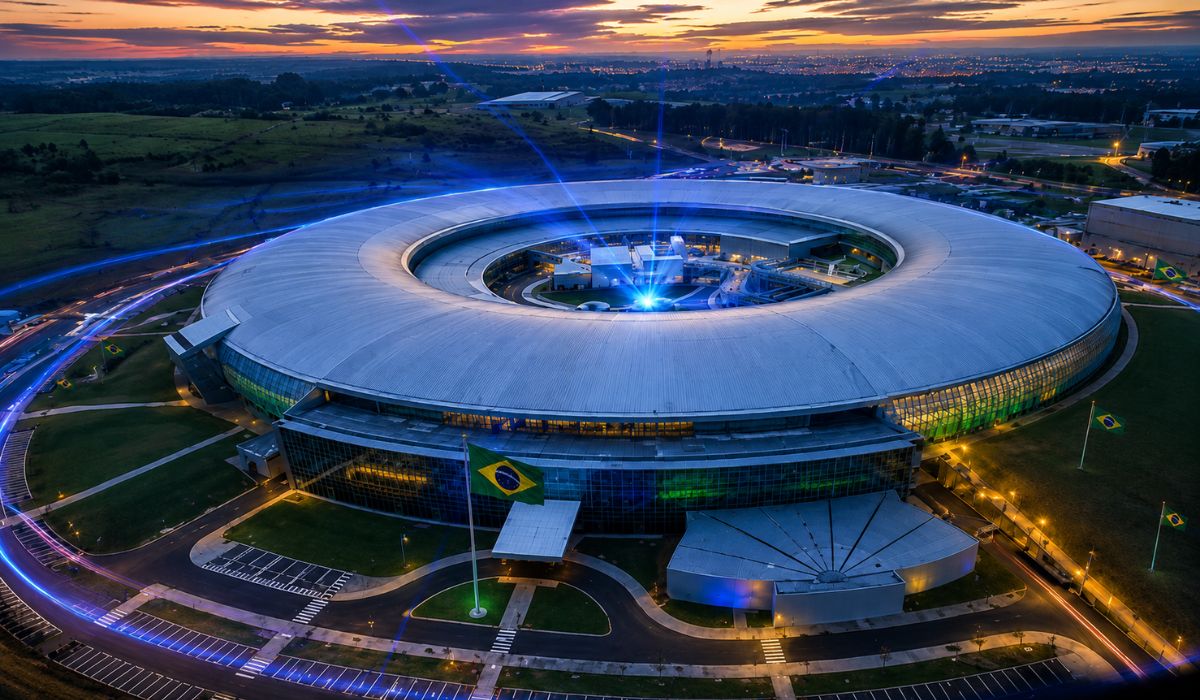


Sirius to have new expansion phase with federal investment and new research lines to broaden analyses on matter, health, energy, agriculture, and materials at a microscopic scale.
Brazil allocated R$ 800 million to the second phase of Sirius, a synchrotron light source installed at the National Center for Research in Energy and Materials, CNPEM, in Campinas, São Paulo state.
According to the Ministry of Science, Technology and Innovation, the investment is part of the New PAC and is expected to expand the equipment’s research structure until 2026.
The forecast also appears in a report published on November 24, 2025 by the International Trade Administration, an agency linked to the U.S. Department of Commerce, which cites the allocation of R$ 800 million until 2026 to expand the capabilities of Sirius’s phase 2.
-
Six Helicopters to Drop 550 Tons of Poison on Island Near Antarctica to Eradicate Mice Threatening Albatrosses and 19 Seabird Species.

-
Russia Unveils Poseidon: A 20-Meter Nuclear Torpedo-Drone with 10,000 km Range, 185 km/h Speed, and 100-Ton Capacity Threatening Coastal Cities with Radioactive Waves
-
Brazilian Innovator Converts Old Car into Electric Vehicle Using Laptop Batteries and Forklift Motor, Achieves Nearly 90 km/h in Urban Settings

-
Samsung Unveils Smart Oven with Built-In Camera, AI Food Recognition, and Real-Time Monitoring via Smartphone.




The machine, described by CNPEM as the largest and most complex scientific infrastructure ever built in the country, uses electron accelerators to produce synchrotron light.
This type of radiation allows investigating the composition and structure of matter at different scales, with applications in areas such as health, agriculture, energy, environment, and materials science.
The new phase foresees the expansion of research stations, known as lightlines, which are the points where experiments are conducted.
According to MCTI, phase 2 includes the design and construction of ten new stations, which should expand Sirius’s usage capacity for researchers from universities, scientific institutes, and companies.
In practice, the equipment allows studying samples of medicines, fertilizers, rocks, food, industrial materials, viruses, bacteria, and other physical, chemical, and biological systems.
Analyses performed at Sirius help observe structures that cannot be examined with the same level of detail by conventional laboratory methods.

How synchrotron light reveals details of matter
Synchrotron light is produced when electrons accelerated to near light speeds have their trajectory deflected by magnetic fields.
This process generates high-brightness beams of electromagnetic radiation, which can include infrared, visible light, ultraviolet, and X-rays.
With these beams, researchers can analyze internal characteristics of samples, such as chemical composition, spatial organization, molecular structure, and changes that occur during physical, chemical, or biological reactions.
CNPEM reports that the technology allows investigating materials at a nanometer scale, a unit equivalent to one billionth of a meter.
This type of analysis can be applied to questions from different areas.
In health, for example, synchrotron light can aid studies on molecules related to medicines.
In agriculture, it can contribute to research on fertilizers, soils, and plants.
In energy, it can be used in investigations on batteries, biofuels, and materials employed in renewable technologies.
As a multi-user infrastructure, Sirius receives experiment proposals submitted by research groups.
Requests undergo technical and scientific evaluation before the use of lightlines, a model also adopted in other large international scientific facilities.
Sirius Phase 2 expands lightlines
The second phase of Sirius focuses on expanding the number of operational lightlines.
Each station functions as a specialized laboratory, with instruments defined according to the type of experiment to be performed.
Some lines allow obtaining three-dimensional images of samples; others measure chemical reactions, crystalline structures, or material properties.
Sirius was designed to accommodate up to 38 beamlines, according to information released by MCTI.
The expansion planned in the New PAC is expected to add ten new research stations, increasing the number of possible experiments and the variety of techniques available to users.
The expansion may also increase the use of the equipment in industrial research.
Companies can use the beamlines to study material failures, evaluate components, develop products, or monitor manufacturing processes with data obtained at a microscopic scale.
In this model, the accelerator does not operate as an isolated laboratory.
It provides light beams for different experimental stations, and each beamline is prepared to answer a specific set of scientific or technological questions.
Sirius Structure Requires Vibration and Temperature Control
The building housing Sirius is part of the necessary conditions for the operation of the machine.
The structure was designed to reduce vibrations, control temperature variations, and maintain the stability of components used in accelerators and beamlines.
Small changes in the floor, environment, or equipment alignment can affect the electron trajectory and the quality of the beams sent to research stations.
Therefore, the construction brings together solutions from civil engineering, environmental control, scientific instrumentation, computing, and accelerator physics.

CNPEM states that the Sirius facilities required specific care regarding thermal stability, isolation from internal and external vibrations, and control of floor deformations.
These factors are treated as part of the synchrotron light source’s performance, not just as building characteristics.
Operation depends on the integration between the main machine, magnetic systems, control devices, electrical infrastructure, technical environments, and experimental stations.
This combination explains why the project is presented by CNPEM as a large-scale scientific infrastructure.


From LNLS to Sirius
Brazil’s trajectory in this area began before the construction of Sirius.
In 1987, the project for the National Synchrotron Light Laboratory, LNLS, was initiated, planned to operate as an open facility for the scientific community.
Between 1987 and 1997, the laboratory developed the UVX, the first synchrotron light source in the Southern Hemisphere, according to CNPEM.
UVX allowed for the formation of technical teams, the development of components, and the consolidation of shared use of a large scientific infrastructure in the country.
After this stage, Sirius was designed to operate with fourth-generation synchrotron light source characteristics, a standard associated with brighter and more stable beams.
The project’s development also involved Brazilian companies.
According to CNPEM, approximately 85% of the resources invested in Sirius were applied in the country, through the contracting of services, components, raw materials, and systems produced or developed nationally.
This industrial participation is evident in areas such as precision mechanics, control systems, engineering, civil construction, information technology, and the manufacturing of components used in accelerators and experimental stations.
New PAC Includes Other Science and Technology Projects
Sirius is part of a broader portfolio of MCTI investments in the New PAC.
The ministry reported that the set of science, technology, and innovation projects totals approximately R$ 12.1 billion, with resources allocated to structuring ventures and actions in different regions of the country.
Among the projects cited by the government are Orion, a maximum biological containment laboratory under construction at CNPEM; a new supercomputer focused on artificial intelligence; the modernization of the National Center for Monitoring and Natural Disaster Alerts, Cemaden; and the Brazilian Multipurpose Reactor.
In the case of the supercomputer, the proposal is to expand the national data processing capacity for applications in artificial intelligence, climate modeling, health, and energy.
The modernization of Cemaden is related to the updating of equipment and systems used in monitoring climatic and geological events.
MCTI’s portfolio brings together projects with distinct purposes, but linked to the expansion of scientific, technological, and monitoring infrastructure.
In the case of Sirius, the focus is on increasing the experimental capacity of a synchrotron light source already in operation.

How researchers use Sirius
Sirius functions as an open facility to the national and international scientific community.
Researchers interested in using the beamlines submit experiment proposals, which are analyzed before scheduling use.
This format concentrates high-cost equipment in a shared national center, instead of distributing similar structures across different institutions.
Universities, research institutes, and companies can access the infrastructure according to technical and scientific criteria defined by the laboratory.
With phase 2, the trend is that more projects can be accommodated, as the new stations come into operation.
The expansion also diversifies the techniques available for the analysis of materials, images, reactions, and chemical structures.