Portuguese
  Spanish


The homemade plane HM.14 by Henri Mignet, called the Flying Flea, attracted people who dreamed of flying, but accidents in 1935 and 1936 proved that simple controls do not eliminate risks in the air
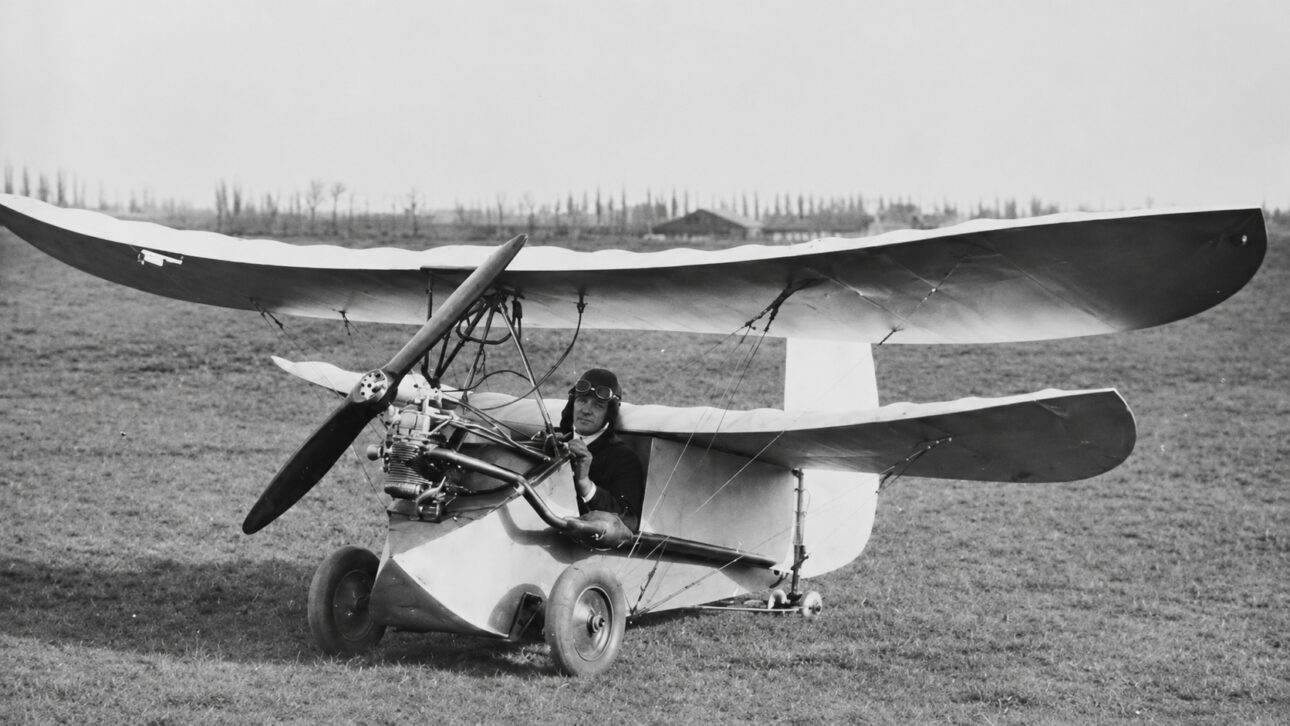
Few know, but the homemade plane HM.14 was created in 1933 by the Frenchman Henri Mignet. The idea was to bring ordinary people closer to the dream of flying, at a time when aviation seemed reserved for professional pilots.
The aircraft had two wings and a simplified control system. The intention was to make flying easier to understand and make the project seem possible for those who liked mechanics and wanted to build their own machine.
The information was released by the Smithsonian National Air and Space Museum, a museum in the United States dedicated to aviation and space. The collection preserves an HM.14 and tells how the Flying Flea went from curiosity to a safety crisis after accidents in 1935 and 1936.
-
He Didn’t Build a Plane, But Spent Decades Trying to Make Bicycles Fly with Wings and Pedals; Remaining Models Tell This Unusual Story in Germany

-
Roraima Security Secretary Poses as Doctor to Expose Technician Charging $600 for Free Public Health MRI in Brazil; Technician Confessed

-
To Protect Its Beaches, the Netherlands Deposits 21.5 Million Cubic Meters of Sand into the Ocean, Letting Nature Reinforce Dunes and Shoreline
-
Swedish Mall Focuses on Sustainability by Repairing and Reselling Discarded Items




The dream of a homemade plane for ordinary people seemed possible
Henri Mignet wanted to reduce the distance between the ordinary citizen and the sky. The HM.14 was born with the proposal of being a plane simpler to build and pilot than the aircraft used by professionals.
The project removed some controls present in more well-known planes and concentrated part of the functions in a lever. This helped create the image of a more accessible machine for amateurs.
The proposal attracted attention because it combined aviation for amateurs, mechanical curiosity, and a desire for independence. For many people, the possibility of having a homemade plane seemed like a huge change.
The two wings of the HM.14 gave the Flying Flea an unusual appearance
The HM.14 had two wings in sequence, one installed in front of the pilot and another behind. The front wing could change position, while the rear one was fixed to the structure of the aircraft.
This design aimed to facilitate the ascent and descent of the plane. The lever helped the pilot move the front wing, while lateral movements served to initiate turns.
Henri Mignet tried to avoid stalling, a situation where the wings fail to keep the airplane in the air. The idea seemed promising, but the behavior of the air over the wings was more difficult to control than it seemed.
The Flying Flea gained popularity among people fascinated by homemade airplanes
Interest grew rapidly in France and England. A book published in November 1934 detailed the project and explained how the aircraft could be assembled.
Smithsonian National Air and Space Museum, a United States museum dedicated to aviation and space, recorded that hundreds of people built and flew versions of the Flying Flea in France and Great Britain during the 1930s.
The model was not only attractive because it was small. It sold the idea that the sky could cease to be a distant space and become part of the lives of people without a career in aviation.
But a homemade airplane does not become safe just because it seems easy to understand. The construction, the behavior of the wings, and the flight conditions required care that went far beyond simple assembly.
Accidents in 1935 and 1936 changed the reputation of the homemade airplane
The sequence of accidents began to put the HM.14 under heavy pressure. The problem stopped seeming like something related only to the pilot’s skill when serious incidents repeated.
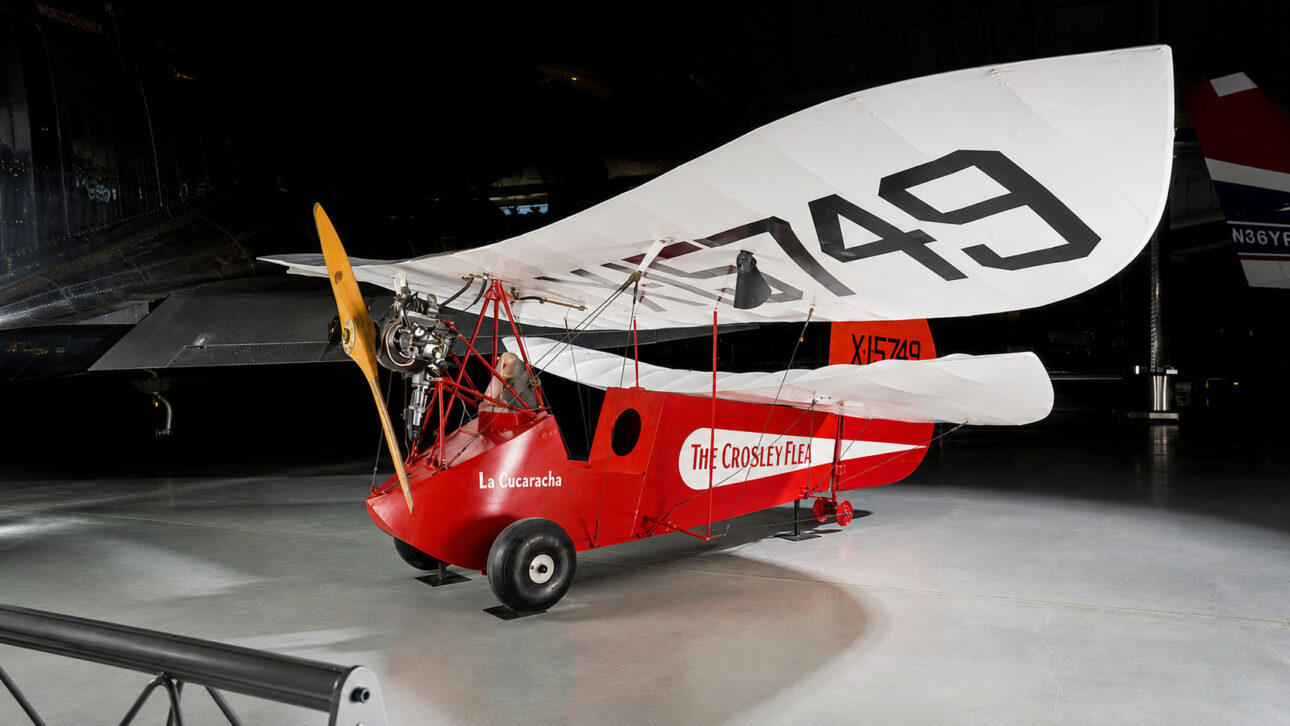
France and England banned the flights of the Flying Flea and took the project for testing. The decision showed there was concern about a possible defect in how the aircraft reacted to the air.
The reputation of the HM.14 was severely affected. The airplane that seemed to open the doors of aviation to amateurs became associated with a risk that was not yet fully explained.
Tests revealed why the pilot could lose control
The tests were conducted in a wind tunnel, a structure that simulates the passage of air over an aircraft. The goal was to understand how the wings reacted in different positions and flight situations.
The results showed that, under certain conditions, the pilot might not be able to recover from a dive. In simple terms, the aircraft could enter a steep descent and not respond to commands as it should.
This was the serious problem of the Flying Flea. It wasn’t enough to have reduced controls when the pilot could be left without a secure response from the machine in a critical situation.
Henri Mignet altered the design after the tests and solved a large part of the problems. Even so, public confidence had already been shaken by the accidents.
The story of the HM.14 left a lesson that remains important
The HM.14 was not only marked as a different airplane. It became an example of how a simple idea can face limits when it comes into contact with real usage situations.
Safety needs to be proven before any popularization. In aviation, a small mistake can become a huge problem when the machine is far from the ground.
The Flying Flea remains important as a historical object and shows why innovation without complete testing can come at a high price. The desire to make flying more accessible was strong, but it could not replace the need for control and safety.
After learning this story, do you think that facilitating a technology is worth the risk when safety is not yet proven? Share your opinion in the comments.