Portuguese
  Spanish


Crude oil exports to China jumped 94% in just one year — from US$ 3.7 billion to US$ 7.2 billion — and Brazil closed the first quarter of 2026 with US$ 82.3 billion in total sales, the highest value ever recorded for the period
As compiled by Poder360 with data from the Brazil-China Business Council (CEBC), crude oil became the main driver of Brazilian exports at the beginning of 2026.
Furthermore, the volume exported to China more than doubled: it jumped from 7.4 thousand tons to 16.5 thousand tons, an increase of 122%.
In addition, China absorbed 57% of all oil exported by Brazil in the quarter, with a peak of 65% in March.
-
Fired during apartheid and with a little borrowed money, an electrician started with a borrowed truck and transformed electrical services into a group connected to energy, real estate, and infrastructure in South Africa.

-
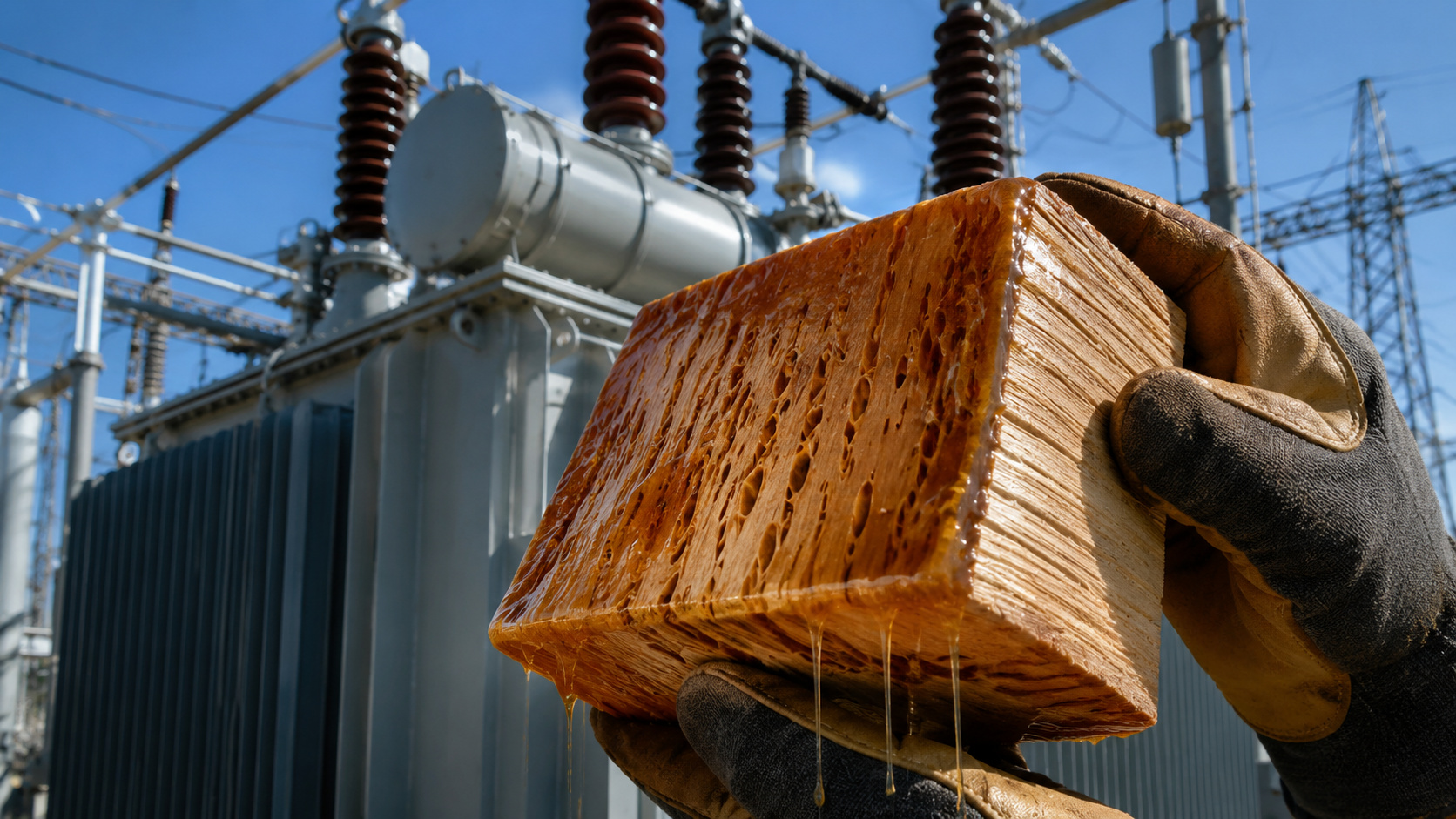
Wood has ceased to be just a construction material in Yale research and has become insulation for electrical transformers that face intense heat, aging, and increasing pressure from the renewable energy-powered grid.
-
More than 1,000 residents of a remote island in Kiribati now have clean water and electricity with solar systems operated by the community itself.
-
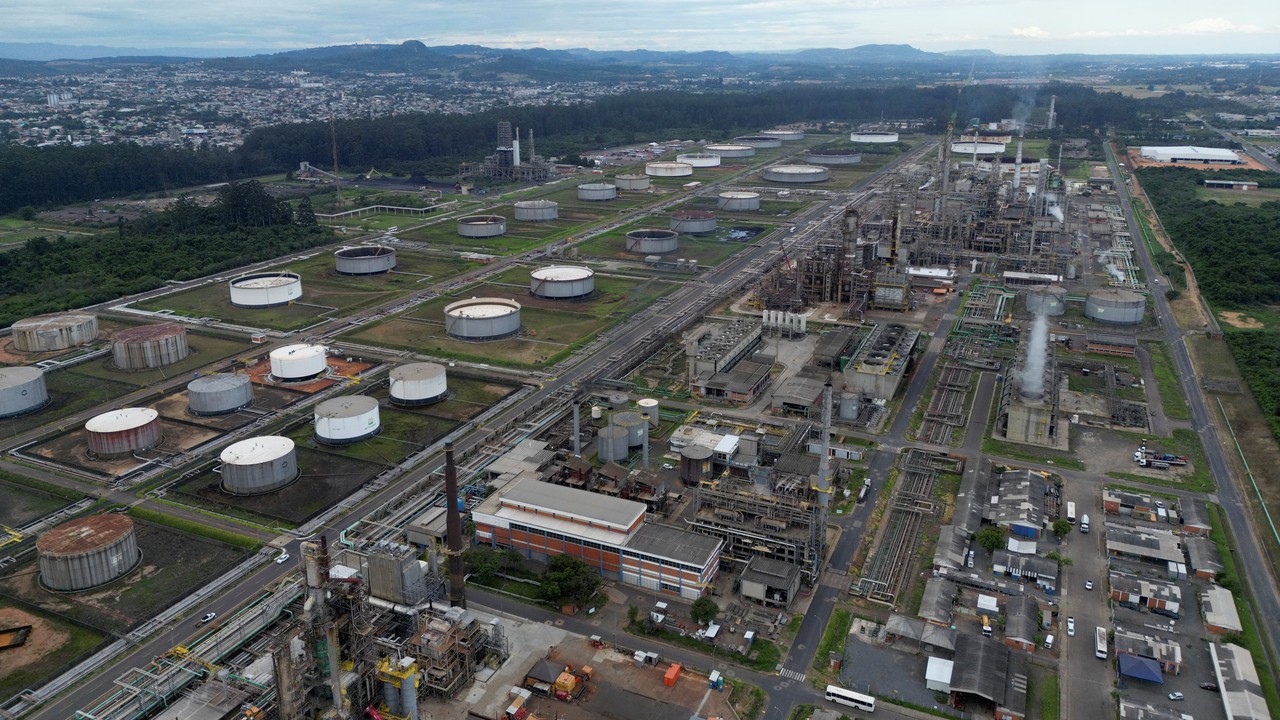
With a record production of nearly 3 million barrels per day, Petrobras resumes importing diesel in July, highlighting the bottleneck in Brazilian refining.



Brazil’s total sales to China reached US$ 23.9 billion in the period — a historic record, with a growth of 21.7% over 2025.
According to CONTEE, India also increased its purchases of Brazilian oil by 78%, totaling US$ 1.02 billion.
The war in Iran that transformed Brazil into Asia’s preferred supplier
However, the jump did not happen by chance. The war in Iran disrupted the flow of oil through the Strait of Hormuz, through which 20% of global maritime oil trade passes.
Consequently, China — the world’s largest oil importer — needed to seek suppliers outside the conflict zone.
Brazil emerged as the most reliable alternative.
According to economist Cristiane Alkmin, interviewed by InfoMoney, “Brazil emerges as the big winner of the geopolitical rearrangement” caused by the instability in Hormuz.
With the price of Brent crude oscillating between US$ 90 and US$ 100, the extractive industry came to account for 49% of Brazilian exports to China — 8 percentage points more than the previous year.
Thus, the record production of 5.3 million barrels per day registered in February found a voracious buyer on the other side of the world.

The paradox no one explains at the gas station
Still, here’s the point that turns export numbers into a story that directly affects the pockets of 215 million Brazilians.
Brazil is one of the world’s largest oil producers. It exports billions in crude oil. But it continues to import gasoline.
The reason is simple and frustrating: the country does not have enough refining capacity to process what it extracts from its own soil.
Above all, Brazilian refineries operate with limited capacity. Most of the pre-salt production is heavy oil that requires specific processing.
In this sense, Brazil functions like a farm that harvests tons of coffee but has no roastery — it sells the raw bean abroad and buys the roasted coffee back, more expensively.
On the other hand, the situation worsened with the war in Iran. Imported derivatives became more expensive due to instability in global maritime transport.
What this means at the pump: expensive gasoline despite record oil exports
For Brazilians filling up their cars, the export record does not translate into cheaper gasoline.
On the contrary. While Brazil breaks records selling crude oil, the energy bill rises and imported derivatives push up prices at the pump.
The country exports the raw material and imports the finished product — paying the refining margin of other countries.
Furthermore, higher maritime freight due to the war in the Gulf makes the derivatives Brazil needs to import even more expensive.
In fact, it is a perverse cycle: the more oil Brazil produces and exports without refining, the more dependent it becomes on imported derivatives whose price is determined by crises the country does not control.
The ethanol solution: 32% blend to eliminate imports
Given this paradox, the government found a partial solution that does not involve building new refineries.
The Ministry of Mines and Energy announced its intention to increase the ethanol blend in gasoline from 30% to 32% (E32), with analysis scheduled for May 2026 at the National Council for Energy Policy.
The estimate is that the measure will reduce the need for gasoline imports by 500 million liters per month.
However, critics point out that E32 treats the symptom without solving the cause. Brazil would continue to export cheap crude oil and rely on ethanol to compensate for its inability to refine.
Similarly, the measure does not solve the import of diesel — another derivative that the country does not produce in sufficient quantity and that drives all road transport logistics.

China buys 57% — and that could be a problem
Still, the export record brings another risk that few discuss.
When a single buyer absorbs 57% to 65% of your exports of a product, you don’t have a customer — you have a dependency.
If China finds cheaper suppliers, or if the war in Iran ends and Iranian oil returns to the market, Chinese demand for Brazilian oil could fall as quickly as it rose.
Therefore, the record of US$ 7.2 billion is both a commercial victory and a strategic warning.
Concentration in primary commodities exported to a single market is exactly the type of vulnerability that geopolitical crises exploit.

Why Brazil doesn’t build more refineries — the R$ 50 billion question
Building a modern refinery costs at least R$ 50 billion and takes about a decade between design, licensing, and operation.
Petrobras tried in the 2010s with the Rio de Janeiro Petrochemical Complex (Comperj) and the Abreu e Lima Refinery in Pernambuco. Both became symbols of delays and cost overruns.
Consequently, Petrobras’s strategy in recent years prioritized crude exports — more profitable in the short term — instead of investing in domestic refining.
However, what is profitable for Petrobras is not necessarily good for those filling up their cars.
The company profits by exporting crude. Brazilians pay dearly by importing derivatives. And this misalignment is the heart of the paradox.
What might change — and what probably won’t
For now, the scenario favors Brazil. As long as the war in Iran keeps Hormuz unstable, Asian demand for Brazilian oil will remain high.
Despite this, exporting raw materials and importing finished products is an economic trap known for centuries — and which Brazil repeats with oil in 2026 exactly as it repeated with coffee in the 19th century.
The difference is that now the country extracts black gold 7 kilometers deep in the pre-salt, with cutting-edge technology. But when it comes to transforming this gold into gasoline, it still depends on refineries located on the other side of the ocean.